





Supplements when BARF-feeding cats
Basics, requirements and sensible BARF additions
Essential BARF supplements for cats
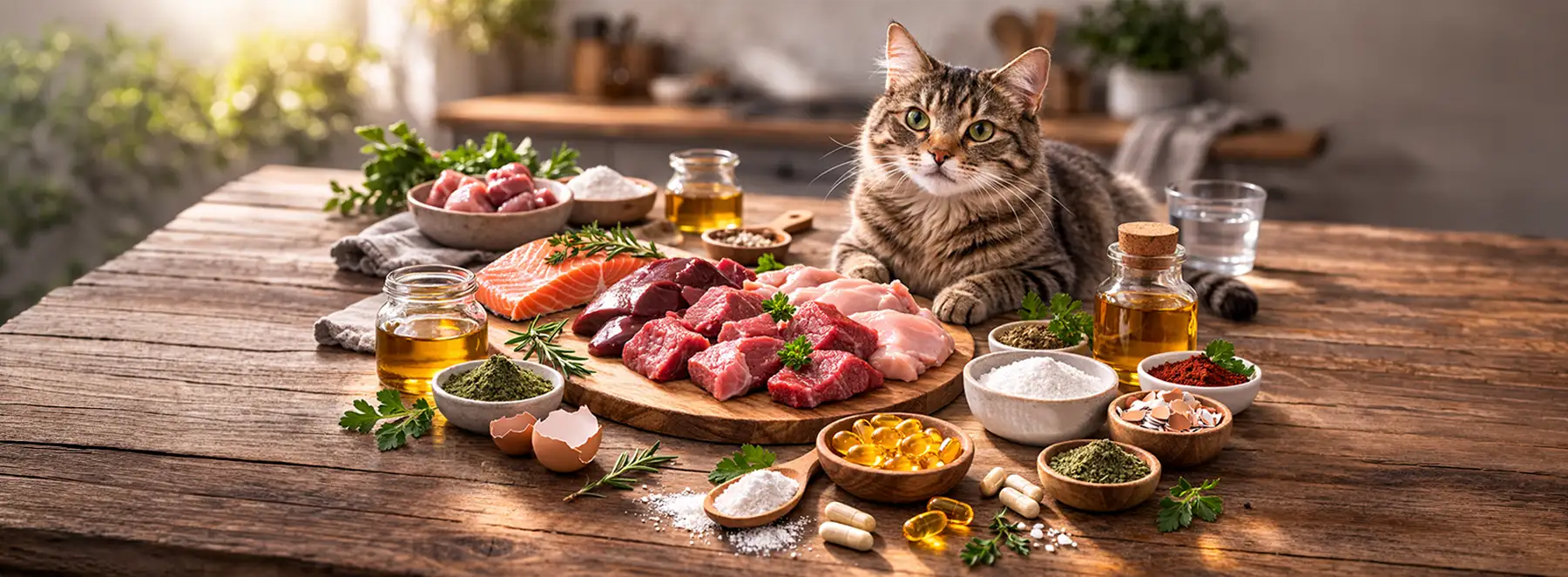
Which supplements cats really need when BARF-feeding is one of the most frequently asked questions about BARF nutrition for cats. Time and again, questions come up such as: “Will a plant-based oil harm my cat?” or “Are synthetic additives even absorbed well?”. Many uncertainties revolve around which additions are actually necessary and what you should pay attention to when putting together a balanced raw meat ration for cats.
Maybe you’re also wondering why a healthy cat needs supplements at all. Couldn’t – similar to a dog – a well-thought-out combination of different animal components already provide all important vitamins, trace elements and minerals?
In practice, it becomes clear that the cat’s natural prey animals, first and foremost the mouse, have a very specific and exceptionally high nutrient density. This composition is difficult to replicate with conventional BARF ingredients such as muscle meat, offal and bones. That is precisely why it is necessary to supplement certain nutrients in a targeted way with supplements.
Important notes on supplementation for cats
This article refers exclusively to supplementation for healthy cats. In cases of acute or chronic illness, nutritional requirements can change significantly. In such cases, feeding should always be adjusted individually and in consultation with veterinarians or qualified nutritionists.
In the following overview, you will get to know the most important nutrient supplements that can play a role when BARF-feeding cats – including their respective advantages and disadvantages. The aim is to give you clear guidance so that you can choose supplements consciously and according to needs.
Vitamins when BARF-feeding cats – essential supplements explained simply
Vitamins perform numerous vital functions in the cat’s body and must be considered particularly carefully when BARF-feeding cats and supplementing raw diets in a targeted way. Unlike many other animal species, the cat depends on a direct supply of certain vitamins, as it cannot convert or synthesize some precursors itself. In the following section, the most important vitamins are introduced and explained, along with which sources in a BARF diet can be used to supplement them.
Vitamin A – natural sources and alternatives
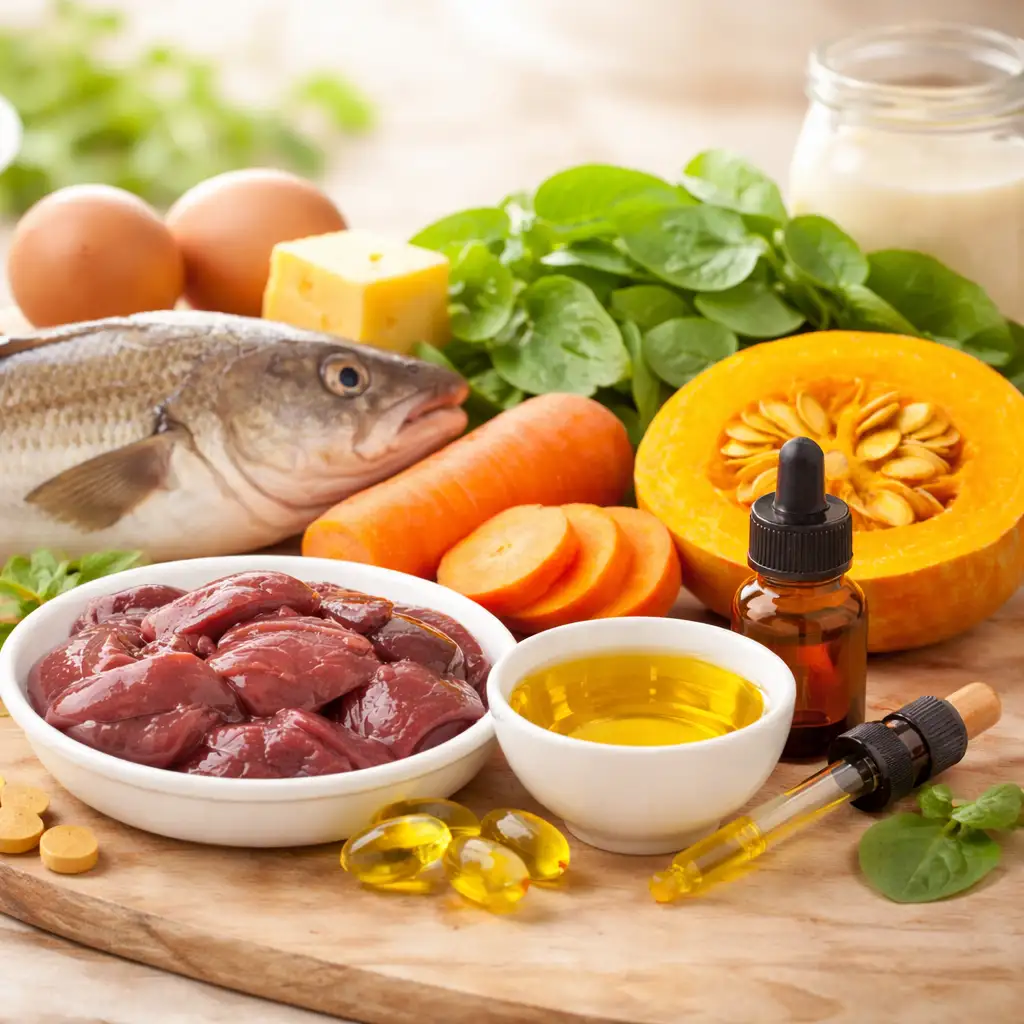
Unlike humans, cats are not able to convert the precursor of vitamin A – beta-carotene – into vitamin A on their own. Therefore, cats must take in vitamin A directly through their food. Ideally, this is done via fresh liver. This form of supplementation is considered particularly natural, as it not only provides vitamin A but also many other important nutrients at the same time. Turkey liver has a particularly high vitamin A content and contains, for example, about five times as much vitamin A as veal liver.
Learn more
Cod liver oil can also be used to supplement vitamin A. However, this option should only be used by experienced BARF feeders or after consultation with a nutrition advisor specializing in cats. The reason lies in the need for very precise dosing: if cod liver oil is dosed too high over the long term, it can lead to an oversupply of vitamin D3.
Alternatively, vitamin A drops can be used. However, these have the disadvantage that they may contain additives that can trigger allergic reactions in sensitive cats – such as oils based on peanuts or soy.
B vitamins – brewer’s yeast, vitamin B complexes and their specifics
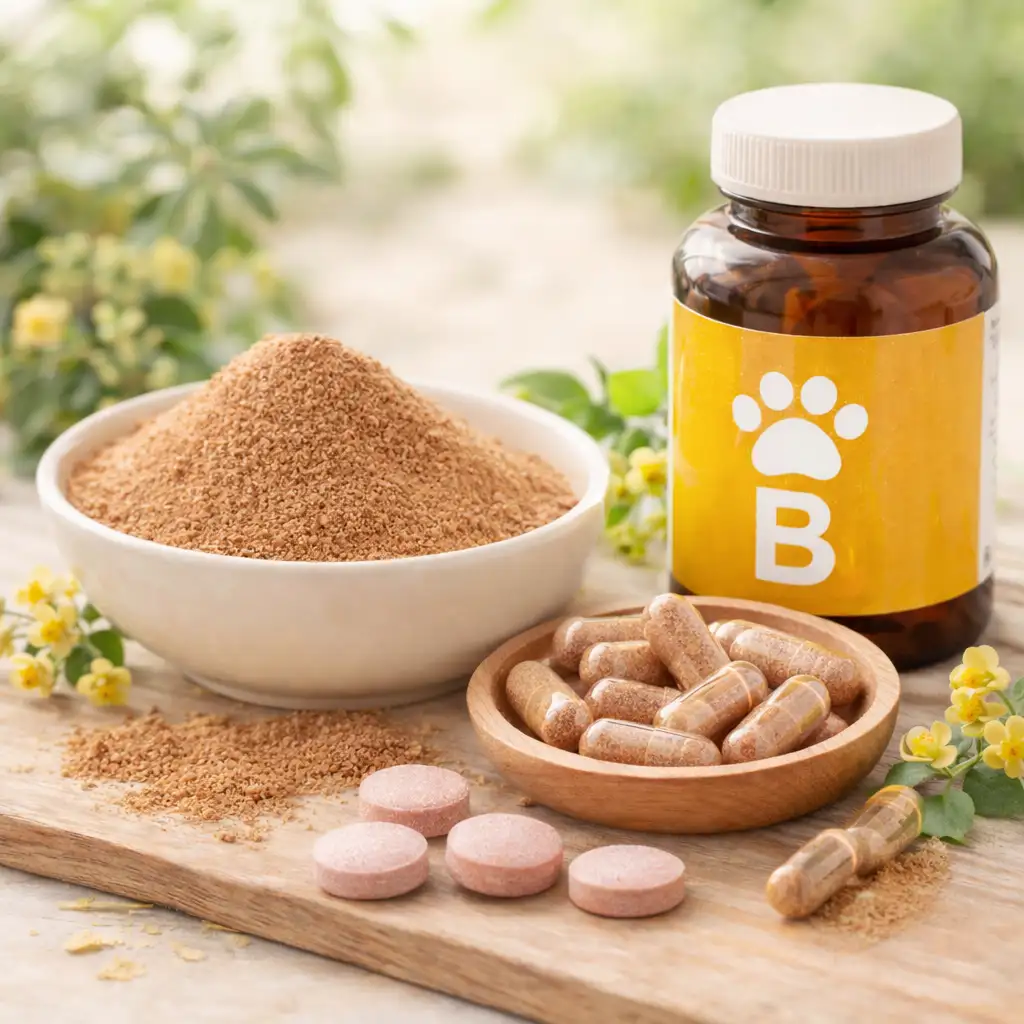
When BARF-feeding, B vitamins are often supplemented via brewer’s yeast. In addition to various B vitamins, it also contains numerous minerals and trace elements. One disadvantage of brewer’s yeast, however, is its relatively high phosphate content as well as an undersupply of vitamin B1, biotin and folic acid. To meet the requirements for these three vitamins via brewer’s yeast alone, very large amounts would have to be fed.
Learn more
Even though excess B vitamins can generally be excreted, a targeted, needs-based supply makes more sense than an unnecessarily high overall amount of supplements. Additional supplementation of the B vitamins mentioned, which are not sufficiently present in brewer’s yeast, can therefore be advisable.
Alternatively, a so-called vitamin B complex can be used, which usually covers the requirement values in full. However, it should be taken into account that some cats reject vitamin B complexes because of their strong smell or taste.
Vitamin D3 – using fish, heart and supplements correctly
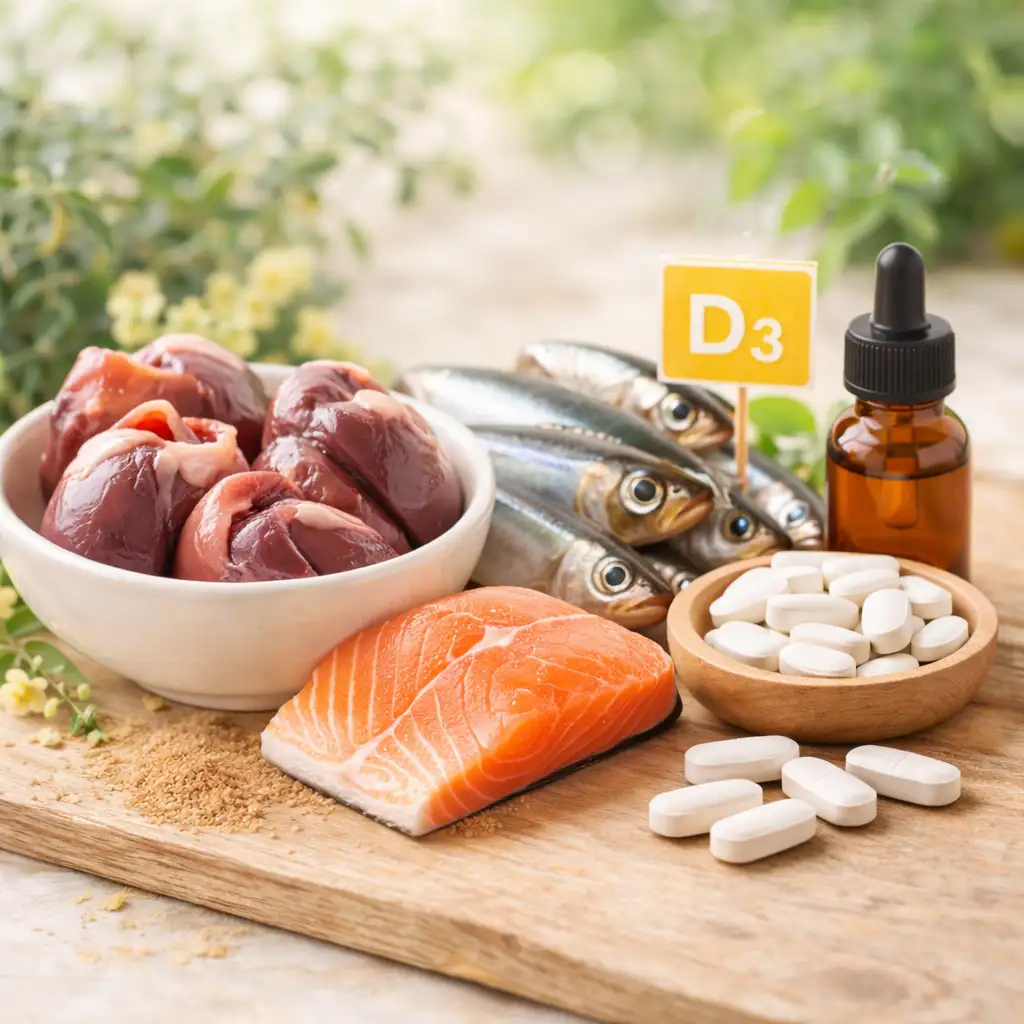
Vitamin D3 cannot be synthesized by cats themselves and must – like vitamin A – be supplied directly through food. A particularly natural option for this is supplementation via vitamin D3-rich fish. At the top of the list are salmon from the Salmonidae family, for example Atlantic salmon (Salmo salar). It is important to clearly distinguish this from Atlantic pollock, which does not provide the same nutrients.
Learn more
Sprats and rainbow trout can also be used to support the supply in part. However, with regular fish feeding, the iodine content of the entire ration should be taken into account, which is why checking the feeding plan is recommended in such cases.
Not every cat accepts fish or tolerates it well. Some animals reject it completely or react allergically to it. In such situations, sheep or lamb hearts can be mixed into the meal, as they can also serve as a natural source of vitamin D3.
Alternatively, vitamin D3 tablets from the pharmacy can be used, which can be finely crushed and mixed into the food. Tablets with 500 IU are often used. However, the exact calculation of the amount required should be left to an experienced nutritionist specializing in cats.
As a general rule: vitamins A, E and D are fat-soluble vitamins. In the event of an overdose, they are not excreted via the kidneys, but stored in the body. This means that excessive amounts can accumulate over time and, in the worst case, cause health problems – a risk that should be kept in mind especially with vitamin D.
Vitamin E – antioxidant protection
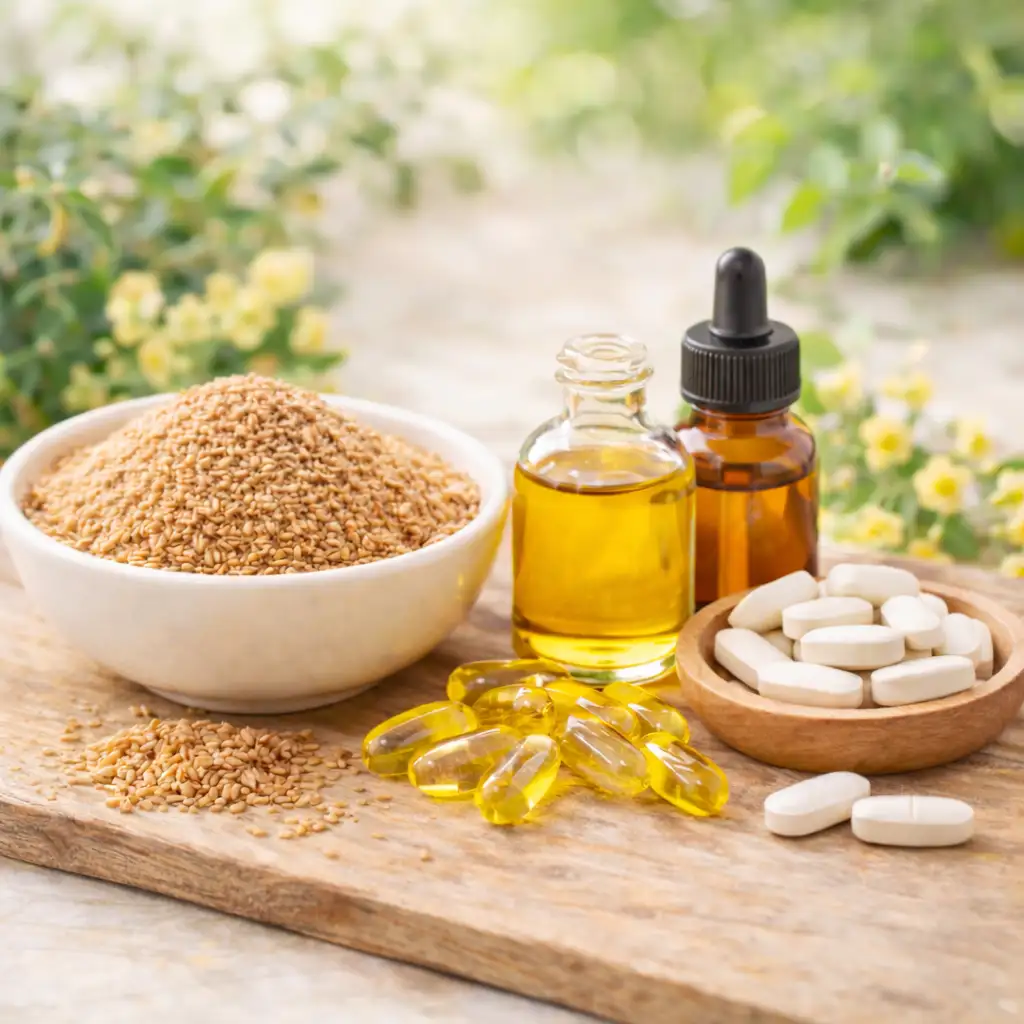
Vitamin E performs an important protective function in a cat’s body. It acts as an antioxidant and helps protect sensitive fats and cell structures from harmful influences. This protection plays an important role, especially in a raw meat-based diet that contains a lot of fat.
Learn more
Findings on this come, among other things, from experiments on rats, in which even high doses of vitamin E were well tolerated and showed no toxic effect. Nevertheless – as with all supplements – the dosage should be aligned as closely as possible with the individual needs.
In nature, vitamin E occurs exclusively in plant sources. A natural way to supplement it is high-quality wheat germ oil. However, this form of supplementation should only be used for healthy cats, as plant oils generally cannot be utilized optimally by cats. Alternatively, vitamin E tablets, powder or drops are available.
The use of fresh or dried wheat germ in cats should be viewed critically. The purines and oxalates it contains can contribute to an increase in uric acid or promote the formation of oxalate stones.
Minerals in BARF for cats – supplementing calcium, sodium & co. correctly
Minerals perform numerous fundamental tasks in a cat’s body, especially in bone metabolism as well as in various metabolic processes. When BARF-feeding, the correct ratio of individual minerals to one another is particularly crucial. In the following section, important minerals are presented and explained, including which sources can be used to supplement them in a BARF diet.
Calcium – the foundation for bone metabolism
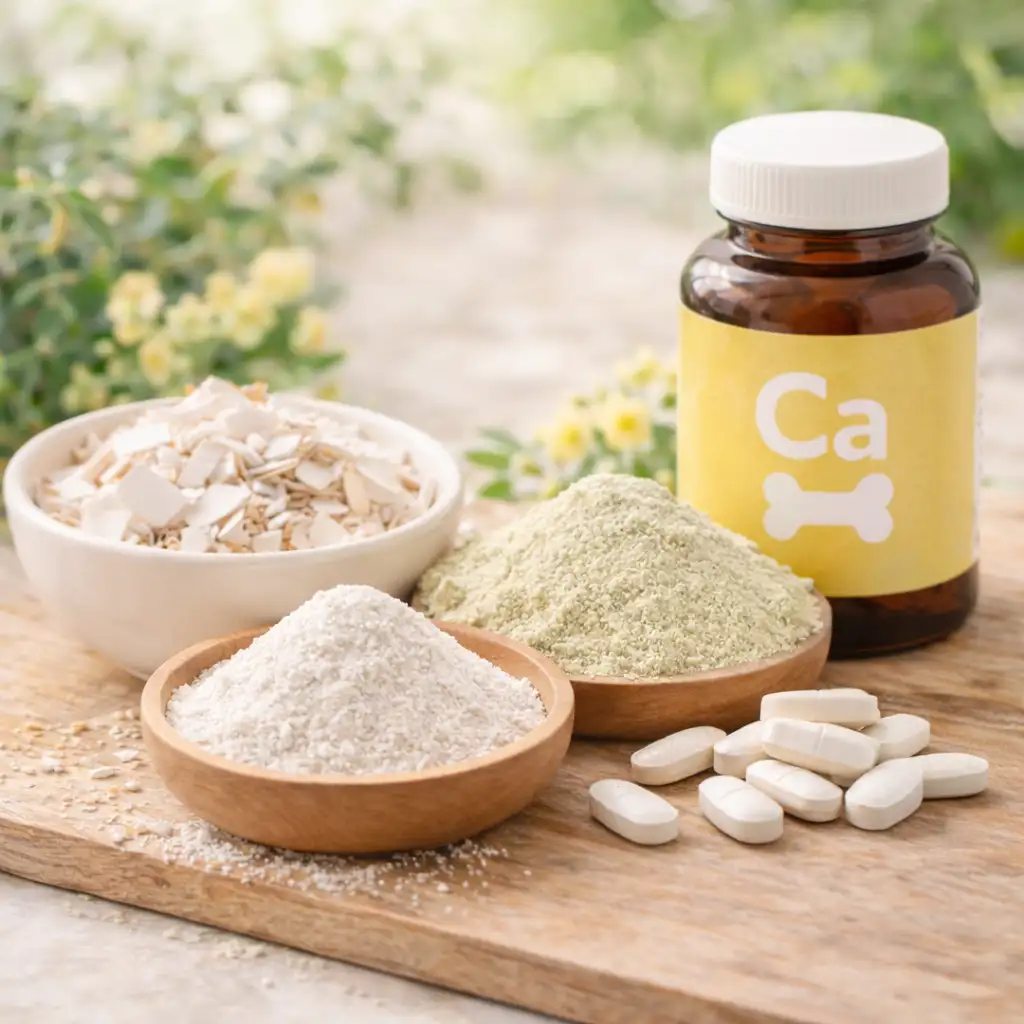
Together with phosphorus, calcium plays a key role in a cat’s bone metabolism. For cats, both minerals should be present in a balanced ratio. The recommendation is a calcium-to-phosphorus ratio of around 1.1–1.2 : 1.
Learn more
For pure calcium supplementation, eggshell powder, algae lime, calcium carbonate or calcium citrate can be used, among others. It should always be noted that the individual products have different calcium contents and the dosage must be adjusted accordingly.
Phosphorus – a natural component of meat
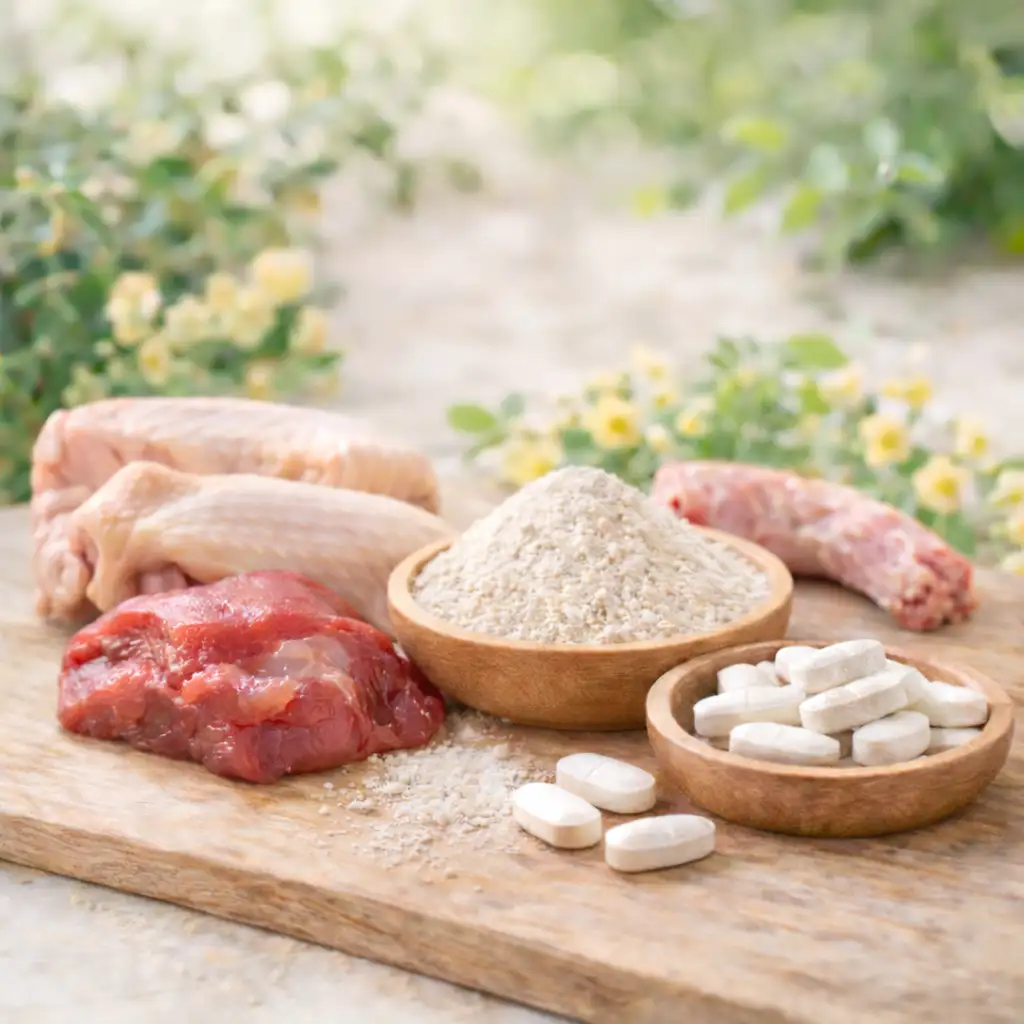
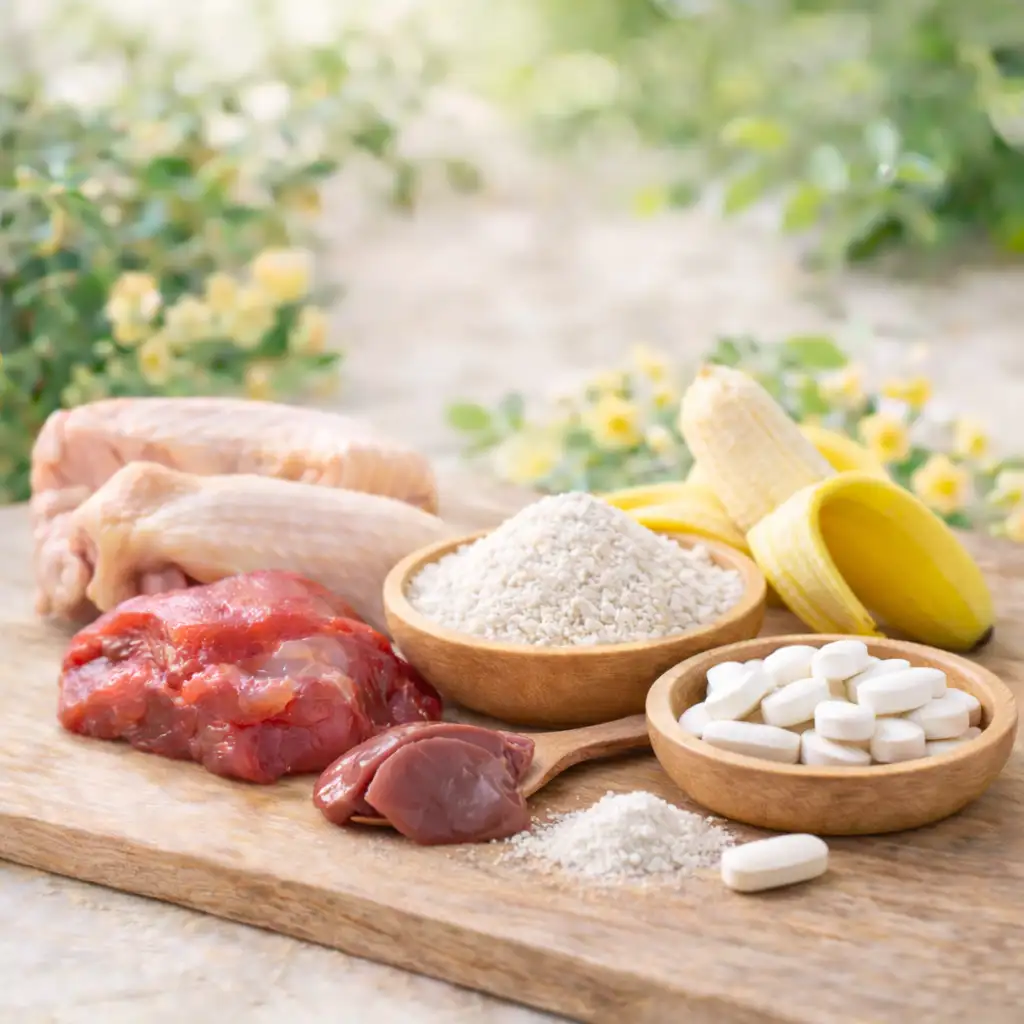
Meat naturally contains relatively high amounts of phosphorus, which is why only small additional amounts of supplements are often needed to meet requirements. In addition to bones, (meat-)bone meals or dicalcium phosphate can also be used for supplementation.
Learn more
However, caution is advisable when feeding bones, as cats can tend to so-called bone stool if they are given too frequently. It is therefore recommended to feed bones at about every third meal and otherwise rely on appropriate supplements.
Phosphate-containing supplements generally also contain calcium. In many cases, however, this is not sufficient to ensure a balanced calcium-to-phosphorus ratio, so calcium must be supplemented additionally.
Magnesium – supplement in a targeted way only when needed
Many BARF rations already contain magnesium in sufficient amounts, so additional supplementation is only rarely necessary. A balanced, meat-based diet usually provides cats with enough magnesium via natural ingredients.
Learn more
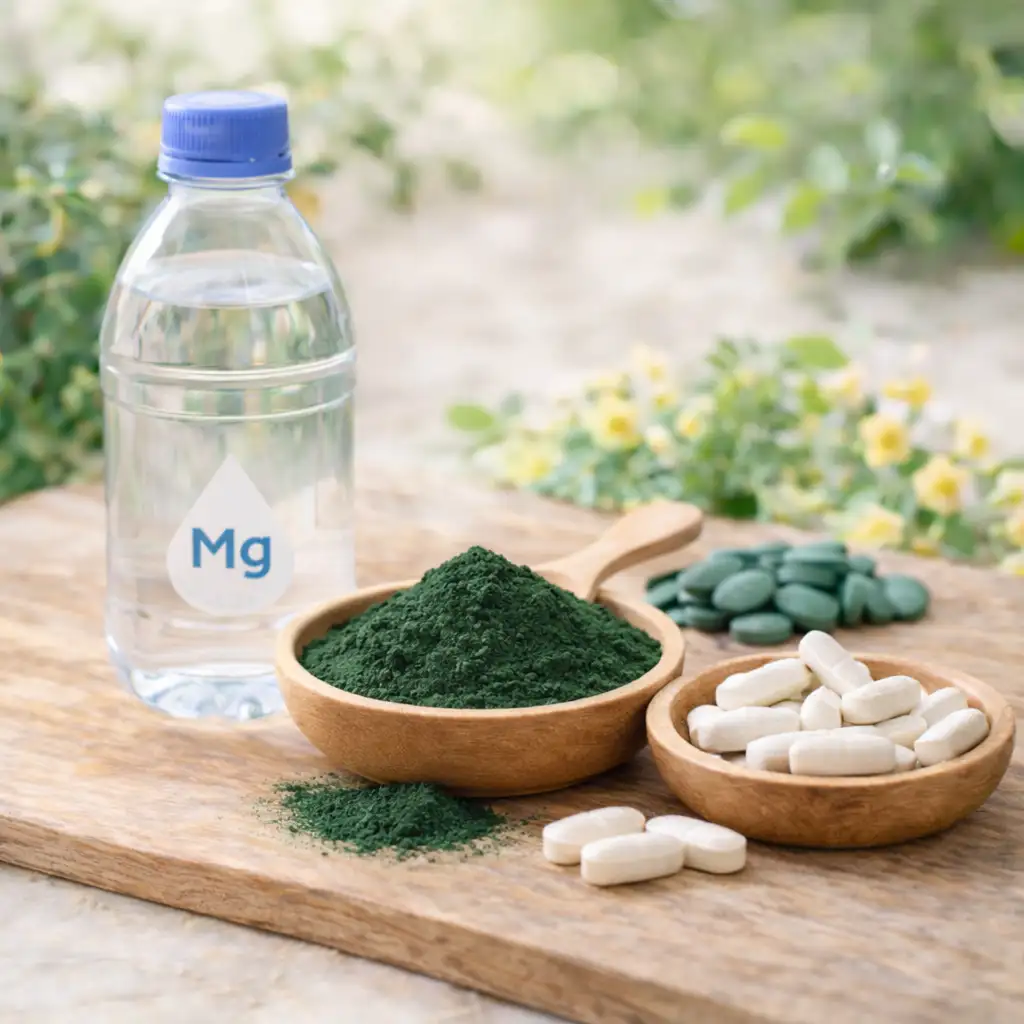
If there is nevertheless an increased need, meals can be supplemented, for example, with a still mineral water that has a higher magnesium content. Spirulina is also sometimes used – however, it should be noted that the amounts required can be quite high and may not be well accepted by some cats in their food. In the worst case, it can even lead to food refusal.
Alternatively, individual magnesium preparations are available, for example in the form of magnesium oxide. However, targeted supplementation should always be carefully weighed up and ideally carried out in consultation with a qualified nutrition advisor.
Potassium – interplay with sodium in cell metabolism
Potassium and sodium work closely together in a cat’s body and influence many processes in cell metabolism. For these processes to function stably, the ratio of both minerals should be balanced. For cats, a potassium-to-sodium ratio of around 2.1 : 1 is recommended.
Learn more
With a natural, meat-based diet – such as BARF feeding or high-quality cooked food – potassium is usually already present in sufficient amounts. Additional supplementation is therefore only rarely necessary. In practical ration formulation, sodium is more often supplemented to achieve the desired ratio between potassium and sodium.
If additional potassium supplementation is nevertheless necessary, it should only be done after measuring the potassium level in the blood and in close consultation with the treating veterinarian.
Sodium – an important component of electrolyte balance
Sodium – as already described – acts as an important counterpart to potassium and also plays a central role in many metabolic processes. An adequate sodium supply is crucial, especially for maintaining electrolyte balance. Since potassium is usually present in sufficient amounts in meat-based rations, sodium is often adjusted in practice to maintain the recommended potassium-to-sodium ratio.
Learn more
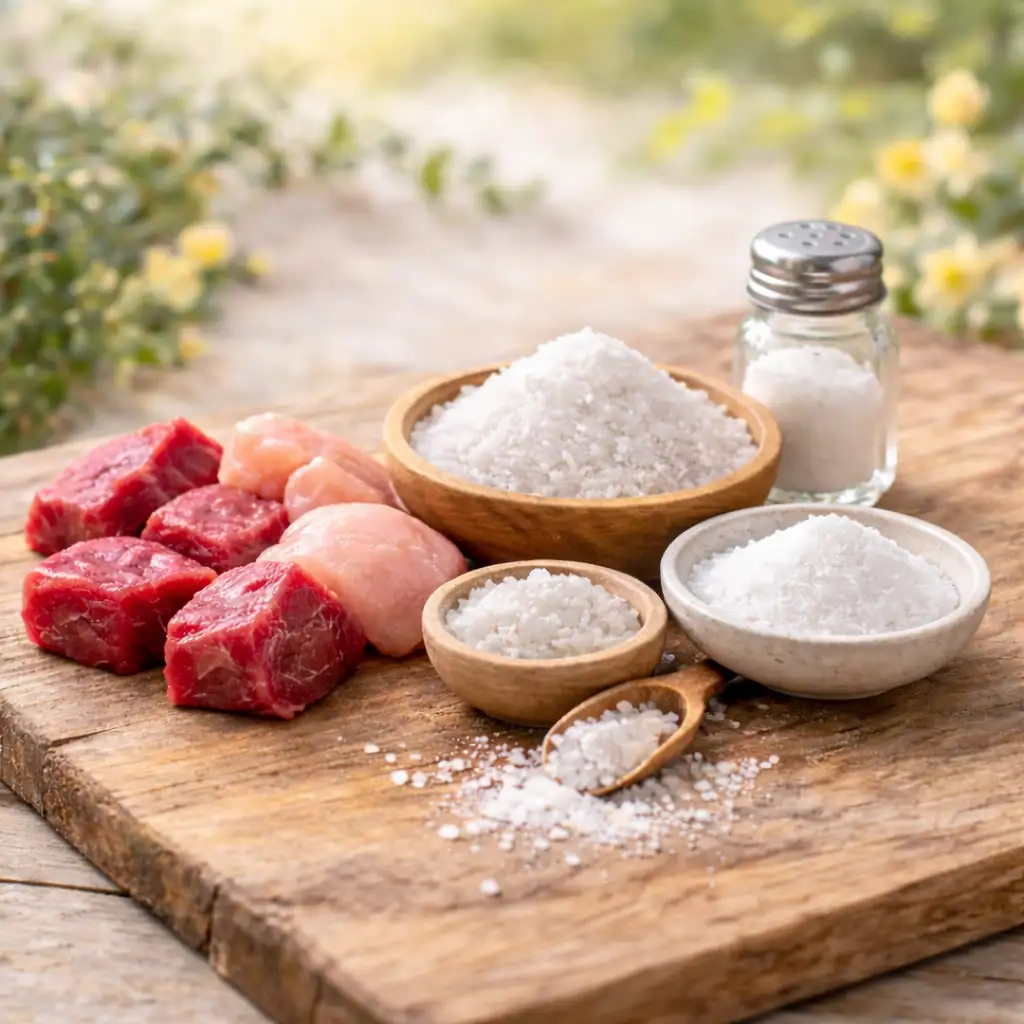
In raw feeding, sodium is often supplemented via rock salt or pure sea salt. However, sea salt is sometimes discouraged, as it can often contain nanoparticles of plastic. Alternatively, simple table salt can be used. In any case, it is important to ensure that the salt used contains no added iodide or fluoride.
Trace elements when BARF-feeding cats – iron, iodine & further additions
Trace elements are only needed in very small amounts, but they perform important tasks in a cat’s metabolism. They should also be considered in a targeted way when BARF-feeding, as certain components of natural prey often cannot be fully replicated in practice.
Iron – important for oxygen supply
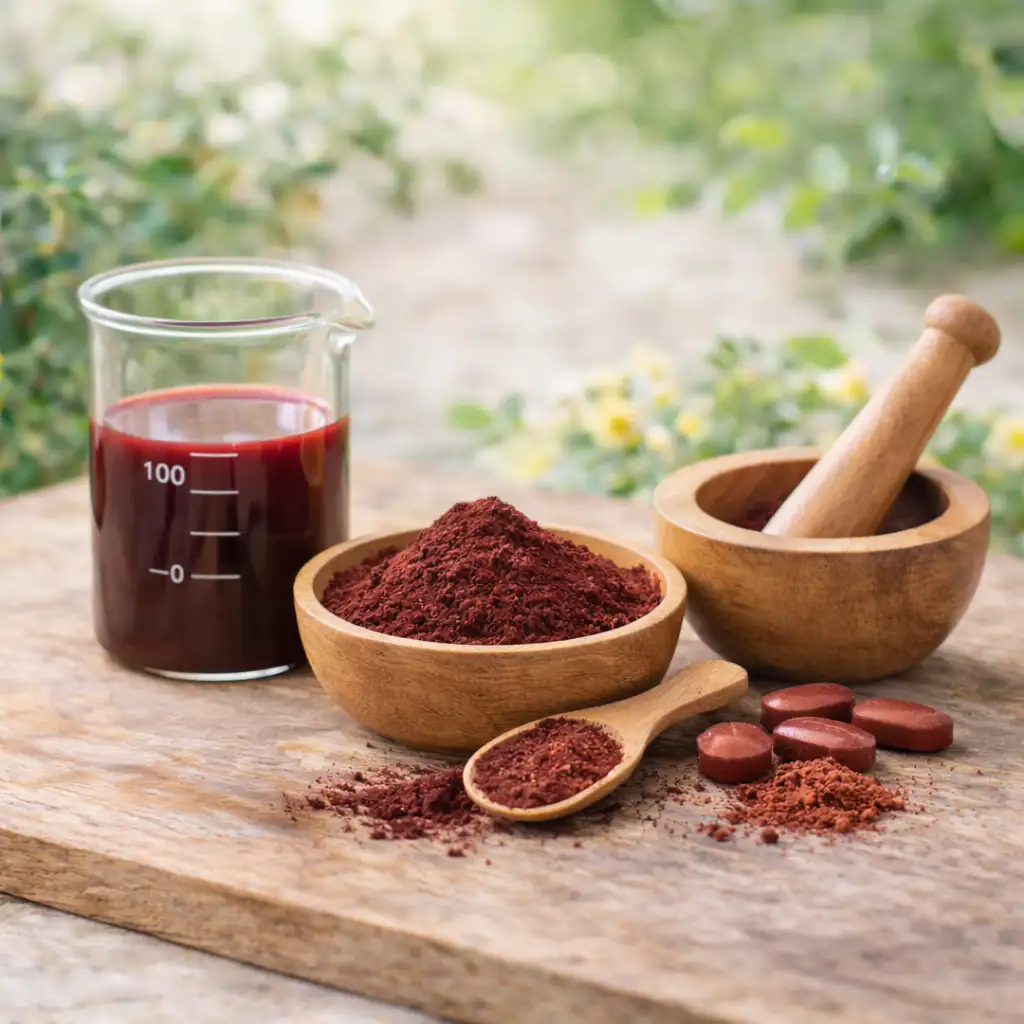
Iron is an essential component of oxygen supply in a cat’s body and must be ingested through food. The most natural form of supplementation is fresh blood, as it provides iron in a form that is readily available to cats. Alternatively, dried blood powder can be used, which can simply be mixed with water and then stirred into the food.
Learn more
If supplementation via blood is not possible, iron tablets can also be used. Care should be taken to ensure that they are a non-enteric-coated variant. The tablets are finely crushed and then mixed into the food.
Iodine – important for the thyroid and metabolism
In nature, cats take in iodine through the thyroid gland of their prey animals. As a trace element, iodine plays a central role in the formation of thyroid hormones and thus influences numerous metabolic processes in the body. Other hormonal processes as well as the condition of skin, hair and coat are also connected to an adequate iodine supply.
Learn more
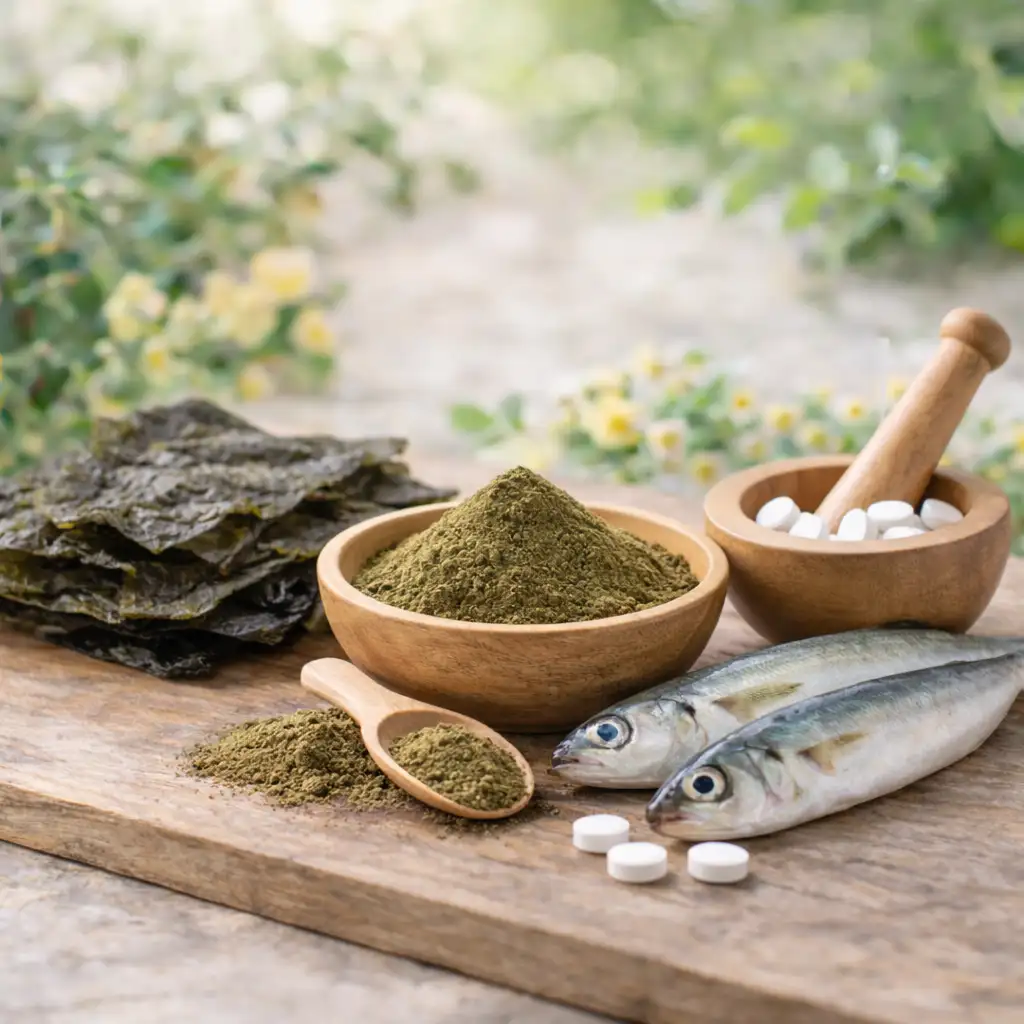
When BARF-feeding, thyroid tissue is generally not fed, which means this natural source of iodine is missing from the feeding plan. To still meet requirements, iodine can be supplied in various ways. In addition to regular feeding of sea fish, which is a natural iodine source, kelp meal is often used. Alternatively, iodine tablets can be used, although supplementation should always be adapted to the individual feeding plan and overdosing must be strictly avoided.
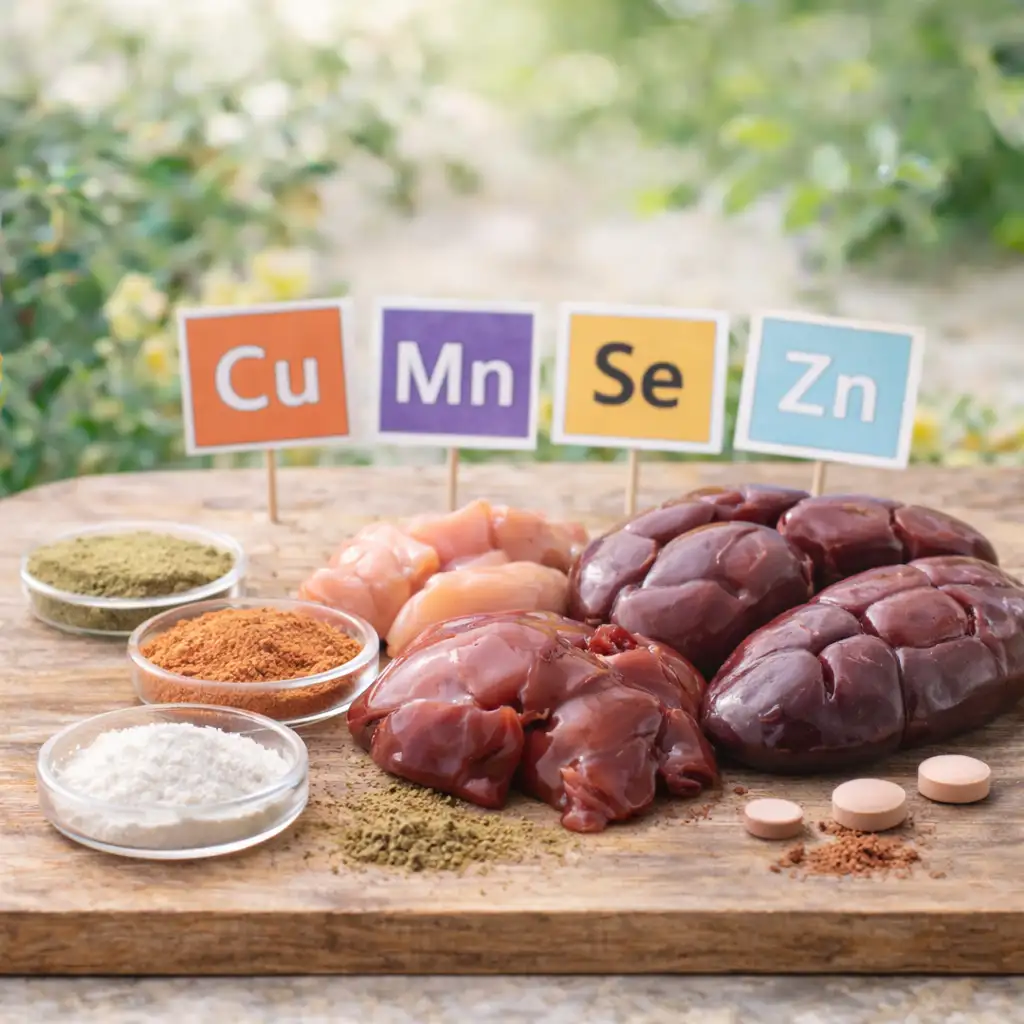
Copper, manganese, selenium & zinc – trace elements from natural sources
Trace elements such as copper, manganese, selenium and zinc are primarily obtained through natural ingredients in a balanced BARF ration. The more varied the individual components are chosen, the broader the spectrum of trace elements typically contained – without any additional preparations.
Learn more
Offal such as liver and kidney is particularly rich in these nutrients. While liver is readily accepted by many cats, kidney often earns skeptical looks in the bowl – not every kitty is enthusiastic about it. As a result, in practical feeding it can sometimes be more difficult to adequately cover certain trace elements through natural ingredients alone.
If the supply of these nutrients is not sufficient, individual supplements can be a sensible addition. Which supplements make sense in a given case is best decided together with an experienced BARF advisor. Trace element levels can vary greatly depending on the composition of the ration – and so can the selection and dosage of the appropriate supplements.
Essential amino acids in a cat’s diet
Amino acids are important building blocks of animal proteins and perform numerous vital functions in a cat’s body. While many amino acids are consumed in sufficient amounts via a meat-based diet, taurine has a special status and must be specifically considered when BARF-feeding.
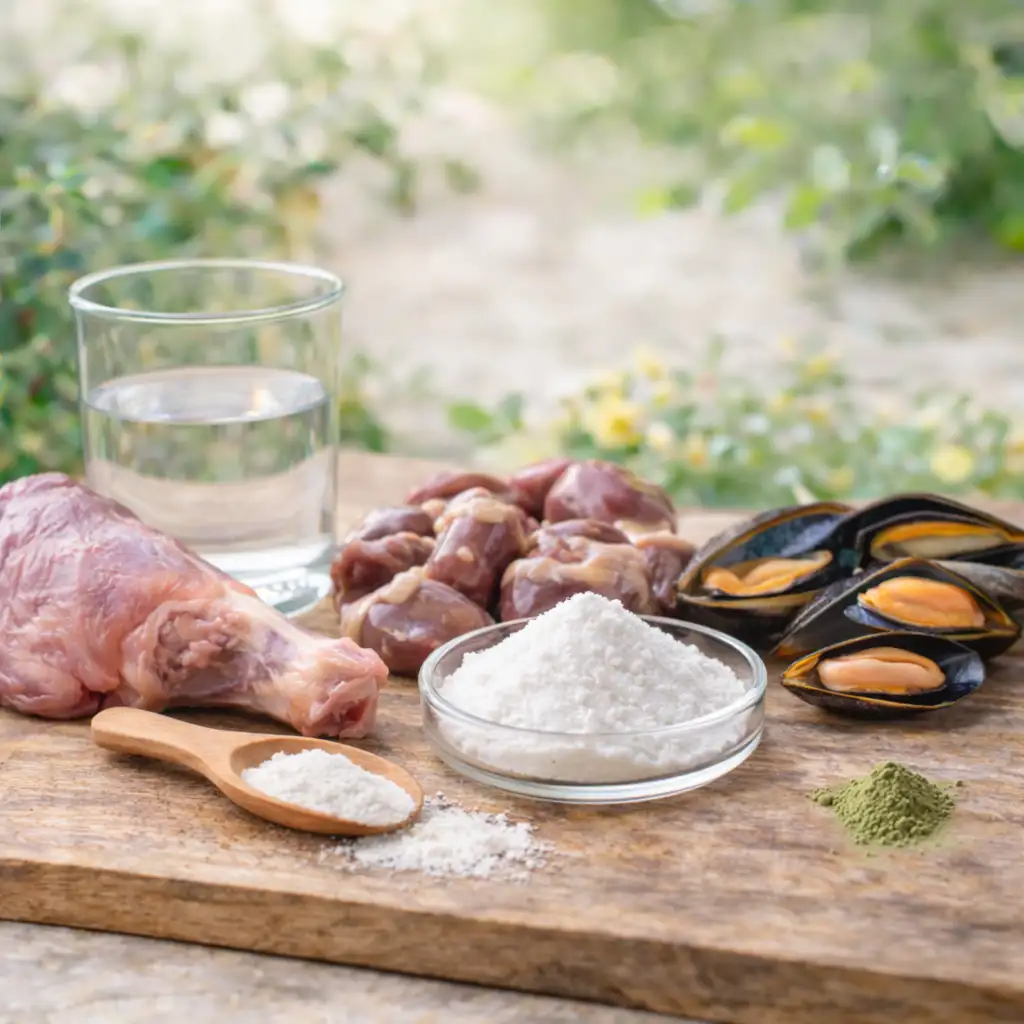
Taurine for cats in BARF – why this amino acid is so important
Taurine is one of the vital amino acids for cats and is found primarily in animal foods such as meat, fish and shellfish. Especially darker meats, such as turkey thigh, as well as offal like turkey or chicken hearts provide comparatively high amounts. Nevertheless, the actual requirement is difficult to reliably cover through natural food components alone – unless whole prey animals such as mice are fed.
Learn more
In practice, taurine is therefore usually supplemented in a targeted manner. In theory, green-lipped mussel powder can be used as a natural source, but very large amounts would be necessary to reliably meet requirements. This not only makes supplementation costly, many cats would probably also refuse such a powder-heavy meal. This is why pure taurine powder is often used, which can be easily dissolved in a little water and then mixed into the food.
At a glance: the most important nutrients in BARF feeding and how to cover them
Vitamin A: liver, cod liver oil or vitamin A drops
Vitamin D3: certain fish types such as salmon, sprats and trout; alternatively sheep/lamb hearts or vitamin D3 tablets
Iron: blood, blood powder or iron tablets
Calcium & phosphorus: bones, bone meal or dicalcium phosphate
Iodine: sea fish, kelp meal or iodine tablets
Taurine: taurine powder or green-lipped mussel powder (high amounts required)
Conclusion: needs-based supplementation when BARF-feeding cats
A balanced BARF diet for cats thrives on the right balance between natural ingredients and targeted additions. While many nutrients can already be obtained through high-quality meat, offal and other animal components, there are some essential vitamins, minerals, trace elements and amino acids that should be considered deliberately. Taurine in particular, as well as certain minerals and trace elements, shows that a cat’s natural prey can only be replaced to a limited extent by conventional meat components.
What matters is not having the largest possible number of supplements, but a well-thought-out, individually tailored ration plan. Depending on the composition of meals, acceptance of individual ingredients and the cat’s needs, requirements can vary. Targeted supplementation – ideally supported by expert advice – helps avoid nutrient gaps without unnecessary overdosing.
When implemented correctly, BARF offers the opportunity to make a cat’s diet very close to nature and at the same time needs-based. Anyone who engages with the most important nutrients and plans supplementation consciously creates a stable foundation for long-term balanced feeding and a long, healthy cat life.
Frequently asked questions about supplements in BARF for cats (FAQ)
Does my cat really need supplements when BARF-feeding?
The answer to whether your cat really needs supplements when BARF-feeding can be found in the section "Essential BARF supplements for cats".
Which supplements are particularly important in BARF for cats?
Which supplements are particularly important when BARF-feeding cats can be found in the section "At a glance: the most important nutrients in BARF feeding and how to cover them".
Can I BARF-feed my cat without taurine?
Whether you can feed your cat a nutritionally complete BARF diet without additional taurine can be found under "Taurine for cats in BARF – why this amino acid is so important".
How do I cover my cat’s iodine requirement when BARF-feeding?
Which supplements you can use to cover your cat’s iodine requirement when BARF-feeding can be found in the section "Trace elements when BARF-feeding cats – iron, iodine & further additions".
Do I need to supplement vitamin D for my cat when BARF-feeding?
Whether your cat needs additional vitamin D in its BARF meals can be found here: "Vitamins when BARF-feeding cats – essential supplements explained simply".
Are plant-based oils useful for cats?
Whether you can feed your cat plant-based oils can be found in the section on vitamin E in the chapter "Vitamins when BARF-feeding cats – essential supplements explained simply".
What role do calcium and phosphorus play when BARF-feeding cats?
The answer to what role calcium and phosphorus play in a BARF diet for cats can be found in the section "Minerals in BARF for cats – supplementing calcium, sodium & co. correctly".
Can I simply dose supplements by feel?
How to dose supplements correctly can be found in the "Conclusion: needs-based supplementation when BARF-feeding cats".