






Supplements for BARF feeding
Do you need BARF supplements when feeding dogs a BARF diet?
Supplements for BARF feeding – useful or not?
BARF is based on the natural diet of the wolf and deliberately focuses on fresh, as unprocessed as possible ingredients. Many dog owners appreciate precisely this original approach. Nevertheless, in practice a classic BARF ration can rarely be equated with a complete prey animal. Components such as blood, brain, fur, eyes, or glandular tissue are often missing from the bowl, even though they would naturally provide valuable vitamins, trace elements, and fibre. This can lead to nutrient gaps in BARF rations, which could affect your dog’s nutrient supply in the long term. A targeted, needs-based use of supplements can therefore be useful and, in some cases, even necessary.
Always consider nutrient supply in BARF feeding individually
Whether supplements are needed and which ones depends on the composition of the diet. Not every dog needs the same additions. What matters is what your dog already gets from meat, offal, bones, plant-based components, and more. Taking a close look at the feeding plan is therefore more worthwhile than adding numerous supplements across the board. Because even natural additions should always be used in a targeted, needs-based way: More is not automatically better!
Deficits in nutrient supply can arise, among other things, from the choice of meat, missing feed components, or the changed lifestyle of modern dogs. Dogs today spend significantly more time indoors and are therefore exposed to less natural sunlight, which can affect vitamin D supply, for example. At the same time, we often feed meat from intensive farming, which can lead to a reduced content of essential fatty acids in the meat. With a well developed BARF feeding plan that also takes the targeted use of supplements into account, the recommended requirement levels for all important nutrients can be met without any problems.

Needs-based supplementation in BARF feeding
In principle, BARF supplements can be divided into necessary, optional, and situational additions. While some supplements contribute to basic nutrient coverage, many others are not strictly required for healthy dogs and should only be selected and used intentionally. However, what always matters is the correct dosage. As a rule, this is based on the amount of food or the dog’s weight and is based on established requirement values, such as NRC recommendations. If a dog’s ration changes – for example due to an adjusted activity level or a special diet – the amount and selection of supplements should always be reviewed as well.
Excursus: What are requirement values according to NRC?
The NRC (National Research Council) is a US organization that publishes reference values for the nutrient supply of dogs based on scientific studies. These values primarily serve as guidelines for animal nutrition and generally refer to an adult, healthy and moderately active dog in maintenance metabolism.
Important to know: NRC recommendations cannot be transferred 1:1 to BARF rations. The reason: among other things, they take into account that nutrients from highly processed commercial foods are sometimes only available to a limited extent. Therefore, the reference values are deliberately set higher to compensate for losses caused by processing and reduced bioavailability. Raw, minimally processed food – as used in BARF – can, however, have a different and often more favorable bioavailability. As a result, a well-balanced BARF ration can meet a dog’s nutritional needs even if individual NRC figures are not fully achieved mathematically.
It is therefore important to classify this correctly: Lower nutrient values in BARF food compared to NRC requirement values do not automatically mean a deficiency if the BARF ration is well structured. The decisive factor is the overall composition of the meal and its orientation towards the natural prey model. NRC data remains a helpful scientific reference – but in BARF it should not be interpreted in isolation.
Essential supplements in BARF feeding
Certain supplements are considered fundamental building blocks of a balanced ration in BARF feeding. They help close typical nutrient gaps that can arise when a whole prey animal is not fed. The most important essential BARF supplements primarily include high-quality oils for supplying omega-3 fatty acids as well as a reliable iodine source.

Omega-3 fatty acids: Why oils play an important role in BARF feeding
Oils are among the most important essential supplements in BARF feeding because they provide polyunsaturated fatty acids that a dog’s body cannot produce on its own. The focus is particularly on omega-3 fatty acid supply. While omega-6 fatty acids are usually consumed in sufficient amounts through meat, the omega-3 content in many BARF rations is comparatively low – especially when primarily meat from modern livestock farming is fed.
Learn more
A balanced ratio of omega-6 to omega-3 is considered an important foundation for healthy skin and coat, a stable immune system, and the regulation of inflammatory processes in the body.
Typical omega-3-rich BARF oils such as salmon oil, linseed oil, or hemp oil have different fatty acid profiles. Occasionally rotating oil sources can therefore be beneficial to ensure a broad nutrient supply. Meat from pasture-raised animals or feeding game may reduce the need for additional oils in some cases. Ideally, oils are added fresh to the food several times per week and complement the ration without replacing the need for animal fat.
A general feeding guideline is: 2 ml per 10 kg of body weight per day.
Suitable oils to supply dogs with omega-3 fatty acids
Salmon oil: is particularly rich in long-chain omega-3 fatty acids and is often used to support skin, coat, and the immune system. It may also positively influence anti-inflammatory processes in the body.
Linseed oil: provides plant-based omega-3 fatty acids as well as vitamin E and is often associated with improved coat quality and supportive effects on digestion.
Hemp oil: complements the fatty acid spectrum with a balanced ratio of different fatty acids as well as γ-linolenic acid and can help the body regulate its natural defence mechanisms.
Quality characteristics and storage of BARF oils
Since omega-3 fatty acids are sensitive to light, oxygen, and heat, it is recommended to always store oils in a cool, dark place and keep them refrigerated after opening. Ideally, oils should be used within a few months to avoid oxidation processes. Adding vitamin E can be useful and beneficial for stabilising the oil.

Seaweed meal – balancing iodine supply in a targeted way
Iodine is an essential trace element and indispensable for healthy thyroid function. In nature, carnivores primarily obtain iodine through the consumption of thyroid tissue. This exact component is deliberately omitted in BARF feeding to avoid uncontrolled intake of thyroid hormones. As a result, a classic BARF ration can quickly lead to an iodine deficiency if no targeted supplementation is provided.
Learn more
To cover iodine requirements, seaweed meal is frequently used in BARF feeding. It is usually derived from the brown algae Ascophyllum nodosum, which naturally contains a high concentration of iodine. Iodine is crucial for the production of the thyroid hormones T3 and T4, which regulate numerous metabolic processes in the body. Insufficient iodine intake can therefore impair metabolism in the long term. However, excessive intake can also be problematic, as it may disrupt the sensitive balance of the thyroid gland.
How to dose seaweed meal correctly
Because seaweed meal is very rich in iodine, precise dosing is essential in BARF feeding. Small quantities should be weighed carefully and ideally distributed across several feeding days. The required amount depends on the individual iodine content of the product, the dog’s body weight, and the overall ration. Special iodine or seaweed meal calculators can help determine the correct supplement quantity as accurately as possible.
Although dogs have a certain ability to adapt to fluctuating iodine intake, their needs should be reliably met over the long term. If thyroid disorders are present or if there is any uncertainty, it is advisable to review and adjust iodine intake individually.

The most important facts about essential BARF supplements for dogs at a glance
Supplement & function |
Recommended dosage & application |
Important notes |
|---|---|---|
Oils to supply essential |
several times per week, |
Fish oils such as salmon oil are particularly rich |
Seaweed meal for iodine supply and |
several times per week, |
Precise dosing is necessary to avoid |
Situational supplements in BARF feeding – depending on needs and ration structure
In addition to essential supplements, BARF feeding also includes a range of so-called situational additions. These are supplements that do not necessarily have to be part of every BARF ration but may become necessary under certain circumstances. Whether and to what extent such supplements are used depends primarily on the individual structure of the BARF ration and the specific needs of the dog.

Cod liver oil – vitamin D in a natural way
Vitamin D plays a central role in bone metabolism, calcium utilisation, and a functioning immune system. Unlike humans, dogs can only synthesise vitamin D through the skin to a very limited extent. Meat and other typical feed ingredients usually do not provide enough vitamin D to reliably cover requirements. Without vitamin-D-rich fish sources or suitable supplementation, a vitamin D deficiency can therefore quickly occur in BARF rations.
Learn more
Cod liver oil is considered a classic natural source of vitamin D in BARF feeding. The oil from cod liver provides not only vitamin D but also vitamin A and omega-3 fatty acids. Alternatively, vitamin D requirements can be covered through fatty saltwater fish such as salmon, herring, sprat, mackerel, or cod. However, caution is advised with fish high in thiaminase, as this enzyme destroys vitamin B1. Species such as herring, sardine, and mackerel should therefore not be fed excessively.
Using cod liver oil correctly
Since vitamin D and vitamin A are fat-soluble vitamins that can be overdosed, careful dosing is particularly important. Long-term oversupply may pose health risks. When determining the correct dosage, not only the overall BARF ration but also the vitamin A and D content of the oil should be considered.
A general feeding guideline is: 2 - 3 x weekly 1 - 1.5 ml per 5 kg of the dog’s body weight.

Bone meal and calcium supplements – alternatives to feeding bones in BARF
Raw meat naturally has an unfavourable calcium-phosphorus ratio, as it contains comparatively high levels of phosphorus and only small amounts of calcium. To balance this, raw meaty bones are usually fed in BARF diets. However, not every dog tolerates bones well and not every owner wants to feed bones. Older dogs or those with dental problems or sensitive digestive systems often can no longer process (whole) bones properly. In such cases, bone meal or other calcium supplements can be a sensible alternative.
Learn more
Bone meal is often the first choice as a supplement to replace bones, as it provides both calcium and phosphorus and therefore best replicates the natural ratio of these two minerals. This can help prevent long-term deficiencies in bone metabolism.
Expert tip: An ideal calcium-phosphorus ratio in a BARF ration is approximately 1.2 to 1.5:1.
Eggshell powder is also frequently used as a natural calcium source. It is particularly suitable for providing additional calcium, for example during growth phases, pregnancy, or lactation when requirements are increased. Since pure calcium sources do not contain phosphorus, their use should be carefully planned to avoid imbalances within the ration. For dogs suffering from kidney disease and requiring a low-phosphorus diet, eggshell powder can be an ideal choice.
Other calcium sources such as calcium carbonate, calcium citrate, or dicalcium phosphate may also be used, but they are often not standalone alternatives and should be fed in rotation or combination with other supplements.
Regardless of which calcium supplement you choose, the required amount should always be calculated based on the entire feeding plan and the dog’s individual needs. A suitable calcium calculator can help determine the correct feeding quantity.

Blood as a BARF supplement – a natural source of iron
Blood is a natural part of a carnivore’s diet and provides valuable minerals such as iron, sodium, and other trace elements. However, it is rarely used or completely absent in many BARF rations. Especially in feeding plans with a low proportion of offal or without spleen, supplementing with blood or blood powder can be useful to support mineral intake.
Learn more
Iron is an important nutrient responsible, among other things, for oxygen transport in the blood. An insufficient supply may become noticeable in the long term through reduced performance, pale gums, or increased susceptibility to infections. Blood can help compensate for such deficiencies in a natural way.
Which situational supplements your dog actually needs in BARF feeding cannot be answered in general terms. The feeding plan and your dog’s individual needs are decisive. Supplements should always be selected intentionally and dosed appropriately, rather than used as a precaution and potentially overdosed unnecessarily.
Optional supplements in BARF feeding – useful additions without obligation
In addition to essential and situational supplements, BARF feeding also includes a range of optional additions. These are generally not necessary for healthy dogs, but can meaningfully complement the feeding plan depending on life stage, health status, or individual ration design. These include ingredients such as herbs, eggs, nuts, seeds as well as individual plant-based supplements like brewer’s yeast or rosehip powder.

Plant-based oils as optional BARF supplements
In addition to the oils already mentioned for supplying essential fatty acids, other plant-based oils can also be used optionally in BARF feeding – for example to support skin and coat, especially during shedding seasons.
Learn more
Examples of such optional oils include borage oil or evening primrose oil, which are often mentioned in connection with skin support, as well as black cumin oil, occasionally used for sensitive airways or seasonal challenges. wheat germ oil is valued for its natural vitamin E content, while rapeseed oil can be an easily available fatty acid supplement. Coconut oil is also used in some BARF plans, for example as part of coat care or within individual feeding concepts when animal fats can only be fed in limited amounts. Which oils are beneficial depends strongly on the individual dog and the overall structure of the ration.
Since areas of use, quality, and nutrient composition of individual oils can vary greatly, it is worth taking a closer look at each specific product.

Herbs as a BARF supplement – plant-based additions used thoughtfully
In the wild, many carnivores consume small amounts of plant matter – and therefore herbs – indirectly through the stomach contents of their prey. In BARF feeding, selected herbs can also provide a source of secondary plant compounds as well as various vitamins and minerals. Depending on their composition, they are also attributed supportive properties for digestion, metabolism, or the immune system.
Learn more
Herbs can be used fresh, dried, or as ready-made supplement blends. The correct form of preparation is important: To make nutrients accessible, herbs should be offered finely chopped, dried, powdered, or as a purée or tea. In general, a varied but modest use in small quantities is recommended so as not to overwhelm the body.
Medicinal herbs with strong effects should be used only in a targeted way and not permanently. Caution is also advised with highly aromatic plants or potentially toxic herbs. Anyone collecting herbs themselves should therefore have sufficient plant knowledge or rely on tested mixtures.

Eggs in BARF feeding – a natural source of protein and B vitamins
Eggs can be a useful addition to a BARF feeding plan because they provide a wide range of easily available nutrients. Egg white and yolk differ significantly in composition: The egg white mainly contains high-quality protein with excellent biological value as well as important amino acids for muscle metabolism. The yolk, on the other hand, provides fat-soluble vitamins such as vitamin A and D, various B vitamins – including biotin – as well as trace elements and lecithin, which is involved in fat metabolism.
Learn more
Egg yolk can be fed both raw or gently cooked. While some heat-sensitive B vitamins may be partially reduced by strong heating, many other nutrients remain stable. With raw egg white, it should be noted that it contains the protein avidin, which can bind biotin. With occasional feeding, this is usually not a major issue, but some dog owners prefer to lightly cook the egg white or avoid feeding large amounts of raw eggs regularly. Ultimately, the dog’s tolerance will determine the best way to feed eggs.
In practice, one egg per week is often sufficient to complement the ration. As with all optional supplements, eggs are not a mandatory component of BARF feeding but an additional option that can be used as needed.
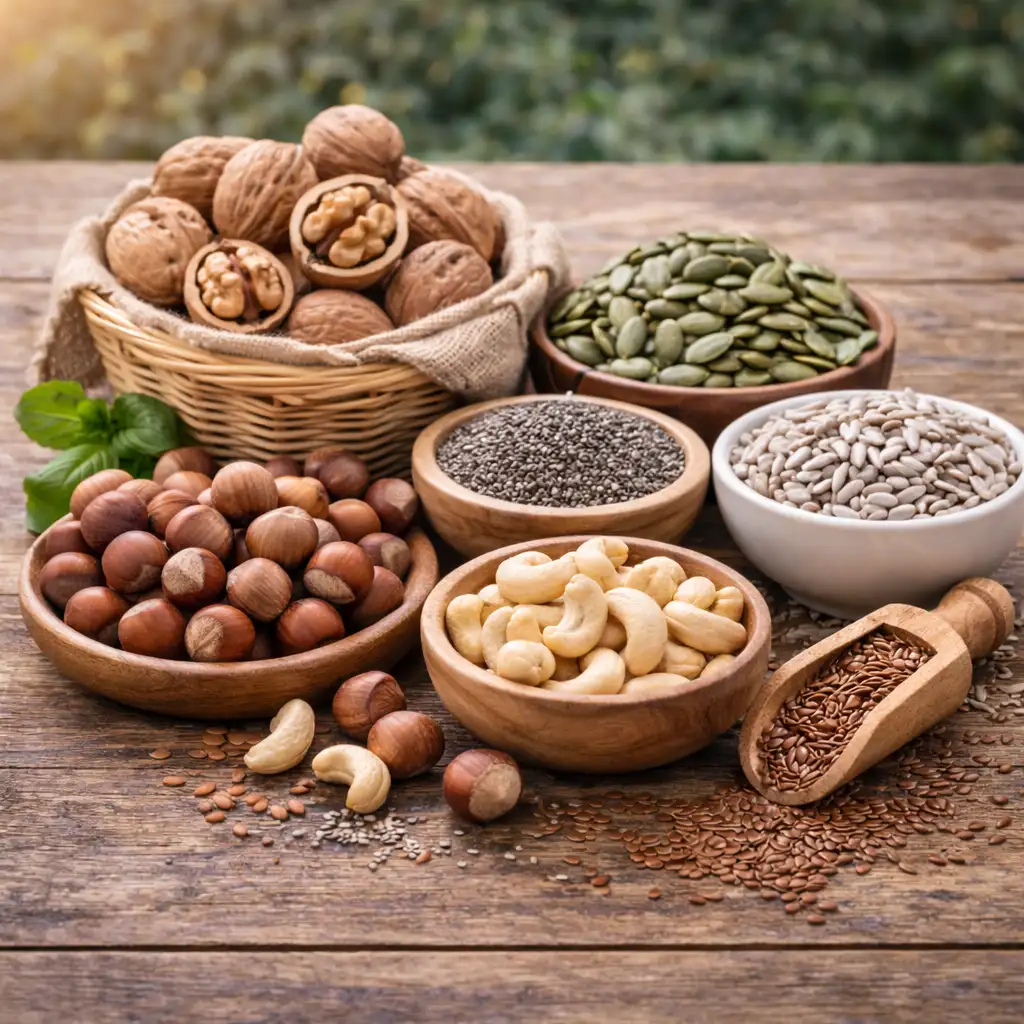
Nuts and seeds in BARF rations – small amounts used with care
Even though nuts and seeds are not part of a carnivore’s natural primary diet, they can be a varied addition in small quantities. They provide various nutrients as well as secondary plant compounds and may serve different purposes. Suitable options include hazelnuts, coconut flakes, as well as pumpkin or sunflower seeds.
Learn more
Moderate dosing is essential when feeding nuts and seeds: They should usually make up only a very small portion of the total ration. Nuts should always be finely chopped or ground so that your dog can digest them better. Quality also plays an important role, as nuts in particular can be prone to mould toxins. Unsuitable varieties such as macadamia nuts, bitter almonds, or nutmeg should be completely avoided, as they can be harmful to dogs.
Further optional supplements in BARF feeding – targeted support depending on needs
In addition to herbs, eggs, or plant-based oils, there are many other optional BARF supplements that can be used depending on life stage, activity level, or the dog’s individual needs.
This includes, for example:
Brewer’s yeast, which provides natural B vitamins and minerals and is often used during shedding season or for dogs with a low liver content in the feeding plan.
Also green-lipped mussel powder is occasionally added, especially for older dogs or generally to support joints, tendons, and ligaments. The contained glycosaminoglycans are often associated with mobility and cartilage health.
Another popular option is rosehip powder, which is rich in vitamin C and secondary plant compounds and can be used temporarily during increased stress or to support the immune system.
Bone broth can also be a tasty addition and is often used to support fluid intake, for sensitive digestion, or for recovery after physical exertion.
The examples mentioned represent only a small selection of possible BARF supplements. Which additions are truly beneficial always depends on the individual dog and feeding habits.

Complete mixes in BARF feeding – useful or unnecessary?
So-called complete mixes are often promoted as a simple and safe solution for supplementation in BARF feeding. However, for healthy dogs with a balanced BARF ration, they are in many cases not necessary or may even be harmful. Since such mixes are not individually tailored to each feeding plan, there is a risk of over- or undersupply of individual nutrients. In addition, some products contain minerals in less bioavailable forms or unnecessary additives.
There are situations in which (complete) mixes can be useful – for example with very small feeding amounts, permanently cooked rations, missing feed components, or increased requirements due to illness or very high activity. Even then, however, their selection and use should always be well considered and targeted.
In general, it is advisable to supplement only the nutrients that are actually lacking and to choose high-quality products with highly bioavailable nutrients. Since complete mixes are often difficult to adapt precisely to individual BARF plans, they are usually not recommended.
Natural or synthetic supplements in BARF feeding – which is the better choice?
Anyone who takes a closer look at supplementation in BARF feeding will eventually come across the question of whether natural or synthetic supplements are the better choice. Both options have their place as well as advantages and disadvantages.
Natural supplements – close to the original feeding concept
Natural supplements consist of foods or components derived from them, such as seaweed meal, cold-pressed oils, dried herbs, bone meal, or cod liver oil. The contained nutrients are often present in a complex natural matrix, similar to how they occur in the natural diet of carnivores. Many BARF feeders appreciate this form of supplementation because it fits well with the basic BARF philosophy.
An advantage of natural supplements is their often good bioavailability and generally gentle composition without artificial carriers. However, natural products can also be subject to fluctuations in nutrient content depending on origin or processing, which means they cannot always be dosed with complete precision. In cases of diagnosed deficiencies or certain illnesses, natural sources alone may therefore not always be sufficient for targeted nutrient supply.


Synthetic supplements – precise dosing for specific needs
Synthetic supplements consist of isolated nutrients in defined concentrations, such as vitamin D3 or pure calcium compounds. They allow very precise dosing and are often used when a specific nutrient must be supplemented in a targeted way – for example due to medical indications, highly restricted rations, or known allergies.
Thanks to their consistently standardised composition, synthetic supplements are easy to calculate and control. However, as mentioned, they are isolated substances that are not present in the same natural matrix as whole foods and may therefore be less efficiently utilised in some cases. Improper use may also increase the risk of oversupply, especially with fat-soluble vitamins or highly concentrated minerals. Some products may also contain artificial carriers or binders that not every dog tolerates equally well.
A balanced combination is often the most practical approach
In practical BARF feeding, a combination of natural supplements and carefully selected synthetic additions has often proven effective. Whenever possible, natural sources can form a solid foundation, especially for healthy dogs with balanced rations. In certain situations – such as diagnosed deficiencies, chronic illnesses, or allergies – a synthetic supplement may be additionally necessary and beneficial. What remains crucial is always a conscious, individually tailored supplementation strategy rather than a one-size-fits-all solution.
Conclusion: Use supplements in BARF feeding consciously & according to needs
The question of the right supplementation in BARF feeding cannot be answered in general terms. Every ration is as individual as the dog itself – depending on diet composition, life stage, activity level, and possible health-related factors. Scientific requirement values can provide important guidance, but can only be transferred to the practice of meat-based nutrition to a limited extent. Due to the often higher bioavailability of certain nutrients in raw animal components, actual needs may differ from case to case.
In many BARF rations, certain supplements have proven particularly useful. These include a reliable iodine source such as seaweed meal, a high-quality omega-3 source like fish oil, and – depending on the ration – a vitamin D source such as cod liver oil or fish. At the same time, the following applies: Not every dog needs every supplement. Thoughtless or generalised supplementation may lead to overdosing or undesirable interactions between nutrients.
Particular attention should be paid to supplementation when certain components are missing from BARF rations – for example if bones are not fed, offal is included only in small amounts, or health factors require adjustments. Instead of relying on complete mixes or random supplementation, it is always worthwhile to carefully review the individual feeding plan and use targeted supplementation. In the end, a balanced BARF diet is not created by using as many supplements as possible, but through well-considered additions that truly support the dog’s actual needs.
Frequently asked questions about supplements for dogs (FAQ)
Do you actually need supplements when feeding BARF?
You can find the answer to whether supplements are necessary when feeding dogs a BARF diet in the section "Supplements for BARF feeding – useful or not?".
Which supplements are most commonly necessary when feeding dogs a BARF diet?
You can learn which supplements are essential for your dog in the section "Essential supplements in BARF feeding".
Can I feed my dog BARF without supplements?
Whether you can feed your dog BARF without supplements is explained under "Supplements for BARF feeding – useful or not?".
How much seaweed meal does a dog need when feeding BARF?
You can find out how much seaweed meal your dog needs in the section on "Essential supplements in BARF feeding".
Are complete mixes useful for BARF?
Whether complete supplement mixes are useful when feeding BARF is explained here: "Complete mixes in BARF feeding – useful or unnecessary?".
Are natural or synthetic BARF supplements better?
You can learn which type of supplements is most suitable when feeding BARF in the section "Natural or synthetic supplements in BARF feeding – which is the better choice?".
Can you give too many supplements when feeding BARF?
You can find the answer to whether supplements can be overdosed in the section "Conclusion: Use supplements consciously & according to needs".