




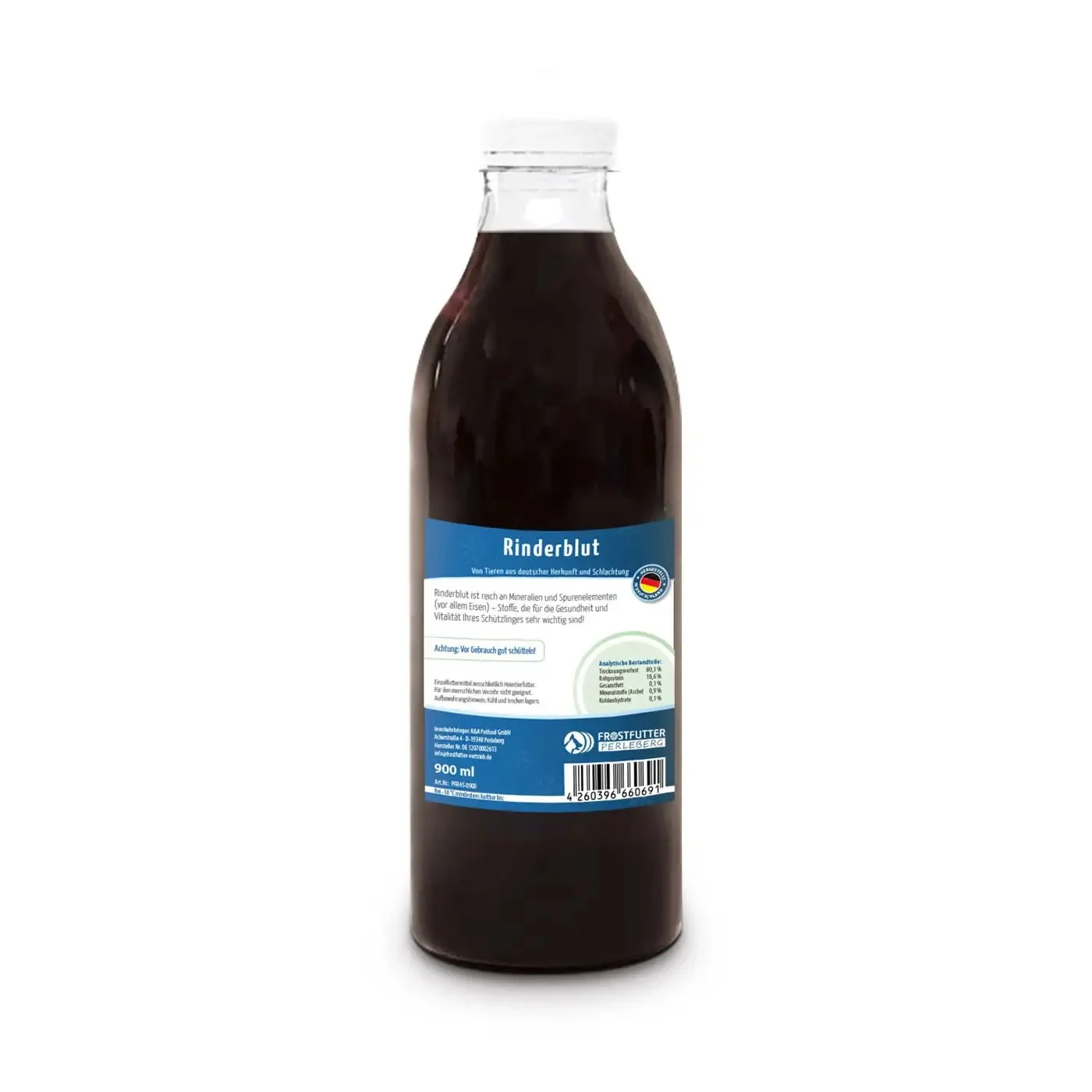


Beef Blood
- High in iron
- Especially nutrient-rich
- Complements any BARF meal
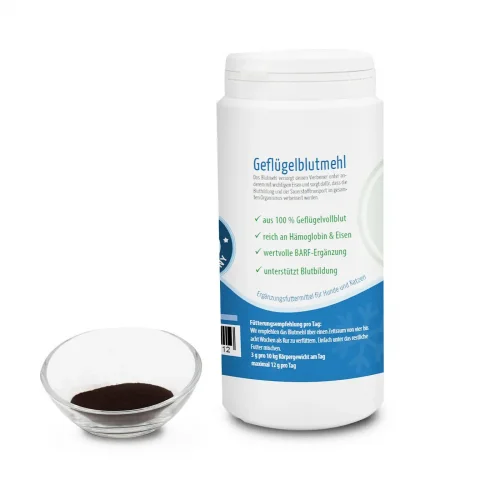

 frozen
 for Dogs
 for Cats
Natural Iron Source & Flavor Enhancer
Beef blood is a valuable addition to your pet's BARF diet. It is rich in essential minerals and trace elements such as iron and sodium, which play an important role in blood formation and support the immune system. Since most of the blood is drained during the slaughter process and muscle meat contains little remaining blood, it makes sense to regularly supplement your dog or cat's diet with fresh beef blood. Additionally, beef blood acts as a natural appetite stimulant, making any meal especially tasty – ideal for pets with a poor appetite.
Fresh and Conveniently Frozen
To easily portion and feed the beef blood, you can pour it into small ice cube trays after thawing and refreeze it. This way, all the valuable nutrients are preserved, and you can offer your pet fresh blood in the right portion size over an extended period. Thawed beef blood can be kept in the refrigerator for about two to three days and easily incorporated into the feeding plan.

Feeding Recommendation per Day:
5 ml of beef blood per 100 g of muscle meat
Tip: Beef blood can be easily pre-portioned using an ice cube tray and refrozen. This way, you can conveniently take the desired amount and mix it with the rest of the food.
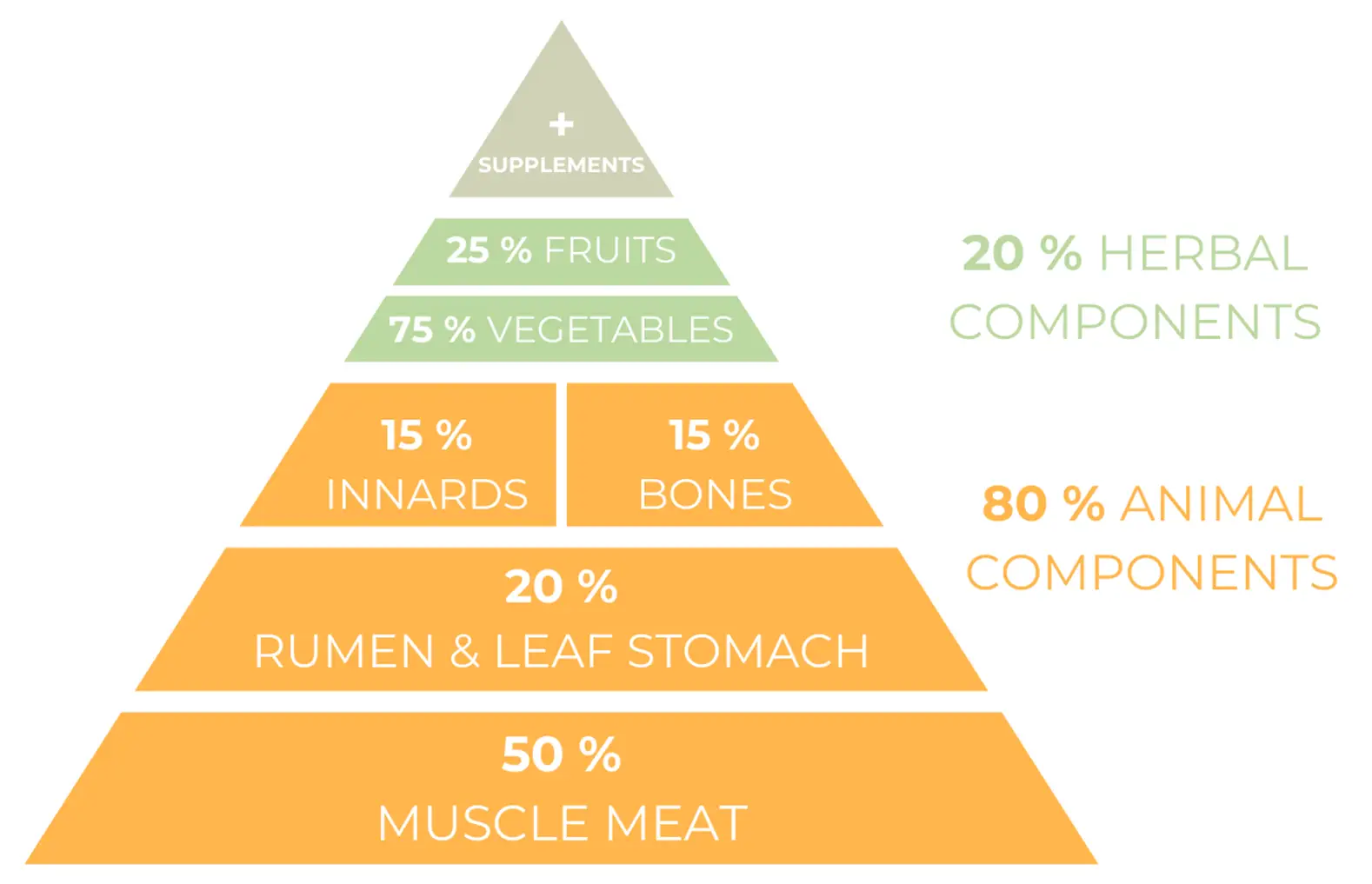
BARF pyramid for dogs
The BARF pyramid shown alongside illustrates how BARF meals can be structured for a healthy, adult dog. As a general rule, rations consist of 80 % animal and 20 % plant-based components, although not all elements need to be fed every single day. Feeding sick dogs or those with intolerances may look completely different. Therefore, the illustration should be seen as a general guideline only. Our nutrition experts are happy to help you with any questions about the right BARF ration for your four-legged friend.
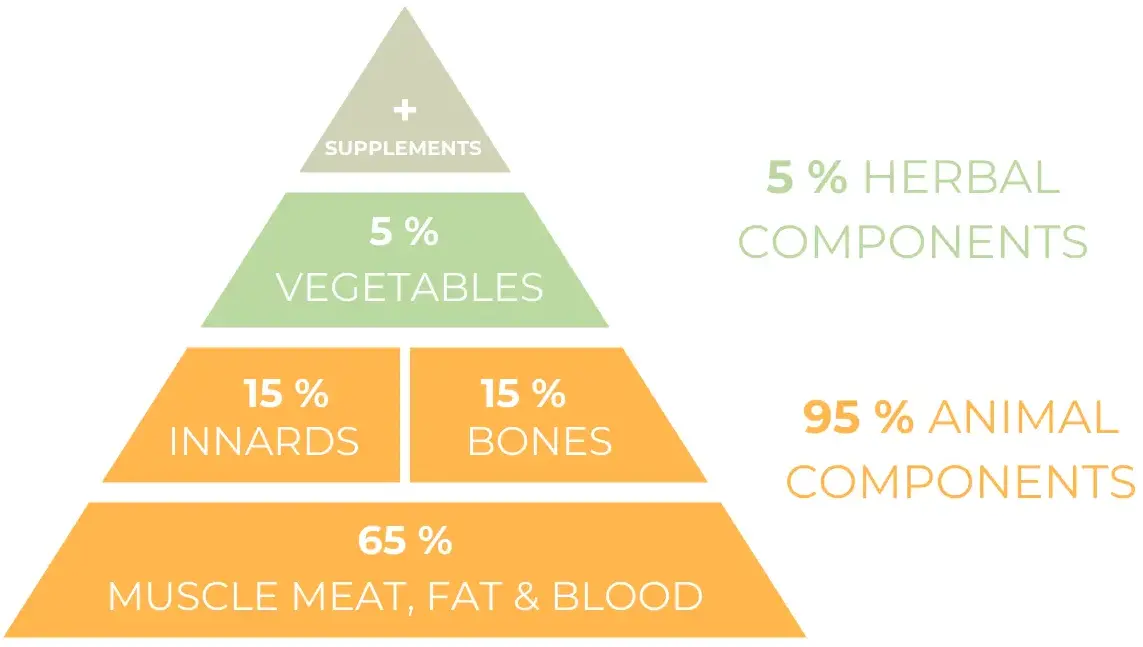
BARF pyramid for cats
The BARF pyramid shown here illustrates how a balanced BARF meal for a healthy, adult cat can be structured. However, it serves only as a rough guideline, as the composition can vary significantly depending on your cat's tolerance, acceptance, and individual needs. A BARF ration typically consists of 95% animal-based and 5% plant-based ingredients. Heart is considered muscle meat and should make up a maximum of 20% of the total ration. Offal includes, among other things, stomach and liver, as well as – depending on the cat's preferences – spleen, kidney, and lung. Suitable meaty bones include, for example, chicken necks, while breastbone is unsuitable for cats.

 Comments
Information about the authenticity of customer reviews can be found here.