





-
Shipping to your country not possible.


 69,99 € 82,57 € (5,83 € / kg)BARF-Package for PuppiesBARF-Package for Puppies Artikel-Nr.: PPR23
 -
Shipping to your country not possible.
 29,99 € 36,34 € (6,00 € / kg)BARF Trial Package for PuppiesBARF Trial Package for Puppies Artikel-Nr.: PPR06
 -
Shipping to your country not possible.
 2,99 € (5,98 € / kg)Organic Green Tripe from Cattle
 -
Shipping to your country not possible.

 4,64 € (9,28 € / kg)Organic Beef Lung
 -
Shipping to your country not possible.
 6,64 € (13,28 € / kg)Organic Beef Tartare
 -
Shipping to your country not possible.
 3,04 € (6,08 € / kg)Organic Chicken Necks (minced)
 -
Shipping to your country not possible.
 3,64 € (7,28 € / kg)Organic Beef Offal Mix
 -
Shipping to your country not possible.
 3,39 € (3,39 € / kg)Green Beef Rumen (minced)2 x 250 g (Packet) Reference: PFR05-0250Out of stock
 -
Shipping to your country not possible.
 2,89 € (5,78 € / kg)Beef Fat
 -
Shipping to your country not possible.
 3,79 € (7,58 € / kg)Pure Fish
 -
Shipping to your country not possible.
 6,69 € (6,69 € / kg)Ground Beef Heart
 -
Shipping to your country not possible.
 6,69 € (6,69 € / kg)Beef Heart (cut in pieces)
 -
Shipping to your country not possible.
 4,89 € (4,89 € / kg)Chicken Necks (Coarsely Ground)
 -
Shipping to your country not possible.
 4,99 € (4,99 € / kg)Beef Liver
 -
Shipping to your country not possible.
 2,89 € (5,78 € / kg)Beef Lung
 -
Shipping to your country not possible.
 9,29 € (9,29 € / kg)Minced Beef Muscle Meat
 -
Shipping to your country not possible.
 10,29 € (10,29 € / kg)Beef Muscle Meat (in Chunks)
 -
Shipping to your country not possible.
 4,99 € (4,99 € / kg)Beef Kidney
 -
Shipping to your country not possible.
 12,19 € (12,19 € / kg)Horse Muscle Meat (Coarsely Minced)
 -
Shipping to your country not possible.
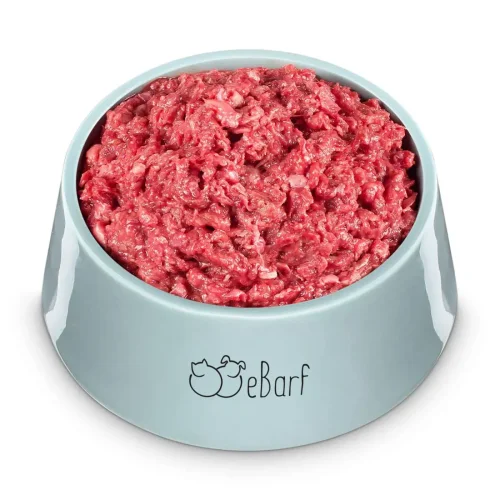 4,69 € (4,69 € / kg)Whole Minced Chicken
 -
Shipping to your country not possible.
 10,39 € (10,39 € / kg)Beef Tartare
 -
Shipping to your country not possible.
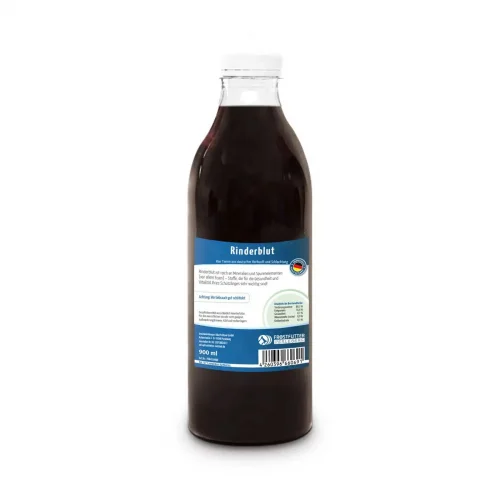 4,99 € (5,54 € / l)Beef Blood
 -
Shipping to your country not possible.
 3,24 € (6,48 € / kg)Green Lamb Tripe
 -
Shipping to your country not possible.
 3,24 € (6,48 € / kg)Bio Organic Rumen from Cattle
BARF for puppies
What is BARF and why is it so well suited for puppies?
BARF, short for “biologically appropriate raw feeding” or “biologically appropriate raw food,” is based on the idea of feeding dogs as naturally as possible. The concept is inspired by the original diet of wolves and other wild carnivores, which primarily consists of prey animals such as rabbits or deer. Therefore, BARF is often associated with the so-called “prey model” of feeding.
For puppies, this means receiving raw food portions that are modeled after such natural prey and precisely tailored to their needs during their growth phase. Fresh meat, raw meaty bones, organ meats, and small amounts of vegetables and fruits form the basis of this healthy puppy food. The goal is to offer the young dog a varied and natural diet that also meets its physiological needs. A closer look at a dog’s digestive system quickly reveals that it is designed for the processing of animal-based foods, and can only use plant components to a very limited extent.
Puppies benefit especially from BARF as it allows the food composition to be individually adapted to their needs and various stages of development. By precisely selecting and controlling the ingredients, it can be ensured that the growing dog receives all essential nutrients in optimal amounts. In addition, a natural puppy diet promotes healthy digestion, a stable immune system, and the development of strong bones and muscles. With the right composition of portions, BARF is an ideal method for puppies to lay the foundation for a long and healthy life.
Frequently asked questions about BARF for puppies
1. Can I start BARF feeding during the puppy stage?
Yes, BARF is a fantastic option for puppy feeding! This also applies to very young puppies, as long as the portions are carefully planned. From the 4th–5th week of life, puppies can be slowly introduced to raw feeding with small, easily digestible amounts of fresh meat. For growing dogs, it is especially important to regularly adjust the food to the age and weight of the dog to ensure adequate nutrient supply at all times.
2. How much BARF food does a puppy need per day?
The daily amount of food usually ranges between 4–10% of the puppy’s current body weight. This amount should be divided into two to four meals per day. As the puppy gets older and heavier, the food amount is adjusted accordingly. Regular weight checks are essential to determine the right portion at all times. When creating a BARF plan for puppies, especially for beginners, consulting a nutrition expert is highly recommended. You can also use our BARF calculator for puppies to determine the correct amount of food.
3. What are the most important components of a BARF portion for puppies?
A balanced BARF portion for puppies consists of muscle meat, raw meaty bones, and a variety of organ meats (e.g. heart, liver, and spleen) as well as small amounts of vegetables and fruits. Fresh green tripe is also a great and very healthy treat for puppies and can be a regular part of meals. Supplements such as high-quality oils (e.g. Omega-3-6-9 oil or salmon oil), seaweed meal, and cod liver oil are also essential. Other supplements like brewer’s yeast, rosehip powder, or green-lipped mussel can be added as needed.
4. What mistakes should I avoid when feeding puppies with BARF?
Common mistakes when BARF feeding puppies include an imbalanced portion and nutrient composition. This particularly applies to an improper calcium-phosphorus ratio and incorrect food quantity. Omitting important supplements such as oils or choosing the wrong ingredients can also lead to nutrient deficiencies or growth problems in the long term. In case of uncertainty, it is always advisable to consult a BARF advisor.
5. Do I need a feeding plan for my puppy?
Yes, an individual feeding plan is highly recommended when BARF feeding puppies. It ensures that portions are tailored to the specific needs of the puppy and provide adequate nutrition. You can either create such a plan yourself or have it made by an experienced BARF nutritionist to avoid mistakes.
For help in composing balanced meals, a BARF advisor or our BARF starter guide can be helpful. Additionally, complete BARF meals for puppies as well as BARF menus for puppies and BARF puppy packages can be a great support for beginners. Ready-made BARF is suitable for introducing puppies to BARF feeding; however, the menus should always be assessed for their suitability for the specific dog in the long term. We recommend preparing meals yourself using BARF meat, fruits, and vegetables to fully benefit from BARF nutrition for puppies.
BARF with eBarf – the healthiest foundation you can give your puppy. 100% natural, species-appropriate & Made in Germany.