






The benefits of Fix-BA(R)F
Special features of the Fix-BARF® and Fix-BAF® complete meals
A healthy and species-appropriate diet for cats and dogs has become an increasingly important topic among pet owners in recent years. The BARF diet in particular has gained enormous importance. It offers many benefits and can help your four-legged companion enjoy a long and healthy life.
The ready-to-serve Fix-BARF® complete meals provide all the positive qualities of raw meat feeding while offering you a unique way to feed your pet a balanced and uncomplicated BARF diet. Fix-BARF® products are not ordinary complete meals like the many products available on the market, but nutritionally complete pet foods that meet your pet’s needs. This means that every individual recipe contains all the important nutrients in the correct quantities. To achieve this, all animal and plant-based ingredients are combined in the correct proportions and supplemented with the necessary amounts of essential supplements. Every recipe for the Fix-BARF® and Fix-BAF complete meals is calculated separately and supplemented to meet the nutritional requirements of cats or dogs, making it nutritionally complete. As a result, the complete meals also comply with the legal requirements for complete pet food according to FEDIAF, the European Pet Food Industry Federation.
Harmful nutrient premixes in industrially produced complete meals
Industrially produced pet foods are manufactured using so-called premixes, which are available as ready-made mixtures. Manufacturers always add the same quantity of the same premix to their recipes. This ensures that they meet the legal minimum requirements. Vitamin D3, vitamin A, vitamin E, iodine, manganese, zinc and selenium are generally added. B vitamins are omitted because they are lost during the cooking process. This means that every cooked complete pet food produced industrially contains insufficient quantities of B vitamins. This is not quite as serious for dogs because they also receive fruit and vegetables, kidneys, tripe and other ingredients that contain B vitamins. The situation is very different for cats, however, because they do not eat these components, or do not consume them in sufficient quantities, and therefore depend on adequate supplementation with B vitamins.
However, B vitamins are not the only area in which the pet food industry’s premixes perform poorly. This approach also fails to achieve either the required calcium-to-phosphorus ratio of 1.15:1 for cats and 1.3:1 for dogs or the desirable potassium-to-sodium ratio of 2:1. Legislation even permits a calcium-to-phosphorus ratio of 2:1, regardless of the total amount of calcium and phosphate contained in the recipe. The potassium-to-sodium ratio is not taken into account at all. Some pet foods therefore contain enormous quantities of potassium and sodium. However, because only the ratio rather than the total quantity is assessed, these foods may still be classified as good complete pet foods. Large quantities of potassium and sodium are nevertheless suspected of contributing to kidney disease, among other conditions.
The same applies to iodine content. Iodine is believed to be partly responsible for the increasing number of cats suffering from hyperthyroidism. As iodine can be overdosed, it is essential to follow the feeding recommendations carefully. This is almost impossible when a premix is used.
Using the same premix for different pet foods can therefore result in significantly elevated nutrient levels, which may have serious consequences in some cases. A manufacturer generally has at least six to eight varieties of food in its range. All varieties contain the same premix in the same dosage. Manufacturers often disregard whether a recipe contains throat meat with parts of the thyroid gland, which contains large amounts of iodine, or fish, which is rich in iodine and vitamin D3. The premix is still added in the same quantity when bones are used or liver is included in the recipe. As a result, industrially produced pet foods regularly contain extremely high levels of vitamin A, vitamin D3 and calcium, which is anything but beneficial.
Only two values are legally regulated with maximum limits:
Vitamin A: 30,000 IU per kg of food (minimum requirement according to FEDIAF*: 208 IU per 4 kg cat)
Vitamin D3: 2,000 IU per kg of food (minimum requirement according to FEDIAF: 16 IU per 4 kg cat)
*FEDIAF represents the European pet food industry. It publishes the guidelines for pet food. The organisation is based in Brussels.
FEDIAF makes the following statement about feline nutrition:
"A cat needs almost twice as much protein as a dog. Vitamin A is essential, but within very precise limits. Too much liver, which is rich in vitamin A, can be harmful. An incorrect balance of essential fatty acids can cause a cat’s coat to lose its shine. Taurine, a vitamin-like substance, is important for preventing eye and heart disease."
This clearly highlights that vitamin A is only necessary and beneficial in small quantities. Nevertheless, the legal upper limit is extremely high and permits the addition of excessively large quantities.
The guide only briefly addresses essential fatty acids. For cats, these are linoleic acid, arachidonic acid (AA), EPA (eicosapentaenoic acid), DHA (docosahexaenoic acid) and dihomo-gamma-linolenic acid (DGLA). Alpha-linolenic acid (ALA) is additionally essential for dogs, while they only require AA during growth. However, most industrially produced pet foods do not contain sufficient quantities of these fatty acids or contain them in the wrong proportions. This is primarily because they use meat from intensively farmed livestock. Compared with meat from animals raised under species-appropriate or organic conditions, this contains significantly lower levels of essential omega-3 fatty acids.
To meet nutritional requirements and create the correct ratio of omega-3 to omega-6 fatty acids, all Fix-BARF® complete meals therefore contain additional salmon oil.
Preparing nutritionally complete BARF meals yourself
When BARF feeders want to prepare their four-legged companion’s food themselves at home, they should always have a recipe available. This may come from specialist forums or nutritional advisers, or it may have been calculated independently.
In principle, all recipes are created according to the same method: the nutritional requirements specified by the NRC, the National Research Council, form the basis of the calculation. The NRC establishes the nutritional requirements for the pet food industry, including FEDIAF. The nutritional values of the individual recipe components are determined and compared with the nutritional requirements.
For the nutritional values, we use sources such as the following:
German Nutrient Database
Souci, Fachmann and Kraut nutrition tables
German Federal Ministry of Food and Agriculture
Scientific studies, for example on the taurine content of animals used for pet food
Our own specific analyses, for example of beef breastbone
The calculated nutritional values of the individual recipe components are then added together. The difference between the amount of an individual nutrient and the corresponding nutritional requirement must then be supplemented with suitable additives. In this way, homemade BARF can be prepared to meet nutritional requirements. For dogs, the 80:20 ratio can be used as a rough guide, while cats are generally fed 95% animal-based and 5% plant-based ingredients. The precise composition of the animal-based portion can vary considerably between individual animals.
Quick & easy BARF feeding with Fix-BARF®
Fix-BARF® complete meals combine the benefits of industrially produced ready-made food with those of homemade BARF. They are produced according to individual recipes, each with its own nutritional calculation, while still meeting the legal requirements for complete pet food. The major advantage is that your cat or dog receives only the nutrients it genuinely needs, in the correct quantities and proportions. This in turn reduces the burden on the kidneys and liver, which would otherwise have to eliminate the excess supplements. At the same time, feeding is extremely easy and just as uncomplicated as opening a tin of wet food.
Another crucial advantage is that BARF feeding allows many nutrients to be supplied through natural supplements. These natural sources of nutrients include blood, seaweed meal, eggshell powder and bone meal. Compared with synthetic preparations, they have significantly greater bioavailability and can therefore be utilised more effectively. For this reason, we also use as many natural additives as possible in the Fix-BA(R)F® complete meals.
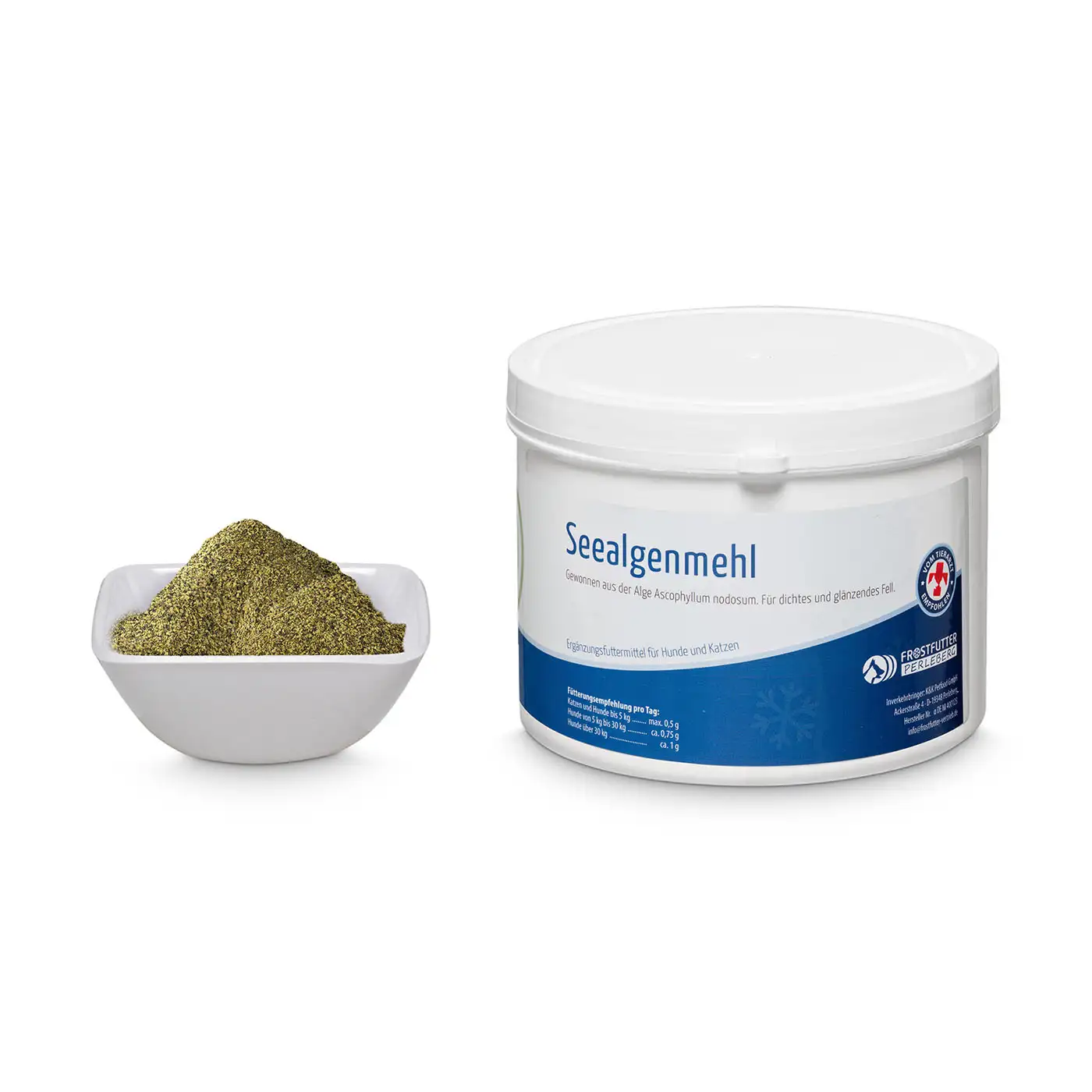
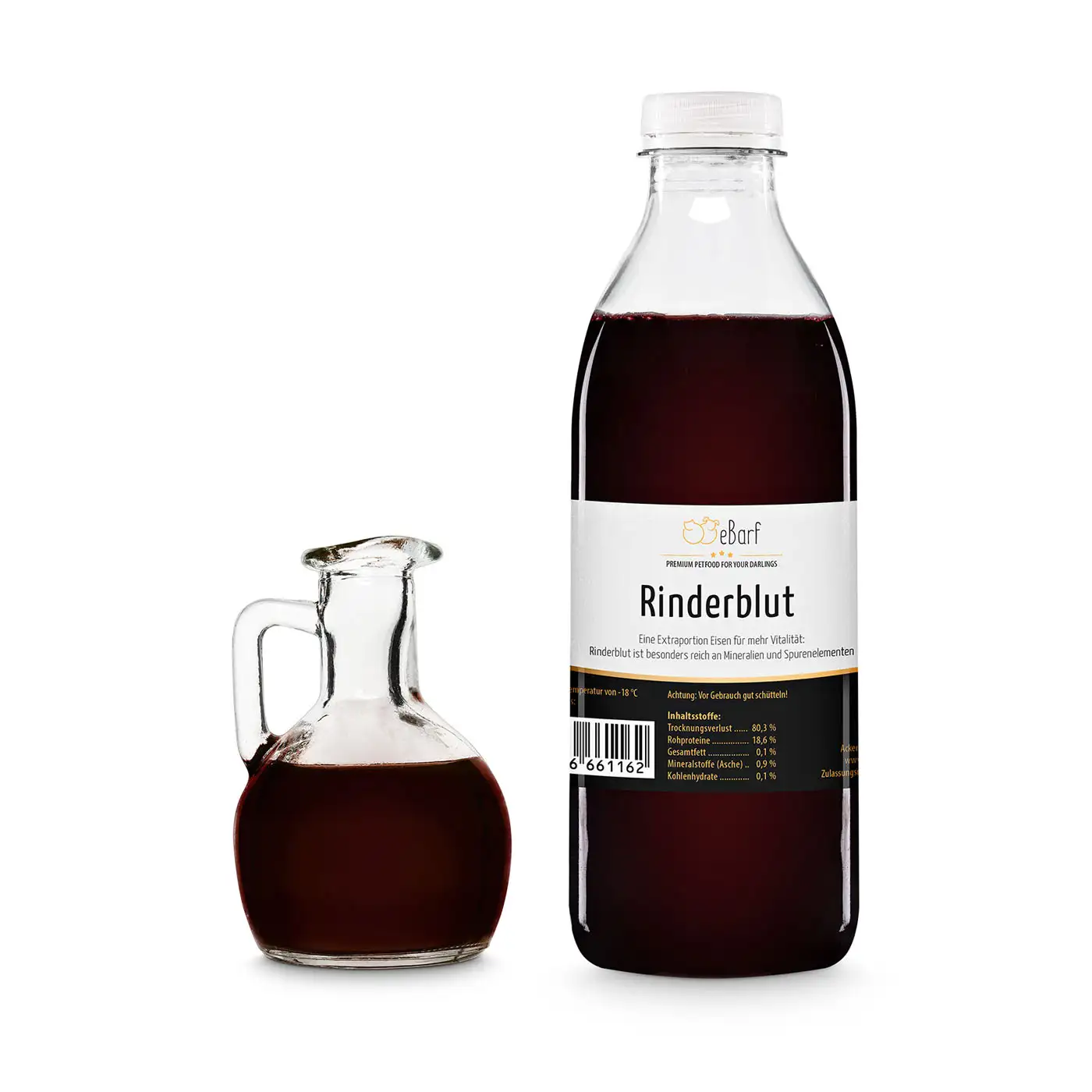
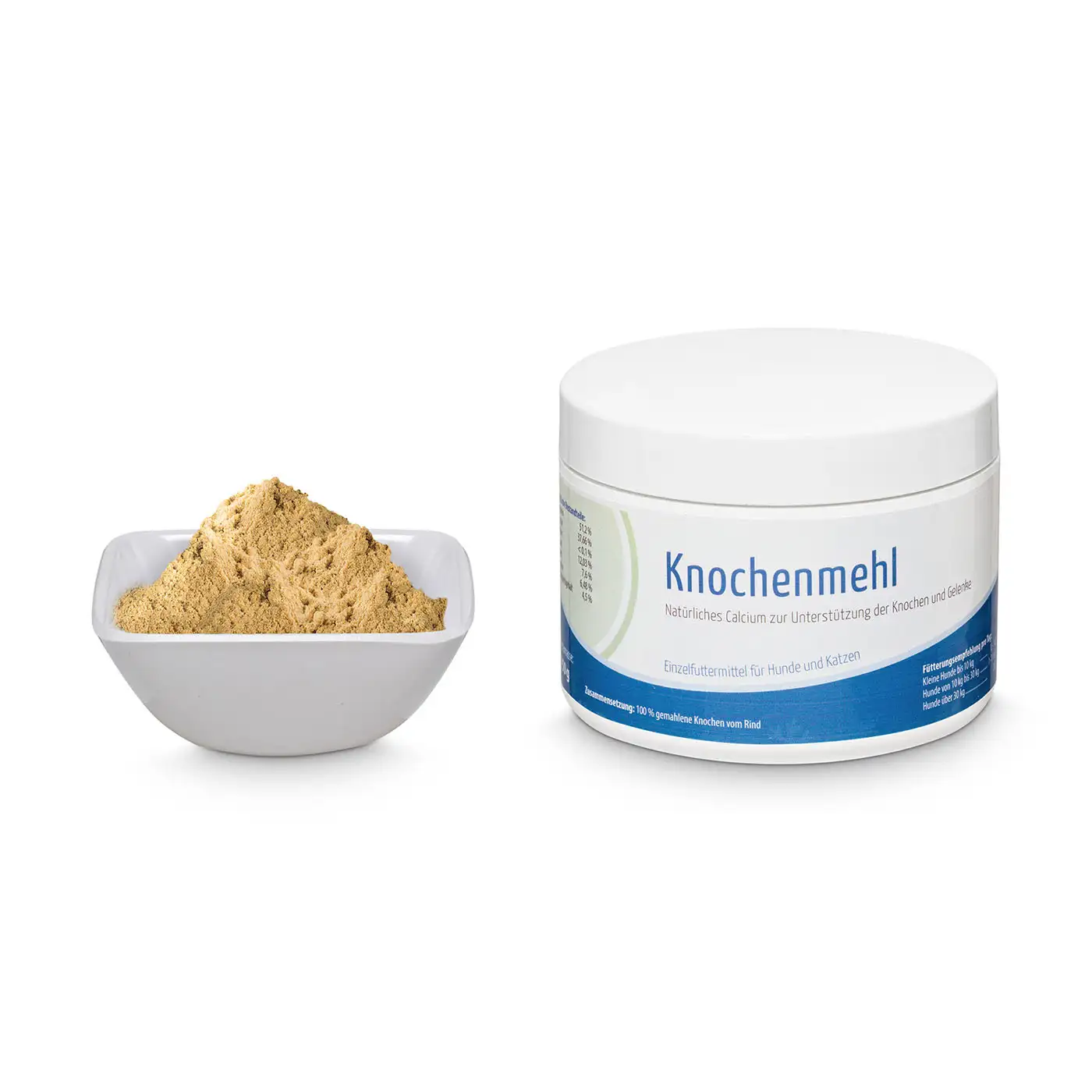
Bioavailability is also the crucial reason why the nutritional requirements found in the literature can only be applied to BARF meals to a limited extent. The NRC’s nutritional requirements, for example, were calculated on the basis of ready-made food containing a high proportion of carbohydrates, including grains. These contain what is known as phytic acid, which inhibits the absorption of certain nutrients such as calcium and zinc. BARF meals, however, contain no grains and hardly any carbohydrates. As a result, they contain no substance that could negatively affect nutrient absorption. Bioavailability is therefore significantly higher with BARF, which means that a smaller quantity of nutrients is generally sufficient to meet nutritional requirements. This is not taken into account in ready-made food. Although the industrial pet food sector is increasingly moving away from foods containing large amounts of grains and carbohydrates, the same premix is still added to all products. Cats and dogs are therefore often supplied with much higher quantities of nutrients than necessary, which is ultimately anything but beneficial or sensible.
A good alternative to canned food
Fix-BAF® offers a genuine alternative to industrially produced canned food. Like the raw Fix-BARF® complete meals, it is produced according to individual recipes and then gently cooked in its own juices. The only difference is that additional B vitamins are added before the cooking process, in sufficiently large quantities to ensure that enough remain available after cooking. All Fix-BAF® complete meals are cooked in their own meat juices and filled cold. This makes them particularly high-quality compared with conventional canned food, which is diluted with water and filled while hot.
As you can see, the complete meals offer clear benefits over industrially produced pet foods. They make providing your four-legged companion with a healthy and balanced diet extremely easy. Try them for yourself and treat your cat or dog to delicious raw or cooked complete meals in a variety of flavours that are guaranteed to taste great while being 100% species-appropriate and healthy.
Fix-BA(R)F® – for quick and easy raw feeding for your four-legged companion!