





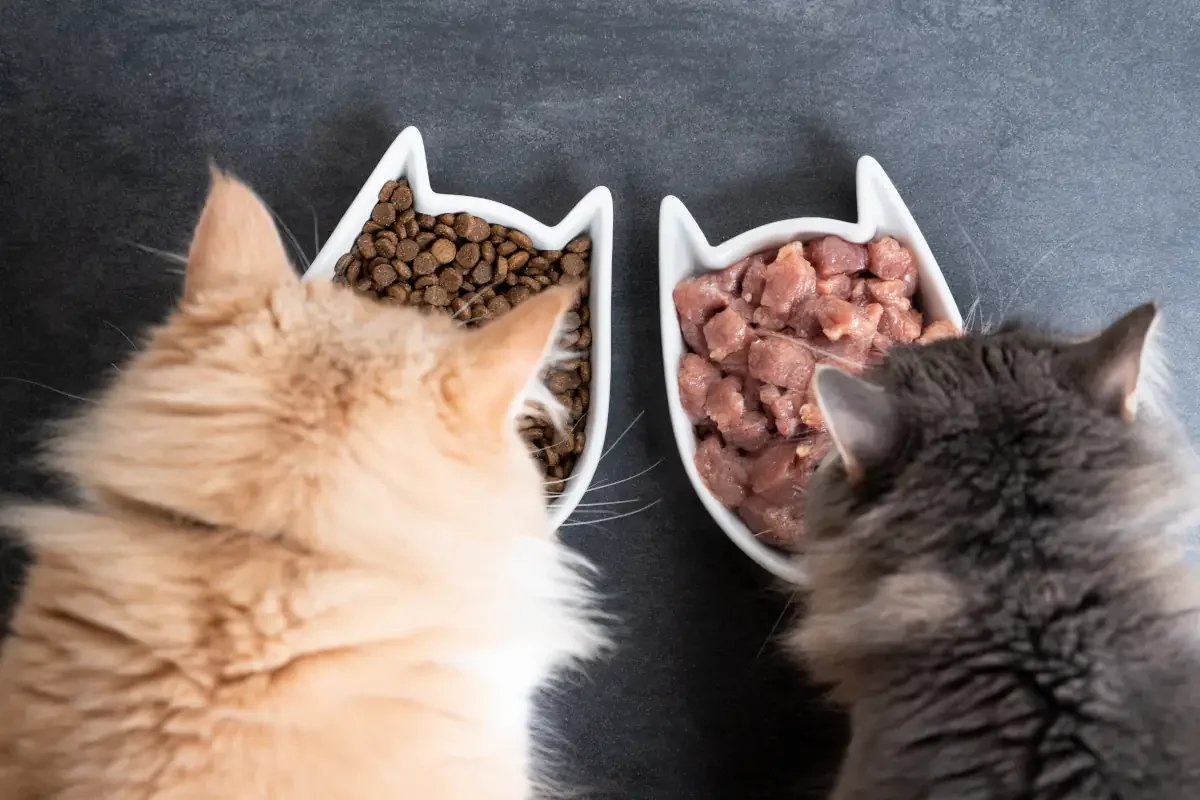
Transitioning Your Cat from Dry and Wet Food to BARF
Cat owners can usually tell a story or two about this: just when you’ve found a type or flavor of food your cat likes, she suddenly refuses it again. Or she’ll only eat her usual food and won’t be persuaded otherwise. Only a few cats like BARF, wet food, dry food, treats, milk, table scraps, etc., equally well. Most cats settle on one type of food and stick with it. Early imprinting during kittenhood and adolescence has a decisive influence on this.
The Type of Food Determines the Transition Period
Besides the smell—which must appeal to the cat—the taste and especially the texture of the food are important. Cats can sense precisely what they have in their mouths with their tongues. If your cat has eaten firm, square dry food for many years, she’ll initially reject anything soft or moist.
Some cats tend to gulp their food down, others nibble small portions throughout the day, while some are satisfied with two proper meals a day. Cats accustomed to wet food are generally easier to transition to BARF than those that eat only dry food. Cats that occasionally receive raw meat or outdoor cats that catch mice have the best chances for a quick and smooth transition.
The transition to raw feeding with Fix-BARF® takes varying amounts of time. It can range from a few days to three months or even longer—anything is possible. It must also be said that some cats will permanently refuse raw feeding. However, this is extremely rare and usually occurs in cats that have been fed only dry food since kittenhood. In such cases, our cooked Fix-BAF® is an ideal alternative.
Getting Cats Used to Raw Meat
Before switching completely, it’s often helpful to get your cat used to raw meat first. Since cats have individual tastes, it may take some time to find a type of meat your cat will accept. Possible options include chicken, beef, turkey or horse meat. You can also try organ meats such as stomachs, hearts or liver. Up to 20% of the daily food intake can be replaced with raw, unsupplemented meat. Supplementing with your cat’s usual food still ensures adequate nutrient supply.
For cats that are used only to dry food, the transition can take longer. First, they need to get accustomed to the moist texture. Add a little more water to the dry food with each meal. Once your cat accepts the moist food, you can switch to a high-quality wet food with a high meat content. Again, patience is key—add one more spoonful of the new food per meal while reducing the old one. It can also help to crush the dry food into a fine powder and sprinkle it over the new food so the cat recognizes the familiar smell.
Side Effects During the Food Transition
Occasionally, digestive issues such as diarrhea or vomiting may occur during the transition—this can’t always be avoided. Adding natural intestinal bacteria in powdered form has proven very helpful in such cases. The digestive system is often adapted to a specific diet for years. It takes time for the body to adjust and for the stomach and intestinal flora to rebalance. The pancreas, which may have been underutilized for years due to a carbohydrate-heavy diet, must also adapt to the higher fat content in BARF meals. Give your cat the time she needs and slow down the transition process if necessary.
Tips and Tricks for Transitioning Food
Meat as a Toy
Cats often play with their prey after catching it. Imitate this behavior by tying a piece of meat to a string and letting your cat “hunt” it. Meat can also be used as a reward or a new treat—cats respond to this quickly.
Psychological Tricks
Take advantage of your cat’s curiosity by “accidentally” dropping a piece of meat. Or place a small plate of meat near your cat’s feeding area and firmly forbid her from touching it. With a bit of luck, she’ll soon be eager to get to that food. This works even better if you have two cats—one gets to eat the meat, and the other, who’s still transitioning, doesn’t.
More Ideas for Switching to Raw Meat
- Serve the meat differently—for example, coat small pieces with crushed treats or dry food, or sprinkle the powder on top.
- Briefly pour a little boiling water over the meat or lightly cook the whole raw meal at first. Acceptance is often higher because cooking releases more flavor and aroma. Gradually reduce the cooking time until your cat eats the meat completely raw.
- After thawing, add some warm water (max. 60 °C) to bring the meal to room temperature—this also increases acceptance.
- Mix small pieces (or minced meat) of raw meat into the usual food. Sometimes “homeopathic” amounts are enough. Gradually increase the proportion of raw meat or Fix-BARF® in your cat’s food.
- Mix the chopped or minced meat with tempting ingredients like cheese, egg yolk, yogurt, quark, or butter—even “meat with whipped cream” is allowed and often happily eaten.
Patience Is Key When Transitioning Food
Especially for picky cats, patience is the most important requirement for a successful transition to raw feeding. If your cat shows strong resistance, take a step or two back and continue from the point where things were working well. Stay calm and persistent! Cats are creatures of habit and quickly notice when you give in.
Often, only one meal per day is switched to the new food at first, while the other remains the usual one. Sometimes it’s necessary to offer dry food together with wet or raw food during the transition. Keep this period as short as possible. Ideally, the different types of food should only overlap temporarily. If you alternate between a meal of the old food and a raw meat meal, allow about four to six hours between meals so your cat’s digestive system can adjust.
Sometimes the Transition Doesn’t Work
Despite all efforts, it may not always be possible to transition a cat to a BARF diet. This is often due to long-standing feeding habits and preferences that can’t be changed. Some cats may react aggressively to persuasion attempts or completely refuse to eat. Both are valid reasons to stop trying—it makes no sense to force a cat to eat a new type of food.
Long-term food refusal lasting more than 24–48 hours can already lead to liver damage, especially in overweight cats. As an alternative, you can offer Fix-BAF®, which consists of gently cooked Fix-BARF® complete menus.
However, in most cases, about 95% of cats—sooner or later—are successfully transitioned to raw feeding. Some cats even accept the new food immediately, as if they’d never eaten anything else.
And one final tip: if you can’t ensure that you’ll always have enough time to prepare BARF meals regularly, you should reconsider the switch. Alternatively, you can rely on the Fix-BARF® Complete Menus developed by our cat expert and animal health practitioner Petra von Quillfeldt. These are raw meat meals, just like homemade, providing your cat with all the nutrients she needs for a healthy life. As a complete food, these menus can be fed long-term—making it easy to provide your cat with a healthy and balanced BARF diet.
We wish you much success with the transition and your cat a hearty appetite with her new BARF meals!
Your eBarf Team