






Benefits & Risks of Raw Feeding
What to Consider When BARFing Dogs
BARF for Dogs: Benefits & Risks
Hardly any feeding concept is as polarizing as BARF. Some dog owners swear by the positive changes after the diet transition, while veterinarians and scientists mainly warn about risks. As so often, the truth lies somewhere in between: raw feeding can offer many advantages but also requires a certain amount of knowledge and care. This article shows you which opportunities BARF offers and what you should pay attention to so that it truly benefits your dog.
Benefits of BARF – What Studies & Practice Suggest
1. The Visible Benefits & Changes
Many dog owners report that their dog shows noticeable changes shortly after switching to BARF. These are small, everyday signs that clearly show that the body often processes fresh, natural ingredients differently than highly processed pet foods.
One of the most obvious changes is stool output. Because BARF contains no fillers and the body can better utilize the ingredients, there is simply less “waste” that needs to be excreted. BARFed dogs therefore often produce smaller, well-formed and often less smelly stool volumes – a very direct sign that fewer unnecessary ingredients are in the food.
The dog’s behavior also often changes. Many dogs appear more balanced, calmer in everyday life and at the same time more active when needed. They seem to be able to distribute their energy more evenly throughout the day and use it more deliberately. This may be due to the fact that fresh ingredients are metabolized more efficiently, which reduces the strain on digestion and avoids major fluctuations in energy levels.


One particularly noticeable aspect is the joy of eating. Raw food simply smells and tastes different than industrially processed food. Many dogs show a level of enthusiasm for BARF that owners have never seen before.
This goes hand in hand with an overall natural and species-appropriate diet that corresponds to what dogs are evolutionarily accustomed to. The ingredients are clearly recognizable, fresh, and unprocessed. Many owners consider this transparency a decisive advantage. No long declarations, no vague animal by-products, no artificial flavors or preservatives – you know exactly what ends up in the bowl.
Another point that often surprises owners: many BARFed dogs drink significantly less, without it being a cause for concern. Because raw food contains a naturally high moisture content, the dog absorbs a large part of its fluid intake through the food itself. This is completely normal and even desired.
And finally, many owners appreciate the flexibility. No dog is the same, and BARF meals can be easily adapted to allergies, activity levels, preferences, age, etc. A feeding plan can be adjusted or fine-tuned at any time without having to completely switch foods.
Visible benefits of BARF summarized:
Smaller, well-formed stool volumes
overall more balanced behavior
higher activity levels and more vitality
significantly more joy while eating
lower fluid intake, as BARF already contains a lot of moisture
feeding natural, unprocessed ingredients
species-appropriate, fresh nutrition
full control over all ingredients
no hidden additives or unclear declarations
individual adaptation to needs & preferences
2. The scientifically examined benefits – what studies suggest about BARF
In addition to the visible changes that many owners notice in everyday life, there are also scientific indications of how BARF may affect your dog’s body. Research on raw feeding is still young and nowhere near as extensive as that on industrial pet food, but the results so far paint an interesting and quite positive picture.
One area that has been examined more frequently in studies concerns energy metabolism. In several investigations – including some from Finland – raw-fed dogs showed values indicating a more stable metabolism. These include lower triglycerides, more balanced blood sugar levels, and partially elevated ketone bodies. This sounds technical but essentially means: the body processes the energy from fresh ingredients differently – often more steadily and with fewer fluctuations. This can be especially beneficial for active dogs.
The gut microbiome is also a major focus of research. The composition of gut flora has a huge influence on digestion, the immune system, and overall well-being.


Studies show that BARF can shift the gut flora more toward a carnivore-like profile – similar to what is found in wild carnivores (e.g., wolves). In some investigations, a higher bacterial diversity was also found, which is often considered a sign of healthy and resilient digestion.
Several studies also deal with digestive end products, meaning what the body actually does with the nutrients. BARF performed well here: nutrient utilization was more efficient in the studies, and both the composition and quantity of stool differed clearly from that of dogs fed highly processed pet foods.
All these findings are not yet definitive proof. Considerably more long-term research would be necessary for that. But they show that raw feeding is more than just a trend: it has concrete effects on how the dog’s body works, uses energy, and how digestion develops. These results support what many owners already observe in everyday life: BARF can support a dog’s body in several areas – even if not all connections are fully understood yet.
Scientifically supported benefits at a glance:
a changed, partially more stable energy metabolism
tendentially lower blood sugar and triglyceride levels
potentially higher diversity of gut flora
more favorable digestive processes & better nutrient utilization
a gut flora more similar to that of naturally fed carnivores
The risks of BARF feeding – what should be considered
As many positive experiences as there are with BARF, it is just as important to keep potential challenges in mind. Not to discourage anyone, but because a well-founded decision is only possible when you know both sides. Many risks can be managed well – but only if you understand them.
A key point is hygiene when handling raw meat. Meat is a natural product and may contain bacteria that can be relevant for both dogs and humans. A healthy dog can compensate for many of these germs well, as its digestive system is designed for this. However, in everyday life BARF also means: washing hands, cleaning surfaces, and storing meals properly – especially if children, elderly people or immunocompromised individuals live in the household, strong attention should be paid to kitchen hygiene.
Another important aspect is nutrient supply. A dog does not simply need a portion of meat, but also offal, bones, vegetables, fruit and supplements in order to achieve, for example, a balanced ratio of calcium, phosphorus, vitamins and trace elements. If rations are put together without a plan, deficiencies or excesses of certain nutrients may occur in the long term. However, this risk is not related to BARF itself – but to a lack of knowledge or poorly planned recipes. A good feeding plan or professional advice can provide a lot of safety and help minimize the risk.

Bones are also a topic that is often viewed critically. They provide valuable minerals and support your dog’s natural chewing behavior. However, they are not suitable in every form for every dog. Bones that are too hard or too small can lead to dental problems, constipation, or in rare cases even injuries in the digestive tract. Many owners – especially of dogs that gulp their food – therefore choose ground bones or alternatives such as bone meal or other calcium supplements. For a healthy dog with good chewing habits, suitable raw bones such as poultry necks, carcasses and wings as well as beef or veal brisket bone in pieces are completely safe. It is best to observe your dog during the first bone meals to see how well it handles them. This is recommended not only for bones but also when giving larger or harder chew items.
The practical effort should also not be forgotten. BARF means: freezing portions, thawing, preparing, planning freezer space. Especially at the beginning, this can feel exhausting. With some routine, however, it becomes much easier – but you should still honestly assess whether your daily life allows for it.
The final point concerns the state of research. While there are many studies on dry and wet food, research on raw feeding is much more limited. Above all, there is a lack of long-term studies and targeted research on BARF feeding for dogs with certain (chronic) illnesses. This does not automatically mean that BARF is less safe – only that there is less scientifically documented data.
In summary: BARF is a very natural and often well-tolerated form of nutrition – but not one that should be tried “just like that.” Those who take the time to understand the basics, work cleanly, and compose rations thoughtfully can reduce most risks quite easily.
The risks at a glance:
Germ contamination from raw meat, especially without sufficient hygiene
problems caused by feeding unsuitable bones
higher planning effort, especially in the beginning
errors in nutrient supply when rations are poorly composed
few (long-term) studies
Why veterinarians often assess BARF cautiously
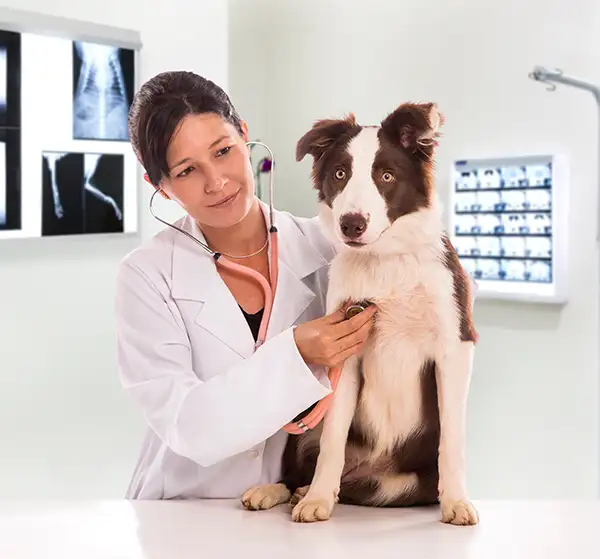
The fact that many veterinarians react cautiously to BARF is often less due to fundamental rejection and more to structures within veterinary education. Nutrition is usually only a marginal topic there, and raw feeding as such plays virtually no role in curricula. Many veterinarians therefore know BARF primarily from guidelines and studies, which in turn are mostly financed by the pet food industry and often do not paint a very positive picture.
Since there is significantly less scientific data on raw feeding, the cautious attitude of many veterinarians is understandable. At the same time, a limited study base does not mean that BARF is bad or dangerous – but simply that less money has been invested in research, because unlike the large commercial pet food industry, the raw food sector mainly consists of smaller companies.
Final assessment: BARF is useful when done consciously
When comparing the available data, scientific indications, and numerous practical everyday experiences, a balanced picture emerges: BARF can bring noticeable benefits for many dogs – especially regarding digestion, microbiome, energy balance, and overall well-being. Feeding fresh, unprocessed ingredients corresponds to what many dogs tolerate well, and it offers owners a level of transparency and flexibility that industrially produced pet food cannot provide.
At the same time, BARF is not a method to introduce casually. The potential risks are real, but manageable if you know them and work carefully from the start. Hygiene, correct composition of rations and an honest assessment of your daily routine play an important role. What research still lacks are long-term studies – a point that applies to several feeding forms, not just BARF.
When done correctly, BARF is neither a miracle cure nor a risk, but a very natural, flexible and for many dogs extremely suitable form of nutrition. It requires some preparation but often rewards with visibly more vitality, high digestibility, and genuine joy while eating.
For BARF to function safely and effectively, three things are especially important:
1. A balanced, correctly calculated ration that covers all essential nutrients
2. Clean and responsible handling of raw meat to avoid hygiene and contamination risks
3. Consultation with experts such as animal health practitioners, nutritionists, or veterinarians – especially for puppies, senior dogs or those with pre-existing conditions
In the end, the best feeding method is the one that benefits your dog, fits into your daily life, and can be implemented with confidence – whether you feed BARF, cook meals, or choose conventionally produced dry or wet food. It must suit you, your dog, and your lifestyle.
Frequently asked questions about the benefits & risks of BARF (FAQ)
What benefits does BARF offer for my dog’s digestion?
The visible and scientifically examined benefits of BARF on your dog’s digestion can be found in the section "Benefits of BARF – what studies & practice suggest".
Do BARF-fed dogs produce less stool?
You can find the answer to whether BARF-fed dogs produce less stool in the section "The visible benefits & changes".
Does my dog really become more balanced or active with BARF?
How your dog’s behavior may change with BARF feeding can be found in the section "The visible benefits & changes".
How high is the risk of germs such as Salmonella in BARF?
You can learn more about the risk of germ contamination in BARF in the section "The risks of BARFing – what should be considered".
Can my dog develop deficiencies from BARF?
Important information about deficiency risks in BARF can be found in the section "The risks of BARFing – what should be considered".
Are raw bones dangerous when feeding BARF?
Whether raw bones are dangerous in the context of BARF feeding can be found in the section "The risks of BARFing – what should be considered".
Is BARF dangerous for children or elderly people in the household?
You can find all important information regarding household risks of BARF in the section "The risks of BARFing – what should be considered".
Studies on raw feeding of dogs
Sandri, M., Dal Monego, S., Conte, G., Sgorlon, S., & Stefanon, B. (2017). Raw meat based diet influences faecal microbiome and end products of fermentation in healthy dogs. BMC Veterinary Research, 13, 65. (Full Text).
Herstad, K. M. V., Gajardo, K., Bakke, A. M., Moe, L., Ludvigsen, J., Rudi, K., Rud, I., Sekelja, M., Skancke, E., & et al. (2017). A diet change from dry food to beef induces reversible changes on the faecal microbiota in healthy, adult client-owned dogs. BMC Veterinary Research, 13, 147. (Full Text).
Sandri, M., Sgorlon, S., Scarsella, E., & Stefanon, B. (2020). Effect of different starch sources in a raw meat-based diet on fecal microbiome in dogs housed in a shelter. Animal Nutrition, 6(3), 353–361. (Full Text).
Xu, J., Becker, A. A. M. J., Luo, Y., Zhang, W., Ge, B., Leng, C., et al. (2021). The fecal microbiota of dogs switching to a raw diet only partially converges to that of wolves. Frontiers in Microbiology, 12, 701439. (Full Text).
Holm, S., Baarman, E., Anturaniemi, J., Hemida, M., Salin, S., Vuori, K. A., Moore, R., & Hielm-Björkman, A. (2025). The effect of a kibble diet versus a raw meat-based diet on energy metabolism biomarkers in dogs. The Veterinary Journal, 314, 106462. (Full Text).
Lyu, Y., Li, Y., Fan, Z., & Li, X. (2025). Current evidence on raw meat diets in pets: A natural symbol, but a nutritional controversy. Animals, 15(3), 293. (Full Text).
Treat Therapeutics & The Nutriment Company (n. d.). Trust Your Gut Study – Effects of raw feeding on the gut microbiome of dogs. Unpublished study, 101 dogs, 35 days. Retrieved from https://www.trustyourgut.pet/de/the-study/