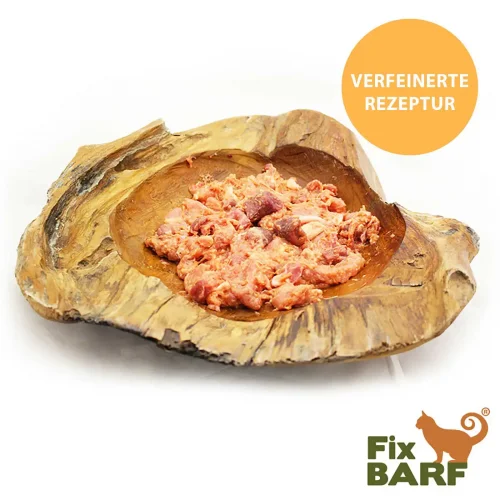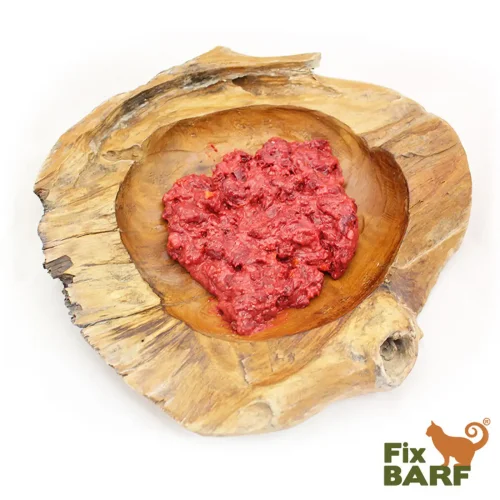





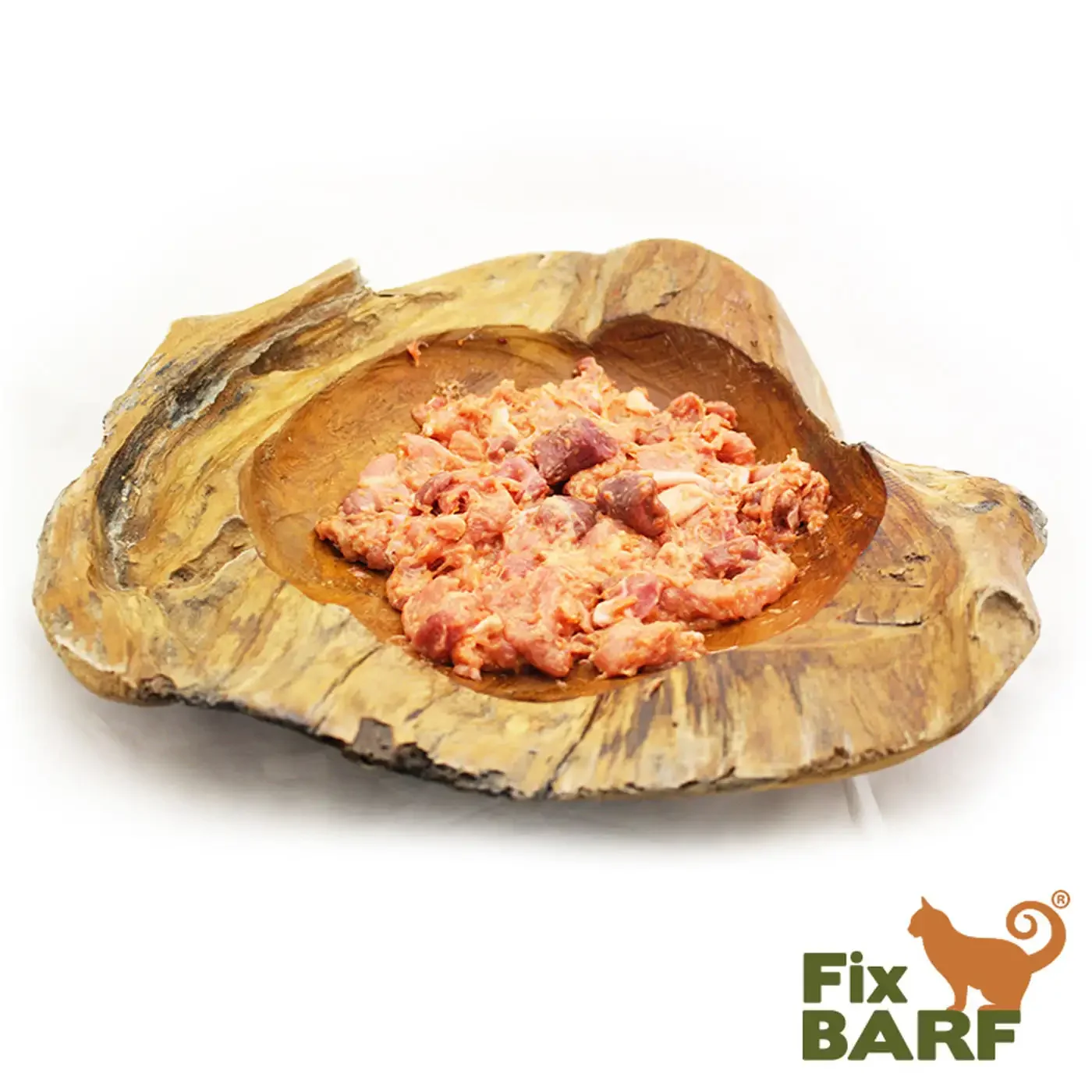

Chicken Renal Diet Food - Fix-BARF®
- High-quality natural ingredients
- 30% reduced phosphate content
-
special renal diet food
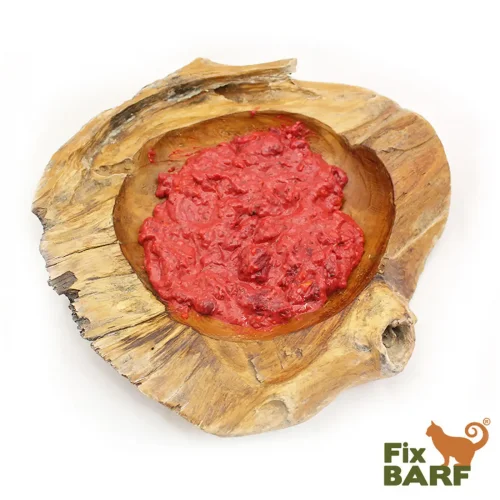
Chicken & Beef Kidney Diet Food - Fix-BARF®
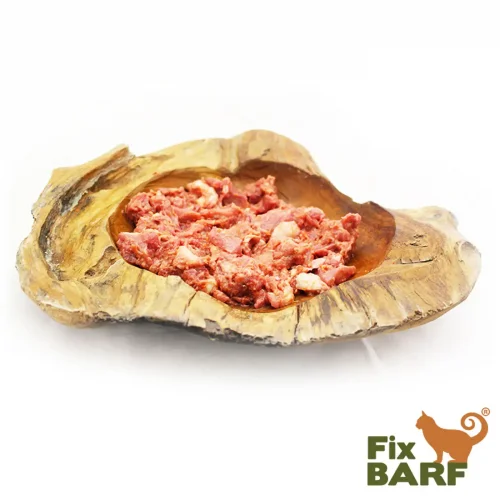
Turkey Renal Diet Food - Fix-BARF®
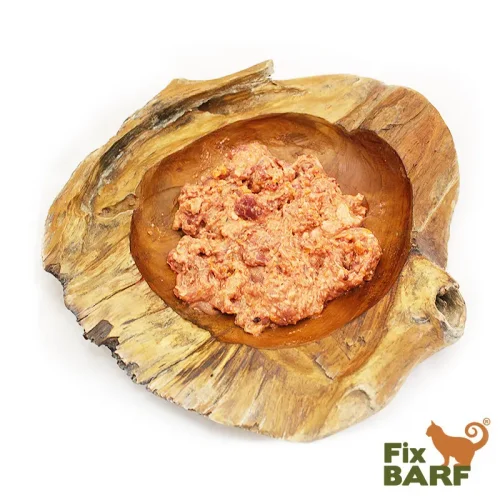
Fix-BARF® Turkey & Chicken Renal Diet Food

 frozen
 for Cats
Easily digestible food for cats with kidney disease
As with all our renal complete menus from the Fix-BARF® range, this variety is also a balanced complete dietetic food for cats to support renal function in cases of chronic renal insufficiency. The main ingredients of this tasty raw meat menu are fresh chicken breast meat as well as chicken hearts and liver. Combined with an extra portion of fat, this complete menu is guaranteed to be a healthy treat for your cat.
Special supplements support health
Unlike conventional renal foods, we do not use any grains or other plant-based ingredients in our Fix-BARF® renal, apart from important indigestible fibre in the form of pumpkin. The renal Chicken complete menu is particularly low in sodium and contains increased amounts of iron, B vitamins, vitamin E and taurine to support your cat with kidney disease. The addition of pectin rounds off this renal meal and provides further relief for the kidneys, as it binds toxins. The phosphate content is reduced by 30 %, while calcium is supplemented to meet nutritional requirements. Overall, this is a high-quality BARF complete menu that is perfectly tailored to the needs of cats with renal insufficiency.
A complete food developed with extensive know-how
In our raw meat menus for cats with kidney disease, we have deliberately chosen not to reduce the protein content below the required level. This makes it possible to counteract the loss of muscle mass that would occur with long-term protein deficiency, while still offering a healthy food that supports your cat in the best possible way. The moderate protein content in our menus is achieved exclusively through high-quality animal proteins. Please take this into account when assessing the protein and phosphate levels in our renal complete menus, as well as the significantly smaller feeding amount your cat needs with our high-quality Fix-BARF® compared to conventional renal diets.
This product was developed in collaboration with our animal naturopath Petra von Quillfeldt. You can find more information about feeding cats with chronic renal insufficiency in our blog post Renal insufficiency in cats.





Please note: The renal diet food has a significantly reduced phosphorus content, which is why the recommended feeding period is initially limited to 6 months. It is recommended to seek the advice of a veterinarian before using the food or extending the feeding period. Regular blood tests are advisable to detect a possible phosphorus deficiency at an early stage and to assess the progression of the condition under this diet as accurately as possible.
Please ensure that your cat always has access to sufficient fresh water. We recommend mixing the Fix-BARF® renal diet food with 1–3 tablespoons of warm water (depending on acceptance) before feeding to help increase your cat’s fluid intake.
Fix-BARF® for Cats
The daily food amount should be approximately 25 - 30 g of food per kg of the cat's body weight. However, the specified food amounts are only guidelines and may vary significantly depending on age, breed, sex, and living conditions.
We recommend dividing the total food amount into at least two portions per day.
All of our BARF products should be stored in the freezer at -18 °C and thawed in the refrigerator for about 12 hours before feeding, either without packaging or with sufficient air holes. Serve the meat at room temperature.
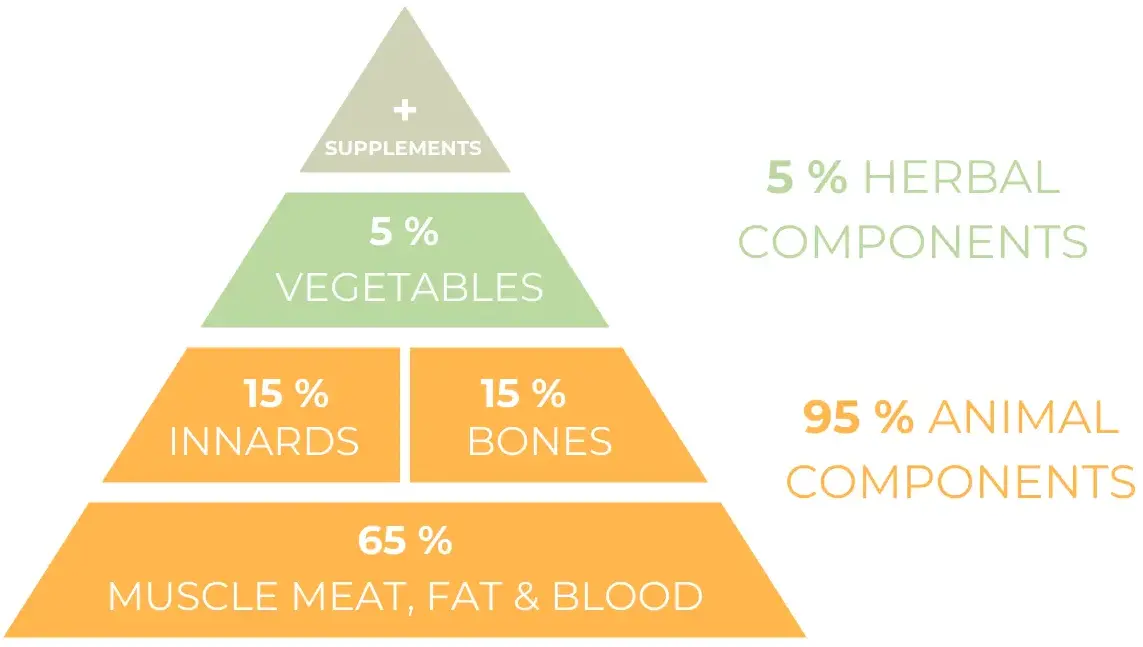
BARF pyramid for cats
The BARF pyramid shown here illustrates how a balanced BARF meal for a healthy, adult cat can be structured. However, it serves only as a rough guideline, as the composition can vary significantly depending on your cat's tolerance, acceptance, and individual needs. A BARF ration typically consists of 95% animal-based and 5% plant-based ingredients. Heart is considered muscle meat and should make up a maximum of 20% of the total ration. Offal includes, among other things, stomach and liver, as well as – depending on the cat's preferences – spleen, kidney, and lung. Suitable meaty bones include, for example, chicken necks, while breastbone is unsuitable for cats.

 Comments
Information about the authenticity of customer reviews can be found here.