





Kidney failure in cats
But how can you recognize kidney failure in your cat? What should you pay attention to? And when should you start feeding kidney-specific food for this condition? These and other questions will be answered in the following article.
SOS – when your cat suffers from kidney failure
Kidney failure in cats should not be underestimated. You’ve probably read about it before. But when your own cat suffers from acute or chronic kidney failure, it’s a completely different story. Rational thoughts are swept away by emotions. Worries and despair rise. But let’s start with the basics:
Function of healthy kidneys in cats
Your cat naturally has two kidneys, each with different tasks. A major role of the kidneys is filtering toxins and waste products. These breakdown products are excreted via urine. Have you noticed that your cat’s urine has a strong smell?
Then you should definitely keep an eye on your little fur friend. In addition, your cat’s kidneys have a regulatory function. Electrolytes and water balance depend on kidney function. Furthermore, the kidneys also play an important role in producing hemoglobin (red blood pigment) and a hormone that regulates blood pressure.
You can see that the kidneys in your cat’s small body have an essential function. If kidney function declines, it can have far-reaching consequences. Toxic substances may accumulate in your cat’s body, which can negatively affect other organs such as the liver and heart. The remarkable and alarming thing about kidney failure in cats is that symptoms often go unnoticed for a long time. Only when the kidneys have lost about 60 to 70% of their function does your cat show the first signs.
How CKD develops in cats
The so-called CKD (Chronic Kidney Disease) is a condition that unfortunately often affects cats. This is largely because cats often do not drink very much. As your cat gets older, the risk of kidney failure also increases. It is generally estimated that around 50% of all cats over 12 years old suffer from kidney failure. There are numerous triggers and causes for kidney failure in your cat:
Kidney inflammation
Cystic kidneys
Carcinomas
Leukemia infection
Kidney stones
High blood pressure
Accidents and injuries
Administration of certain medications
When damage occurs to a specific part of the kidney, the kidney initially compensates. The healthy parts take over the function of the damaged part, so the disease remains undetected for a long time. This compensation can work well for many years. However, the tissue becomes increasingly damaged due to the extra load. The cat gradually loses kidney function. Kidney failure slowly develops, which, if left untreated, can progress to complete kidney failure.
Recognizing kidney failure in cats
A distinction is made between acute and chronic kidney failure in cats. In an acute case, kidney function decreases quickly and drastically. In chronic failure, symptoms and problems appear gradually over a longer period. Both forms are unfortunately incurable and require urgent treatment.
If left untreated, kidney failure can also lead to the cat’s death. Sadly, your cat often only shows symptoms when the CKD is already advanced. At the same time, the symptoms can be very non-specific and could also point to various other diseases, making diagnosis difficult.
The symptoms of kidney failure
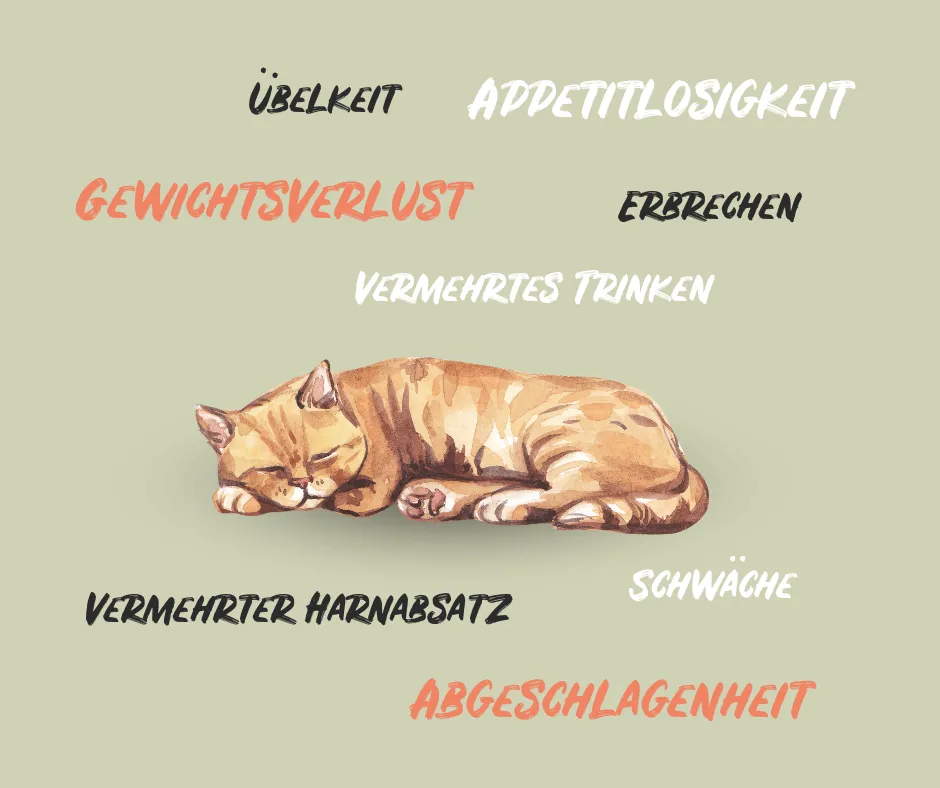
If you notice these symptoms, you should take your cat to a veterinarian immediately for targeted examinations:
Avoidance of food
Severe weight loss despite eating
Dull coat
Frequent infections
Frequent vomiting
Scaly fur
Brittle bones
Changed urination with dark urine
However, there are also other signs that should prompt you to plan a timely visit to the veterinarian:
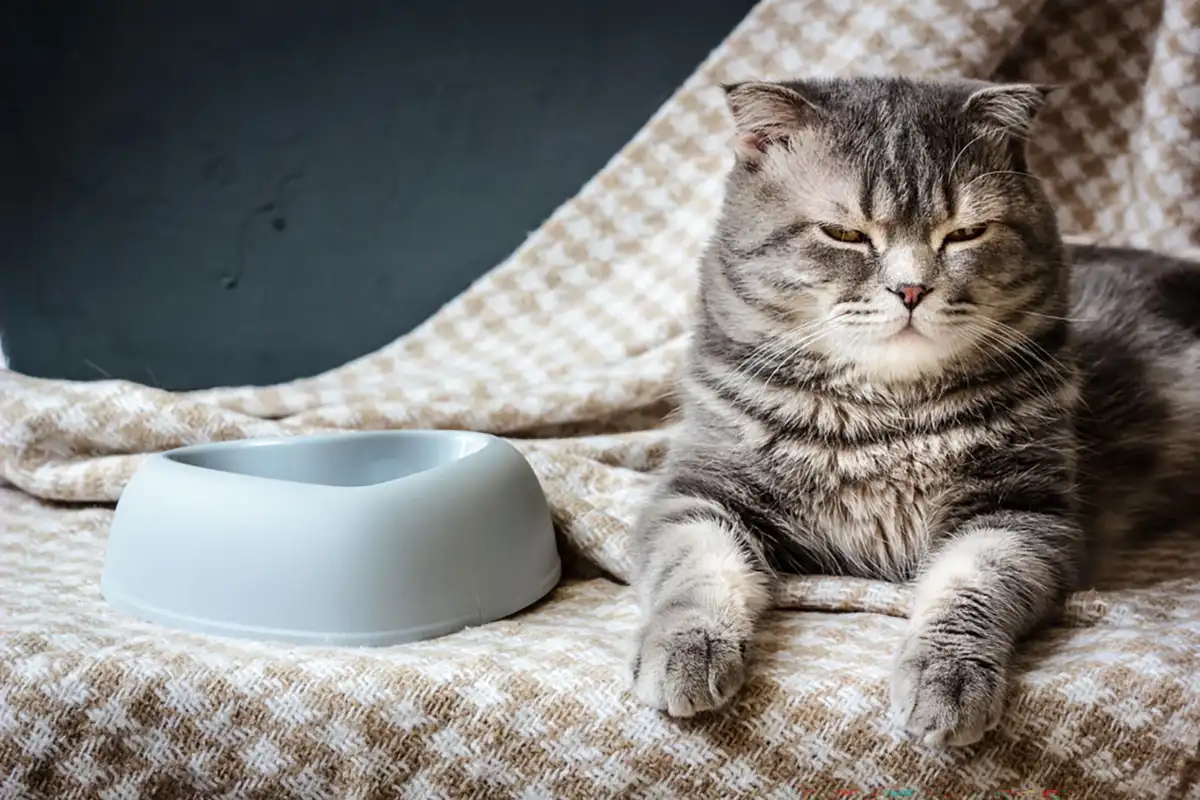
Your cat goes to the food bowl but then turns away without eating.
A strong odor develops from the mouth.
Your cat’s teeth become loose.
The mucous membranes are pale due to impaired blood circulation.
The veterinarian should perform various examinations.
The following findings are usually observed:
Changes in the kidneys
Heart rhythm disturbances
Proteins in urine
Accumulation of uremic substances in the blood
Changes in blood electrolytes
Increased SDMA
Changes in bone substance
The progression of kidney failure in cats
Once CKD has been diagnosed in your cat, the veterinarian will provide a classification. These are medical guidelines that the vet can follow to adapt treatment accordingly. The severity of the CKD has a major influence on further treatment. There are four different stages, ranging from mild to severe impairment. The veterinarian considers the following criteria to assess the severity:
The concentration of uremic substances in the blood increases over time.
Your cat’s blood pressure is too high.
Protein is excreted via the kidneys and can be detected in urine.
Frequent occurrence of typical CKD symptoms.
To determine the severity of the cat’s kidney failure, the intensity and extent of symptoms as well as laboratory values are considered.
Unfortunately, the above symptoms and altered lab values can also occur in other diseases. Therefore, an accurate approach by the veterinarian is necessary, i.e., targeted diagnostics. The combination of symptoms and altered lab values already provides an initial indication of kidney failure in cats. Imaging techniques are used to support the diagnosis.
The stages of kidney failure in cats
Kidney failure in cats does not occur overnight. It is a gradual process that is divided into different stages.
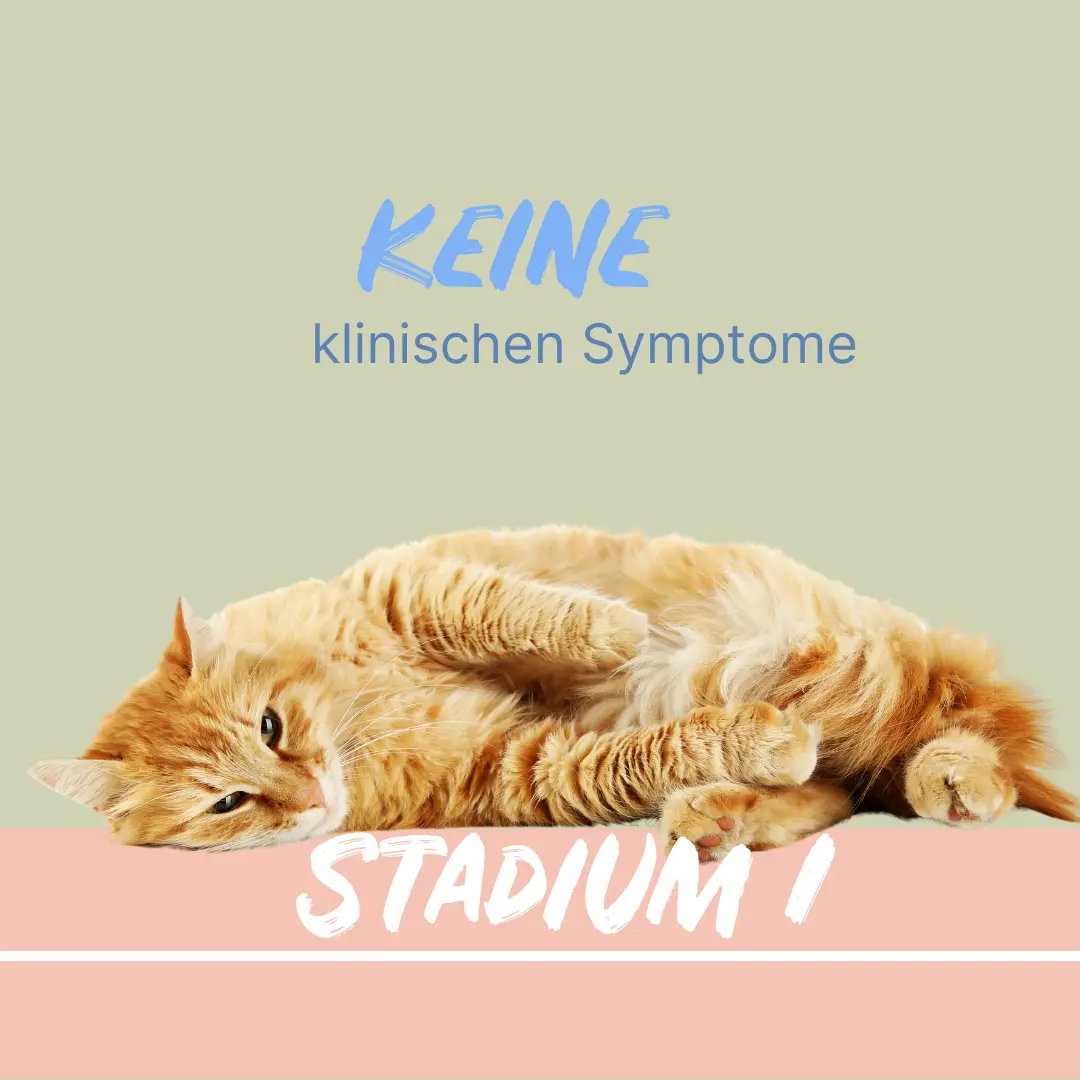
Stage 1: no external signs or clinical symptoms
This phase is the onset of kidney failure in cats. At this stage, your cat shows no external signs or clinical symptoms of kidney disease.
Creatinine levels are still within the normal range, and the protein-creatinine ratio is also normal. If your cat is in this stage, you can breathe a sigh of relief. There is no impact on your cat’s life expectancy yet.
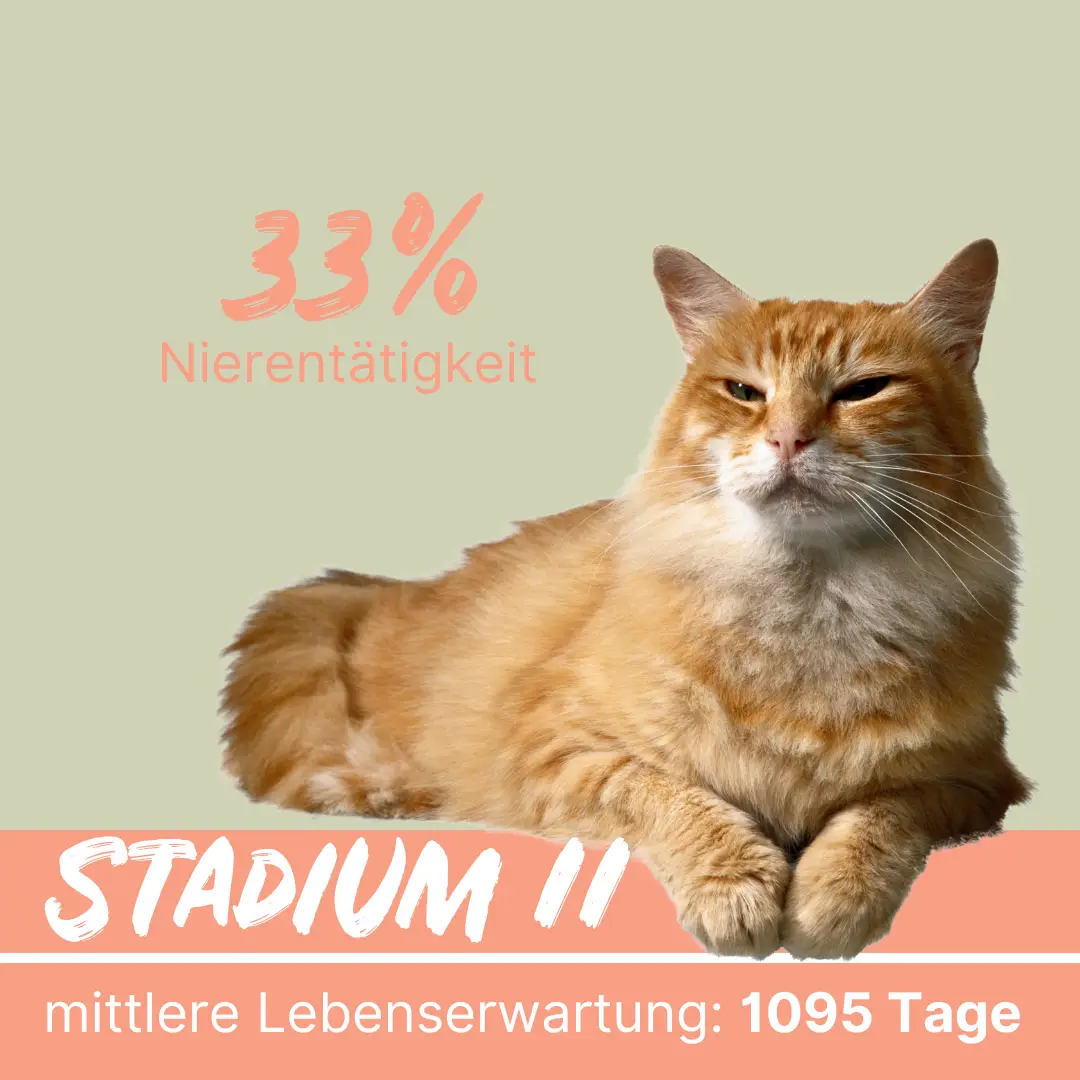
Stage 2: mild expression, SDMA and creatinine slightly elevated
At this point, the first symptoms may or may not appear. The expression is in any case mild. There may be increased drinking or more frequent urination. Many cat owners are still unaware of their cat’s kidney failure at this stage.
SDMA and creatinine levels are slightly elevated, but may still be within the upper normal range. If this stage is detected early, your cat’s life expectancy can still be up to three years.
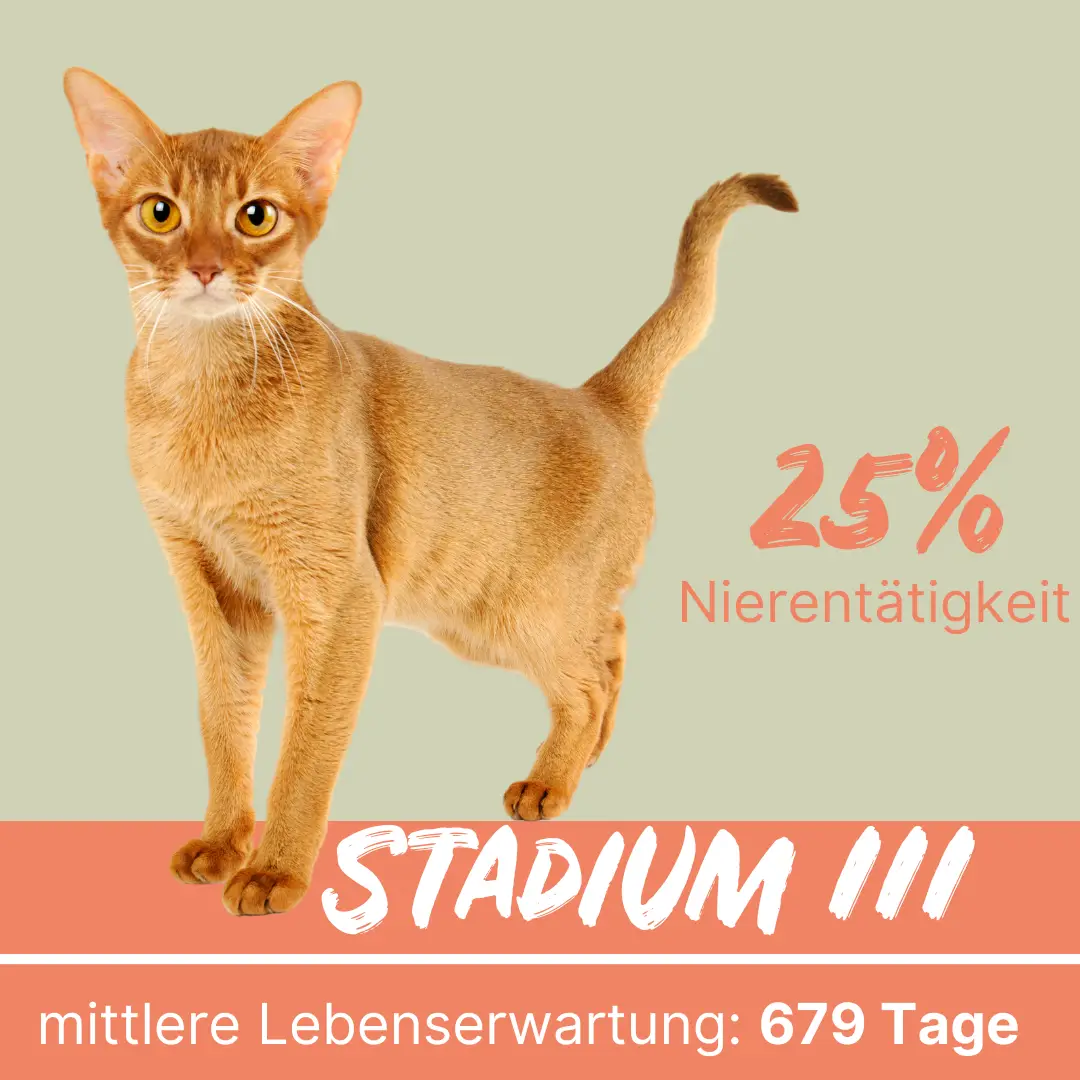
Stage 3: phase of uremic kidney failure
This is the phase of uremic kidney failure. Your cat is now showing pronounced symptoms. In addition to dull and shaggy fur, vomiting, loss of appetite, and weight loss, there is already increased drinking and urination. Blood values also change in this stage.
Creatinine is moderately above normal, the protein-creatinine ratio is elevated, and about 75% of the kidney tissue is irreversibly destroyed. The average life expectancy without protective therapy is just under two years.
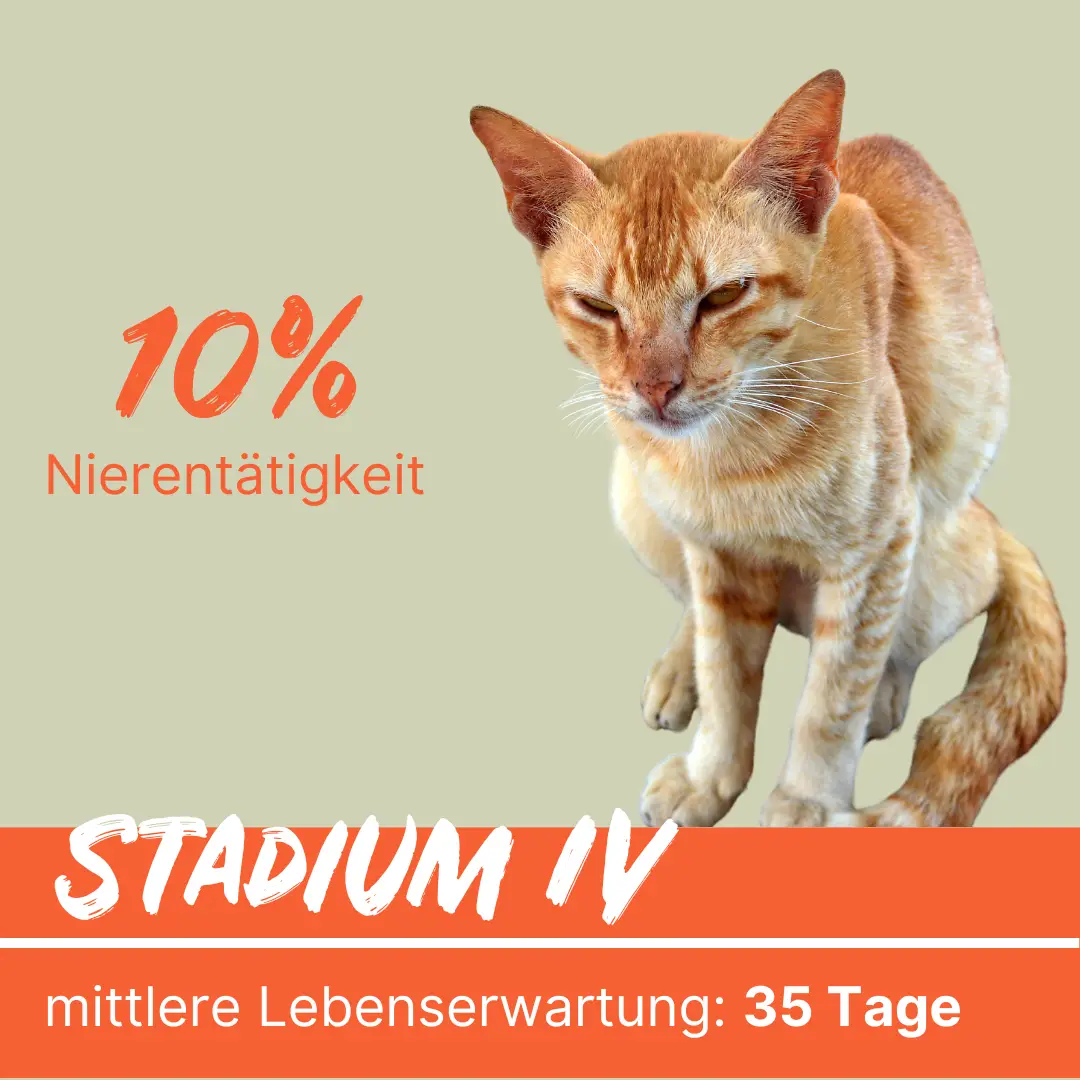
Stage 4: end-stage kidney failure
This stage describes end-stage kidney failure. Symptoms are severe, including severe vomiting, refusal to eat, dehydration, and weakness. Creatinine and the protein-creatinine ratio are significantly elevated. The average life expectancy without symptomatic therapy is only around 35 days.
Chronic kidney failure
Chronic kidney failure in cats is an age-related condition. It develops when the kidney tissue is chronically overloaded. This leads to destruction of kidney tissue and a decrease in organ function. If chronic kidney failure in cats is detected early, life expectancy can be extended. However, it is a progressive condition that cannot be stopped despite treatment.
Special kidney diets may be necessary from stage II onwards – please consult your veterinarian about this. Later in the disease, a phosphate binder may also need to be used – again, only under veterinary guidance and never without consultation regarding the product and dosage.
You can find more information on special kidney food later in this article. For kidney failure, early detection, proper treatment, and dietary changes play a crucial role.
Why is kidney failure dangerous for cats?
Kidney failure in cats can become a life-threatening condition. The following aspects should be noted:
If uremic substances are no longer filtered by the kidneys, their concentration in your cat’s blood will rise. Over time, this leads to poisoning of all organs. The brain is particularly affected by uremic toxins.
Increased blood pressure can, over time, affect your cat’s organs and eyes. The brain and heart are especially impacted.
If your cat urinates frequently, important electrolytes are lost. This starts a vicious cycle: due to the electrolyte imbalance, your cat vomits more often. This symptom can lead to circulatory problems, poor organ supply, and worsening of kidney failure in cats.
Life expectancy for cats with kidney failure
Many cat owners want to know from their veterinarian how long their cat will live after diagnosis. However, this question cannot be answered in general terms. Many factors play a role. Among other things, further treatment and dietary adjustments are central. If kidney failure in cats is detected in an early stage, the prognosis is better.
When symptoms are treated individually and consistently, life expectancy increases. It also depends on your cat’s individual constitution and how she copes with the burden of CKD. If kidney failure in cats is detected early, with the right treatment and a quality diet change, life expectancy can often be several years.
Treatment of CKD
Kidney failure in cats is unfortunately incurable. A large proportion of cats that reach the age of 12 suffer from this insidious disease. Although kidney failure in cats is irreversible, it can be slowed down through proper symptomatic treatment and a change in diet. This can reduce disease progression and improve your cat’s quality of life.
In addition to drug therapy prescribed only by the veterinarian, you can also help your cat yourself. Two key aspects play an important role here:
Make sure your cat eats enough food and drinks enough water. Keep an eye on food and water intake. For outdoor cats, this is often difficult as control is lost when your cat leaves the house.
With a gentle diet, your cat’s kidneys can be largely relieved. This means that the tissue already affected has less work to do in detoxification and cleaning. For a so-called kidney diet, you should choose high-quality products such as BARF.
Sometimes symptoms become more pronounced. With the right treatment, your cat can often be stabilized again. Depending on the stage and severity, treatment of kidney failure in cats involves important pillars:
01. The food
Your cat should definitely receive a special kidney diet. Because the food contains lower amounts of protein, fewer uremic substances are produced. To have a positive effect, the kidney diet should be given already in an early stage (from stage 2).
02. Fluid intake
If your cat suffers from CKD, make sure she drinks enough fresh water. Meat broth can be added to regular water to encourage fluid intake.
03. Medication
Medication treatment is planned according to symptoms and blood values. It is important to have regular check-ups for your cat so that medication can be adjusted as needed.
Dietary recommendation for kidney failure in cats
As with all health-related topics, nutrition plays a central role in kidney failure. What your cat eats has a major impact on the function and health of her organs. Only a healthy diet lays the foundation for a healthy body – and that applies to us humans as much as to our four-legged friends. Some veterinarians recommend feeding special diet food in kidney failure. This is usually dry food. We probably don’t even need to mention here that due to its low moisture content, this can negatively affect the kidneys.
It is better to offer your cat high-quality, fresh meat, which, in addition to highly digestible vitamins and minerals, contains no unnecessary chemical additives and has a very high moisture content. Specifically for cats with kidney failure, there are the renal complete menus from eBarf. These were developed with animal naturopath and feline nutrition expert Petra von Quillfeldt and are specially tailored to the needs of cats with kidney disease.
In addition to lots of fresh muscle meat from turkey, chicken, and beef, high-quality offal and other natural supplements provide optimal nutrition for your kidney-impaired cat. Poultry meat is particularly high-quality and easily digestible protein. Poultry is among cats’ natural prey animals and is usually readily eaten by them. For cats with kidney disease, acceptance of the food is especially important, as they are often plagued by nausea and vomiting and become particularly picky about eating.
The special features of Fix-BARF® renal complete menus from eBarf
Unlike conventional kidney diets, Fix-BARF® renal is completely grain-free and contains no carbohydrates – apart from the necessary fiber (which cannot be digested by the cat’s body in its raw state) and pectin (a binding agent made from ripe apples that inhibits the formation of ammonia and urea in the large intestine).
The renal complete menus are free from other plant components or additives. The fiber content is increased to 10%, using pumpkin. Pumpkin has a soothing and supportive effect on bowel function and digestion and can help prevent common gastrointestinal problems in cats with kidney disease. As cats generally tend toward constipation, pumpkin is usually well tolerated.
The phosphorus content in the menus is significantly reduced (about 30% below the requirement value to 170 mg/MJ ME (Metabolizable Energy)), i.e., to about 2/3 of the maintenance requirement. This significantly relieves the kidneys.
Calcium content is calculated so that a favorable Ca/P (Calcium/Phosphorus) ratio of 1.4/1 remains, despite a significant phosphorus reduction.
The iron requirement in cats with chronic kidney disease is usually higher than in healthy animals. Anemia often develops as a result of the disease. Therefore, the iron content in the kidney diet recipes has been increased to 150%.
To achieve a slightly reduced sodium content with a stable potassium/sodium ratio, the potassium level was not increased, but the sodium content was adjusted. This results in a K/Na ratio of 1.9 to 2.1/1.
Protein content is sufficient for needs (and thus not too high!). The Fix-BARF® renal menus are calculated at around 15 g digestible crude protein per MJ ME. Since the kidney menus are made with high-quality, highly digestible muscle meat and – apart from fiber and pectin – consist exclusively of animal products, acceptance of this food in cats is good to very good.
No connective tissue-rich meats such as neck meat, gullet meat, stomachs, etc., no tendons, cartilage, or other less digestible components are used. By using only high-quality animal protein, the amount of nitrogen compounds in the intestine is limited. At the same time, the amount of ammonia and urea produced by bacterial breakdown in the large intestine is minimized. In addition, fermentable pectin inhibits the formation of ammonia and urea.
Due to kidney disease, water-soluble vitamins are flushed out of the body. This leads to an increased need for B vitamins, biotin, and folic acid. This increased requirement has been taken into account in the recipes.
To counteract polyuria (increased urination) in cats with kidney disease, Fix-BARF® renal menus can be mixed with about 30 ml of warm water before feeding. Many cats love this warm soup.
The energy content in the kidney complete menus is increased by the additional fat, but the total energy content per portion remains unchanged. This leads to an increased need for vitamin E (antioxidant) but also a reduced protein and phosphate content. Therefore, the kidney menus contain 50% more vitamin E than required. Due to the increased fat content in the recipe, acceptance rises, as cats are fat-loving carnivores.
To achieve a phosphate amount below the requirement, egg white is used in the special kidney menus. This is highly digestible protein that contains no phosphate. Raw egg white contains a protein that inhibits the absorption of biotin, which is very important for cats. Therefore, the egg white for our kidney recipes is cooked before being added to the menu.
The proportion of salmon oil in the renal complete menus is 2 g per kg of food. The oil contains many essential omega-3 fatty acids that can additionally support your cat’s health.
Special notes on kidney diet food for cats
As a rule, you should only feed a kidney diet to your cat with chronic kidney disease on the advice of your veterinarian after diagnosis and assessment of the severity of the disease. Please do not feed the kidney diet for longer than six months at a time, and visit your veterinarian for a check-up no later than that.
Cats fed a kidney diet should be under regular veterinary supervision. If your cat has not been fed BARF before, make sure to transition slowly so that your cat’s system can adapt to the new food. As some cats are very picky about their food, you may need patience. Please stick with the diet change. It is an important pillar in treating cats with kidney disease.
If you have questions about the products, you can also contact Petra von Quillfeldt directly. She is not only the author of "Katzen BARFen" but also the developer of the kidney products for cats. She is an expert in this field.
0 Kommentare