





The Digestion of the Cat
What wildcats reveal to us about species-appropriate nutrition
Table of contents
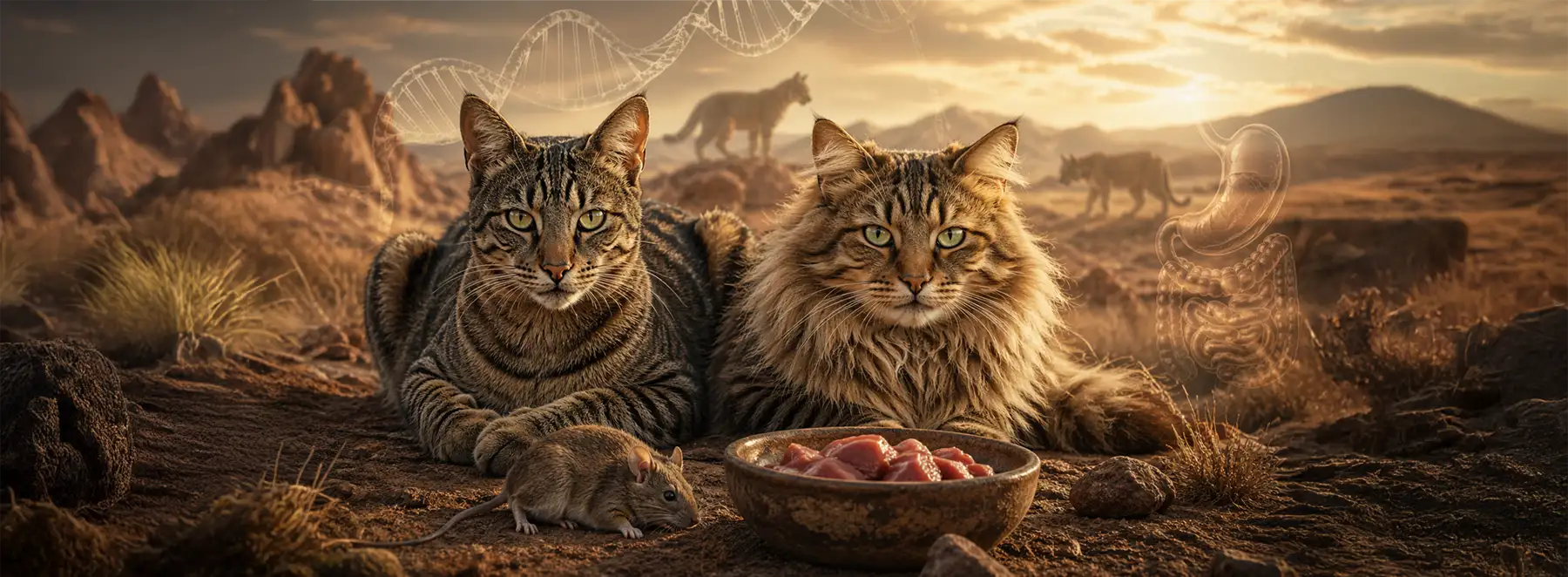
Cats have accompanied us for many centuries and have undergone a remarkable development over time: what was once an independent mouse hunter gradually became a beloved pet and close family member. Yet even though their living conditions have fundamentally changed, one thing has remained the same at its core: their digestion and metabolism are still designed to process animal-based food today.
Unlike the dog, which adapted at least to some extent to human food during domestication, the cat has remained much more original in its dietary habits. To understand what a cat really needs in its bowl, it is therefore worth taking a look at its history, its natural prey and its digestive system.
The cat as a predator
Dogs and cats are often lumped together when it comes to nutrition. However, this falls short. While dogs – and wolves as well – occasionally consume herbs, grasses, berries or other plant components in addition to animal-based food, the cat is far more specialised in its natural diet.
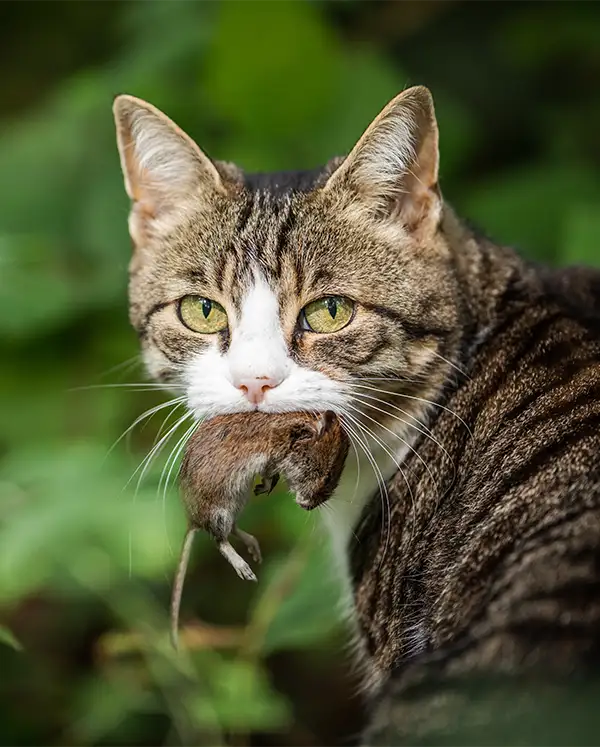
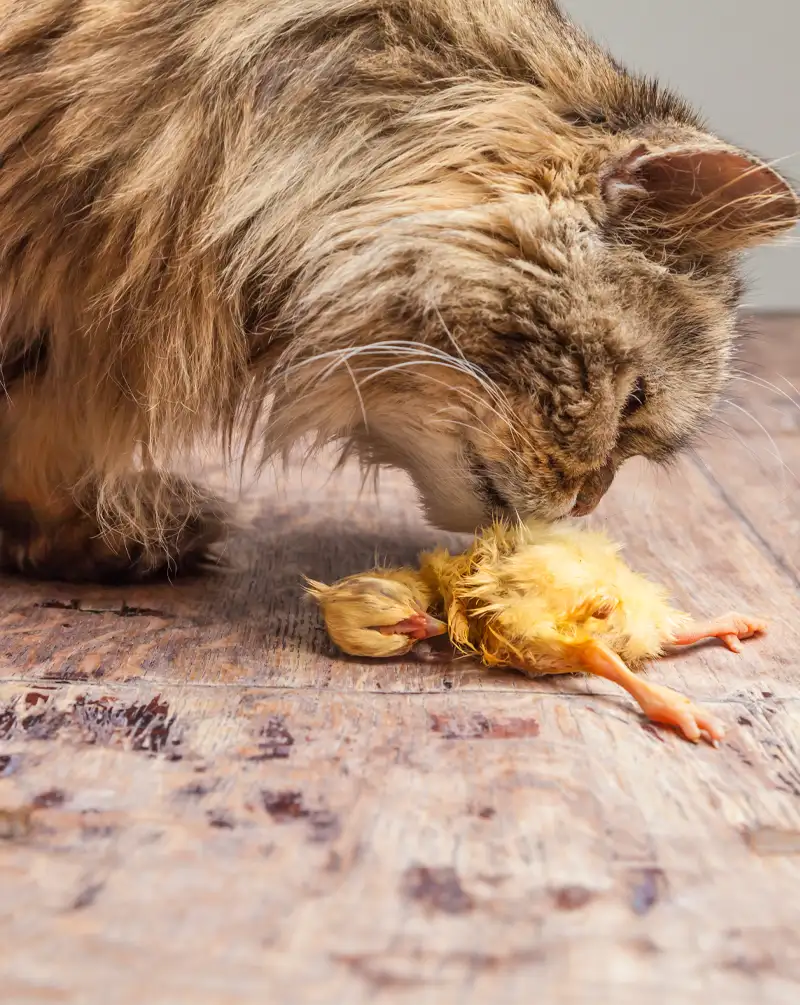
In the wild, cats feed predominantly on small prey animals. These mainly include mice, but also insects, birds, fish, rats, young rabbits, squirrels and moles. This prey provides them with exactly the nutrients their bodies are designed for. Plant components play almost no role and, if anything, enter the digestive tract only indirectly and in very small amounts via the stomach contents of the prey animals.
This way of life as a hunter has shaped the cat and its physiological characteristics over a very long time. It is not an omnivore that can draw nutrients from a wide range of food sources, but rather a highly specialised predator with a clear focus on animal-based food.
From wildcat to domestic cat
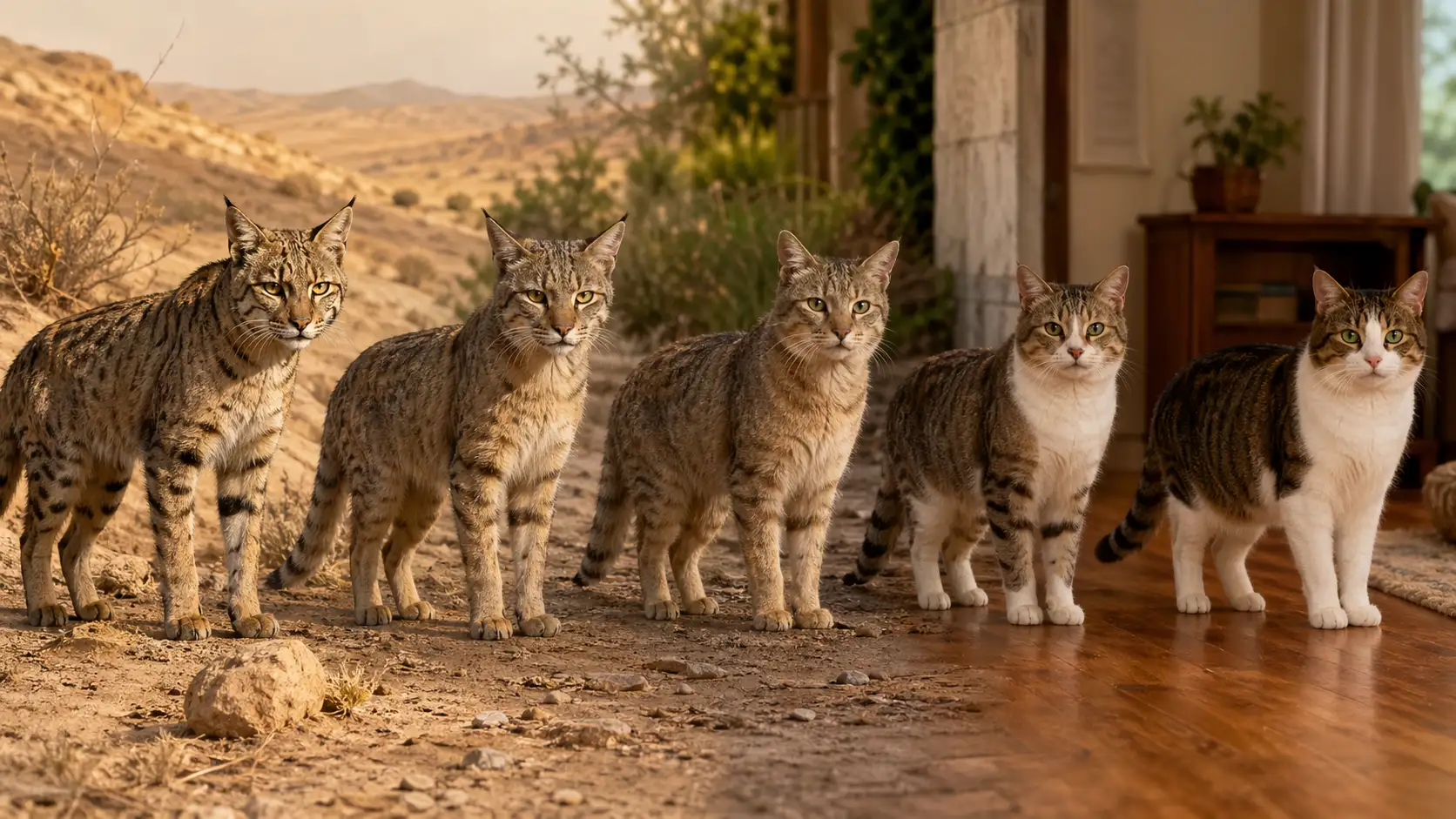
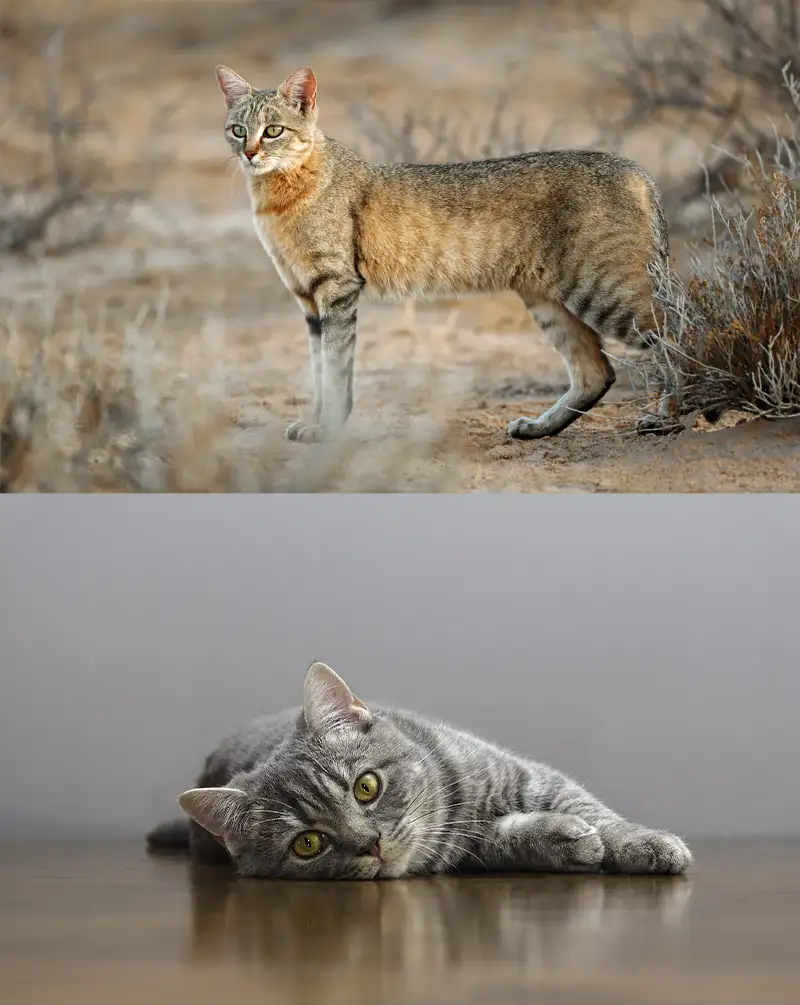
The cat’s history also shows how closely it is connected to this original lifestyle as a predator. Research findings show that the African wildcat, which was already domesticated by the ancient Egyptians, is considered the ancestor of today’s domestic cat. Unlike many other domestic animals, the cat was originally not selectively bred for human use, but was mainly tolerated and valued because it protected supplies from mice and other pests.
For a long time, cats lived in close proximity to humans without completely losing their role as hunters. They fed mainly on animals they had caught themselves and were given milk only occasionally or other leftovers as supplementary food. Only over the centuries did this relationship change fundamentally: the farm cat gradually became a pet that moved permanently into houses and flats and today lives with us as a family member, being offered food selected by us.
With this development, the cat’s outward appearance also changed. Different coat colours, patterns and coat structures initially arose through natural mutations without deliberate human intervention. Only later were cats with certain characteristics intentionally bred together to produce the pedigree cats known today.
Despite all these changes, one thing still applies: the domestic cat remains biologically surprisingly similar to its wild ancestors.
Is the cat a carnivore?
Whether cats are carnivores can be answered clearly: yes. More precisely, the cat is an obligate carnivore, meaning an animal that depends on a predominantly or almost exclusively animal-based diet.
This classification is not merely a theoretical term, but is directly reflected in its biology. The entire digestive tract and metabolism of the cat are designed to absorb animal proteins and fats and use them efficiently. Plant components play only a very minor role in its natural diet and, if present at all, occur only in very small quantities.
This is also where a key difference from the dog lies. While dogs can process plant components and starch to a limited extent, the cat is much more specialised. It is not a small dog with different preferences, but nutritionally and physiologically a true carnivore.
This specialisation becomes particularly clear when you look at how the cat’s digestion works.
The digestion of the cat
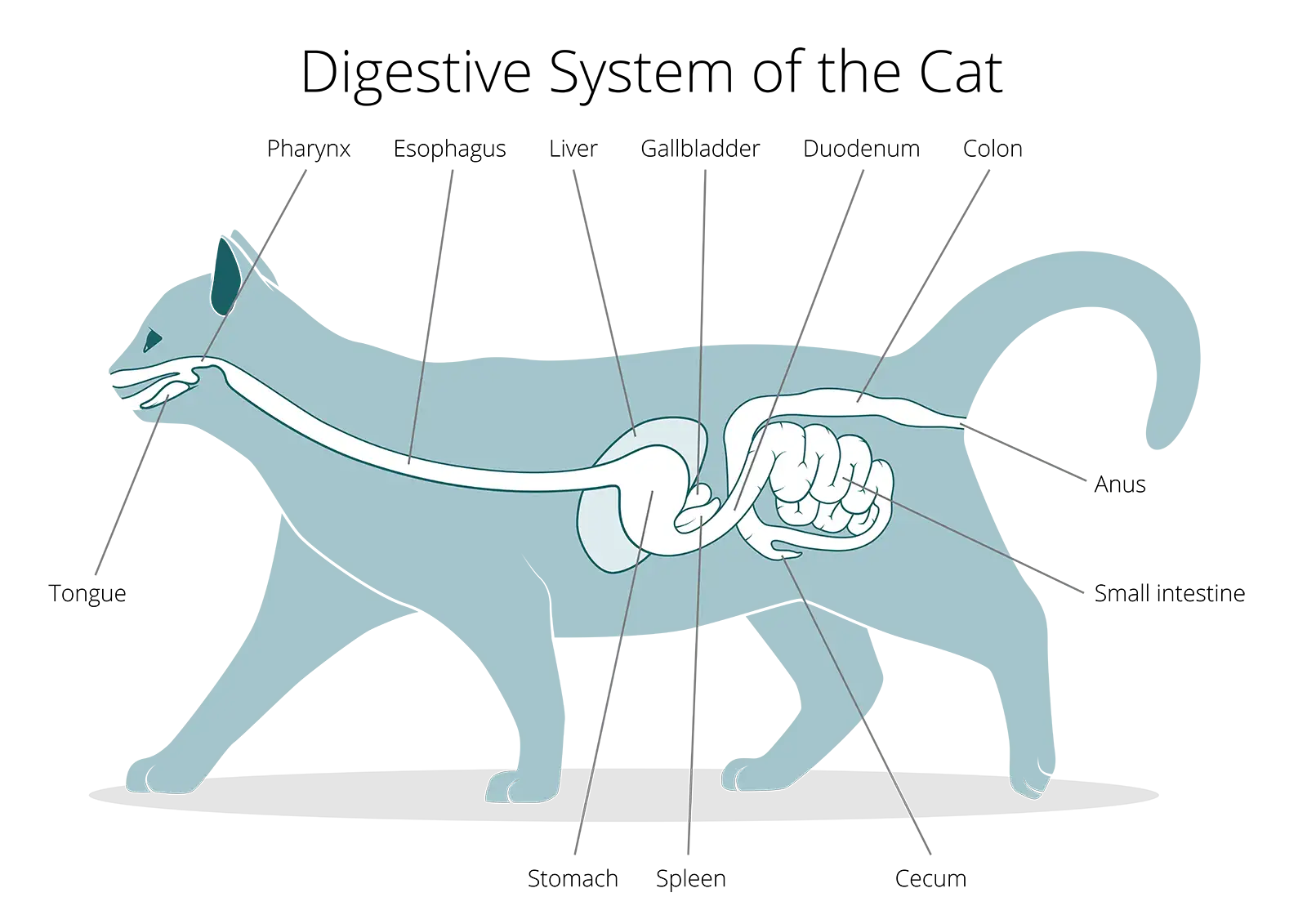
As a carnivore, the cat is specialised in processing animal-based food. Its digestive system is designed to break down protein- and fat-rich prey as efficiently as possible and absorb the nutrients it contains. From the mouth through the stomach and intestines to excretion, various organs work closely together to mechanically transport animal-based food, chemically break it down and transfer usable components into the body.
The first steps of digestion in the mouth
It already becomes clear during food intake how strongly the cat is specialised in catching prey. Unlike humans or many omnivores, it hardly chews its food, but merely tears its prey into suitable pieces and swallows them directly. Anatomically, the jaw is not capable of performing grinding sideways movements.
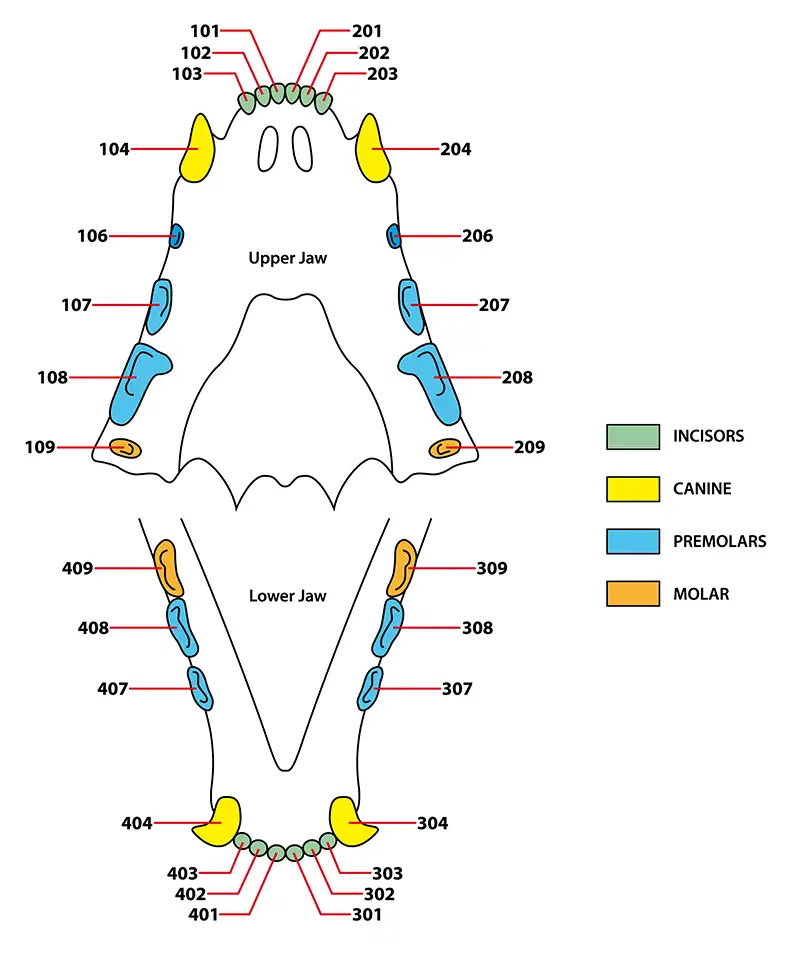
The cat’s dentition is typical of a carnivore and in the permanent set consists of a total of 30 teeth. Particularly striking are the strong canine teeth, which are used to seize and kill prey. The carnassial and molar teeth are used to roughly cut up meat, tendons or smaller bones. The small incisors at the front are used for scraping off small remnants of meat and for grooming the coat.
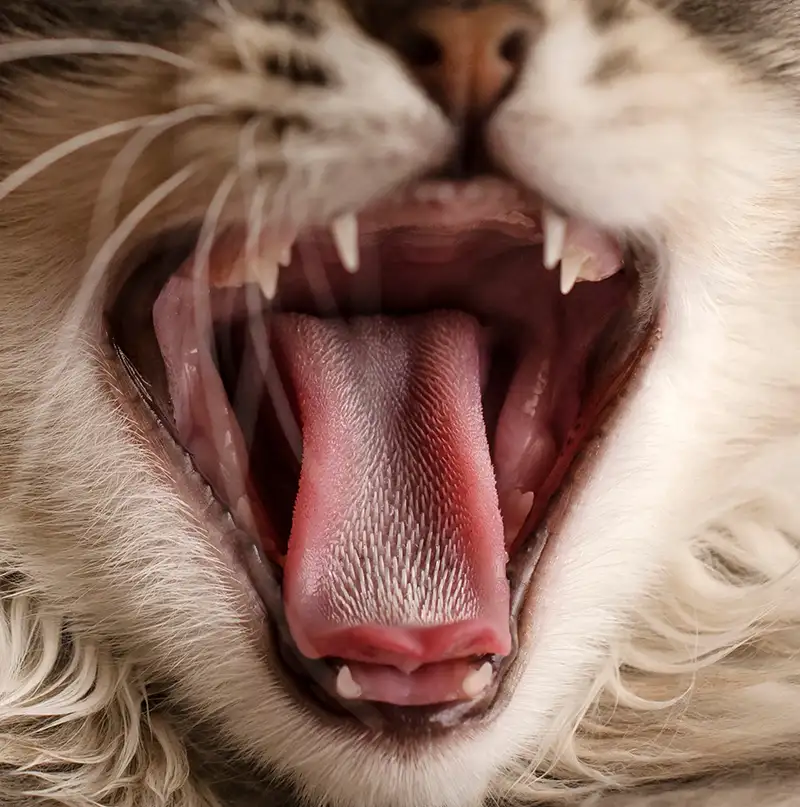
The tongue is also adapted to this way of feeding. Its rough surface with the characteristic horny papillae pointing towards the throat not only helps with grooming, but also enables the cat to rasp meat remnants off bones and to take up liquid. At the same time, the tongue has sensory functions and supports the intake and assessment of food.
A special feature of the cat can also be seen in its saliva: unlike omnivores, it does not contain amylase, an enzyme that breaks down starch. Actual digestion therefore does not begin in the mouth – similar to the dog – but only in the stomach. The saliva merely serves to make the food slippery so that it can pass through the oesophagus into the stomach.
Enzymatic digestion begins in the stomach
The food pieces pass through the oesophagus into the stomach, where they remain for several hours and are processed intensively for the first time on a chemical level. This is where the actual digestion of the cat begins. While the food was only roughly broken down in the mouth, in the stomach it is mixed with gastric acid and digestive secretions by strong muscular movements and gradually processed into a pre-digested food pulp.
The cat’s stomach has a strongly acidic environment with a pH value of around 1 to 2 – an important prerequisite for protein-splitting enzymes to work efficiently and for the digestion of animal proteins to begin. At the same time, stomach acid helps to kill germs and bacteria ingested with the food. As in other carnivores, a layer of mucus protects the stomach lining from self-digestion by the aggressive gastric acid.
The structure of the stomach is also adapted to the typical diet of a carnivore: thanks to its muscular and stretchable structure, it can efficiently mix and pre-digest protein- and fat-rich food. At the same time, the food pulp is gradually prepared so that it can be released into the small intestine in portions, where the actual main digestion takes place.
The stomach therefore does much more than simply serve as an intermediate station in the digestive tract: it starts the enzymatic digestion of proteins, acts as a natural barrier against germs and specifically prepares the food for the following digestive steps.
Main digestion in the small intestine
After pre-digestion in the stomach, the food pulp first enters the duodenum and then the further sections of the small intestine. This is where the major part of actual digestion and almost all nutrient absorption takes place.
Before the digestive enzymes can work, the strongly acidic food pulp from the stomach is first neutralised. This is necessary to protect the sensitive intestinal mucosa and to create a suitable environment in the small intestine for further digestion. This is where the main digestion begins: enzymes from the pancreas break down proteins, fats and the small amount of natural carbohydrates from the food into smaller, usable components. At the same time, bile acids from the liver and gallbladder support fat digestion.
The broken-down nutrients are then absorbed through the intestinal wall and made available to the body. These include above all amino acids from proteins, fatty acids from animal fats, as well as vitamins, minerals and trace elements. They provide energy, support numerous metabolic processes and are needed, among other things, for the maintenance of muscles, the immune system, the nervous system and many other bodily functions.
The small intestine is therefore the central organ for utilising food. Its inner surface is designed to absorb nutrients as efficiently as possible. The fact that the cat’s intestine – as in carnivores in general – is comparatively short is not a disadvantage, but an expression of its specialisation: animal-based food is highly digestible and does not require the long fermentation and digestive processes that are necessary in herbivores.
Further processing in the large intestine
After the usable nutrients have been absorbed, indigestible residues pass into the large intestine. Its main function is to recover water from the intestinal contents and to further thicken the food pulp before it is excreted.
This function is especially important in cats because their bodies use water very efficiently. This special feature becomes even clearer later when looking at the cat’s water balance.
In addition, the large intestine is home to an intestinal flora whose microorganisms are involved in digestive processes and contribute to maintaining intestinal health. An intact intestinal flora not only supports digestion, but also plays an important role in general well-being.
The large intestine thus forms the final section of a digestive system that is overall clearly specialised in processing animal-based food.
Good to know: How long does a cat digest?
The digestion of a protein-rich meal generally takes around 24 to 36 hours in cats. However, how quickly food actually passes through the digestive tract depends, among other things, on the composition, degree of fragmentation and water content of the food. Individual factors such as activity or health can also influence digestion time.
What digestion reveals about the cat’s metabolism
The cat’s digestion already clearly shows how strongly its body is specialised in animal-based food. But these special features do not end in the intestines. The cat’s metabolism, which is closely linked to digestion, is also adapted to this way of eating – and explains why cats have distinctly different nutritional needs from dogs or humans, for example.
A metabolism specialised in meat
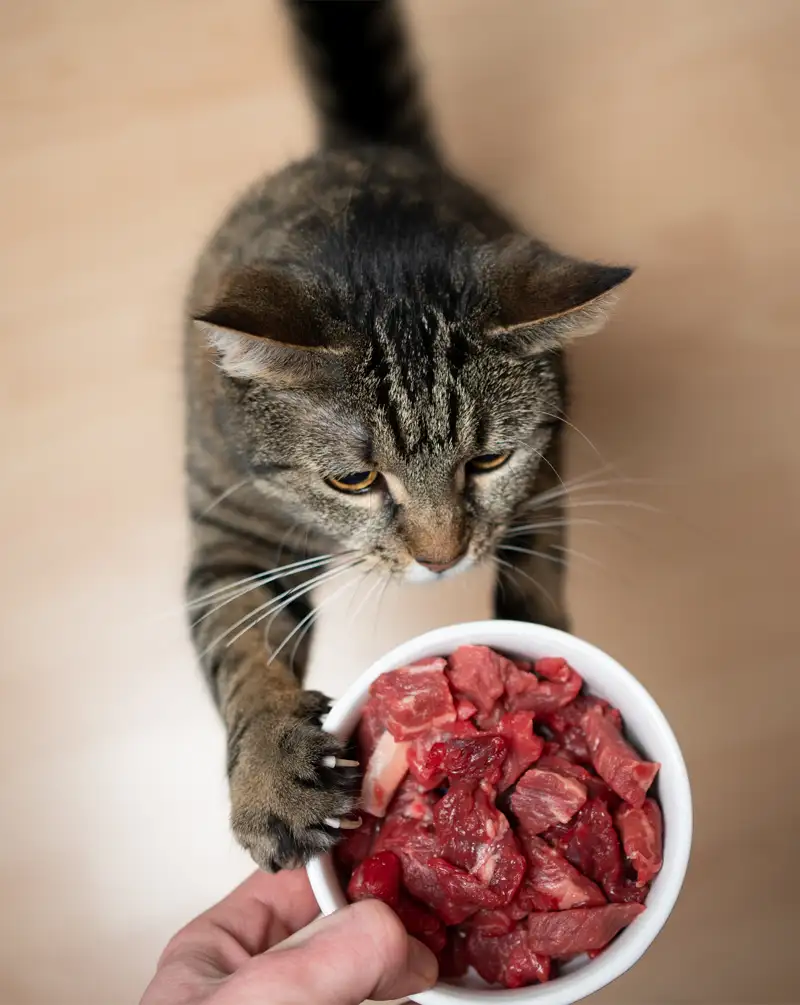
Cats depend on a high intake of animal proteins. These serve not only as building material for muscles, tissues and enzymes, but also play a central role in energy supply. Unlike many other animal species, the cat uses protein not only for the building, maintenance and regeneration of the body’s own structures, but also to a special degree for its energy metabolism.
Another special feature is that cats obtain a large proportion of their energy from animal fat and through so-called gluconeogenesis. In this process, the body produces glucose itself from certain components of proteins in order to maintain important bodily functions. These metabolic pathways run permanently at a high level in cats and are part of their natural adaptation to a low-carbohydrate prey-based diet.
This also means that an adequate supply of high-quality protein and animal fat is of particular importance for cats.
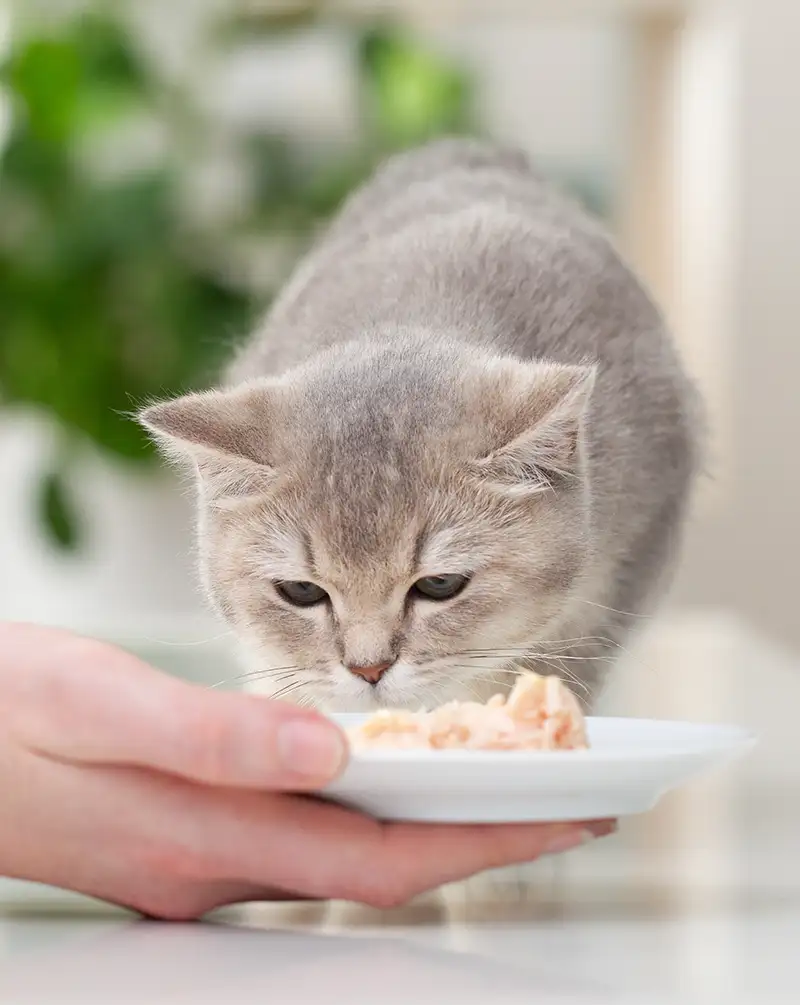
Carbohydrates only play a minor role
While proteins and fats form the natural nutritional basis of the cat, carbohydrates play only a very minor role. Accordingly, its ability to utilise larger amounts of starchy food is limited.
Dietary fibre, however, plays a special role in this context. In natural prey, these do not come from classic plant sources, but for example from fur, skin or other indigestible parts of the prey animal. They can support intestinal activity, regulate the volume of intestinal contents and thus contribute to healthy digestion.
Such dietary fibre should also be taken into account in species-appropriate feeding. In BARF feeding, small amounts of suitable vegetables such as carrot, pumpkin or courgette are often used for this purpose. Although plant components do not play a major role as a source of nutrients in cats, they are functionally very useful in small, deliberately chosen quantities.
Why meat provides cats with more than just energy
The cat’s specialisation in animal-based food is reflected not only in its digestion and metabolism, but also in its need for certain nutrients. Meat does not simply provide cats with energy, but a wide range of essential building blocks that their bodies depend on.
Unlike dogs, cats cannot produce certain nutrients sufficiently themselves and are therefore especially dependent on obtaining them through food. This is particularly evident in amino acids such as taurine and arginine. They are required for numerous vital functions – including metabolic processes, the immune system, the nervous system and fluid balance. This dependence on nutrients from animal-based food especially underlines how strongly cats are nutritionally specialised as carnivores.
Animal fats also do far more than simply act as an energy source. They provide essential fatty acids, support numerous metabolic processes and also enable the absorption of fat-soluble vitamins. This makes them not only energy carriers, but an important part of a diet tailored to the cat’s needs.
Water balance: Why cats mainly take in fluids through food
Another special feature closely linked to digestion and metabolism concerns the cat’s water balance. Its ancestors come from dry habitats, which is why cats are still specialised in using water very efficiently today.
They can concentrate their urine strongly and lose comparatively little fluid through the body. At the same time, they naturally meet their water requirements mainly through their food. This also explains why many cats show only a slightly pronounced drinking behaviour.
This is precisely why the moisture content of the food plays a central role. A moisture-rich, natural diet can help to support the cat’s fluid balance and ideally meet its physiological needs.
Against this background, feeding dry food should be viewed critically. Dry food contains only little moisture, and yet most cats will not reliably compensate for their additional water requirement by drinking. In the long term, this can place strain on the urinary tract, and especially the kidneys, and increase the risk of corresponding health problems.
The water balance therefore once again shows that digestion, metabolism and nutrition are closely interconnected in cats.
Species-appropriate cat nutrition in the light of evolution
Even though our domestic cats are now far removed from the lives of their wild ancestors, their bodies still carry those biological foundations. Digestion, metabolism and water balance show just how strongly the cat is still specialised in a meat-based, nutrient-rich and moisture-rich diet today.
Looking at the wildcat helps us to better understand these biological basics. Cats are not small dogs and not flexible omnivores either, but highly specialised carnivores with very specific needs.
Species-appropriate cat nutrition therefore means taking these physiological requirements seriously and aligning feeding as closely as possible to the cat’s natural needs. What matters is not only energy or individual ingredients, but the quality, composition and digestibility of the food as a whole.
A diet based on this natural model can help to support your cat’s digestion, metabolism and long-term well-being in the best possible way. BARF in particular offers a good way to feed cats in a particularly natural, needs-based and species-appropriate manner.
FAQ - Frequently asked questions about the digestion of the cat
How does the cat’s digestion work?
How exactly the cat’s digestion works is explained in the section "The digestion of the cat".
Why is the cat an obligate carnivore?
You will find the answer to what makes the cat a carnivore in the section "Is the cat a carnivore?".
How long does digestion take in cats?
You can find out how long a cat needs to digest its food here: "Good to know: How long does a cat digest?".
Can cats digest carbohydrates?
Whether cats are able to digest carbohydrates is answered in the section "Carbohydrates only play a minor role".
Why do cats need so much animal protein?
Why animal proteins are essential for cats is explained in the section "A metabolism specialised in meat".
Why do cats drink so little water?
You can find out why cats drink very little water here: "Water balance: Why cats mainly take in fluids through food".
Why should dry food be viewed critically?
You can find the answer to why dry food should be viewed critically for cats in the section "Water balance: Why cats mainly take in fluids through food".
Why is BARF considered a species-appropriate diet for cats?
You can find out why BARF is a species-appropriate form of nutrition for cats in the section "Species-appropriate cat nutrition in the light of evolution".